Now, when we are done with my bucket list, let’s do the regular touristy stuff and walk around Santa Fe. We start with the central square, an indispensable feature of old Spanish towns in the American Southwest.
See, the Spaniards are very organized and meticulous folk. They have rules and procedures for everything. In our case here, the rules were called Leyes de las Indias (“Laws of the Indies”), a 16th-century Spanish building code that dictated exactly how the Spanish colonial settlements in New Spain should be organized for defence and governance. Among other things, there must be a main square (plaza mayor) – a big empty space in the centre of the settlement. This rule originates from how the very first fortifications of a town were created. Rows of houses were built around plaza de armas (a parade ground for mustering the troops) side-to-side, without a space between them. That way they formed a defensive structure of sorts, eliminating the need of an actual wall. Eventually, after the town grew (always in a very straight, chessboard pattern), plaza mayor would become the centre of administrative and civilian life. There would always be the main town church in the plaza, as well as Las Casas Reales (the local administration’s buildings). There is also usually un quiosco (a kiosk, a bandstand) in the middle of the plaza, for musical performances and such, since the square was the hub of communal life.
This is the way the old Spanish towns in the Southwest usually look, as we will see, including Santa Fe. With some variations, obviously. Life is always more complex than a bunch of rules written by bureaucrats in the 1500s.
NIKONCOOLPIX S9300 22mm
/ 5.7
/ 10/1000s
/ ISO 125
Created: 125
Uploaded: 125
Likes: 125
Views: 125
Comments: 125
-1
-1
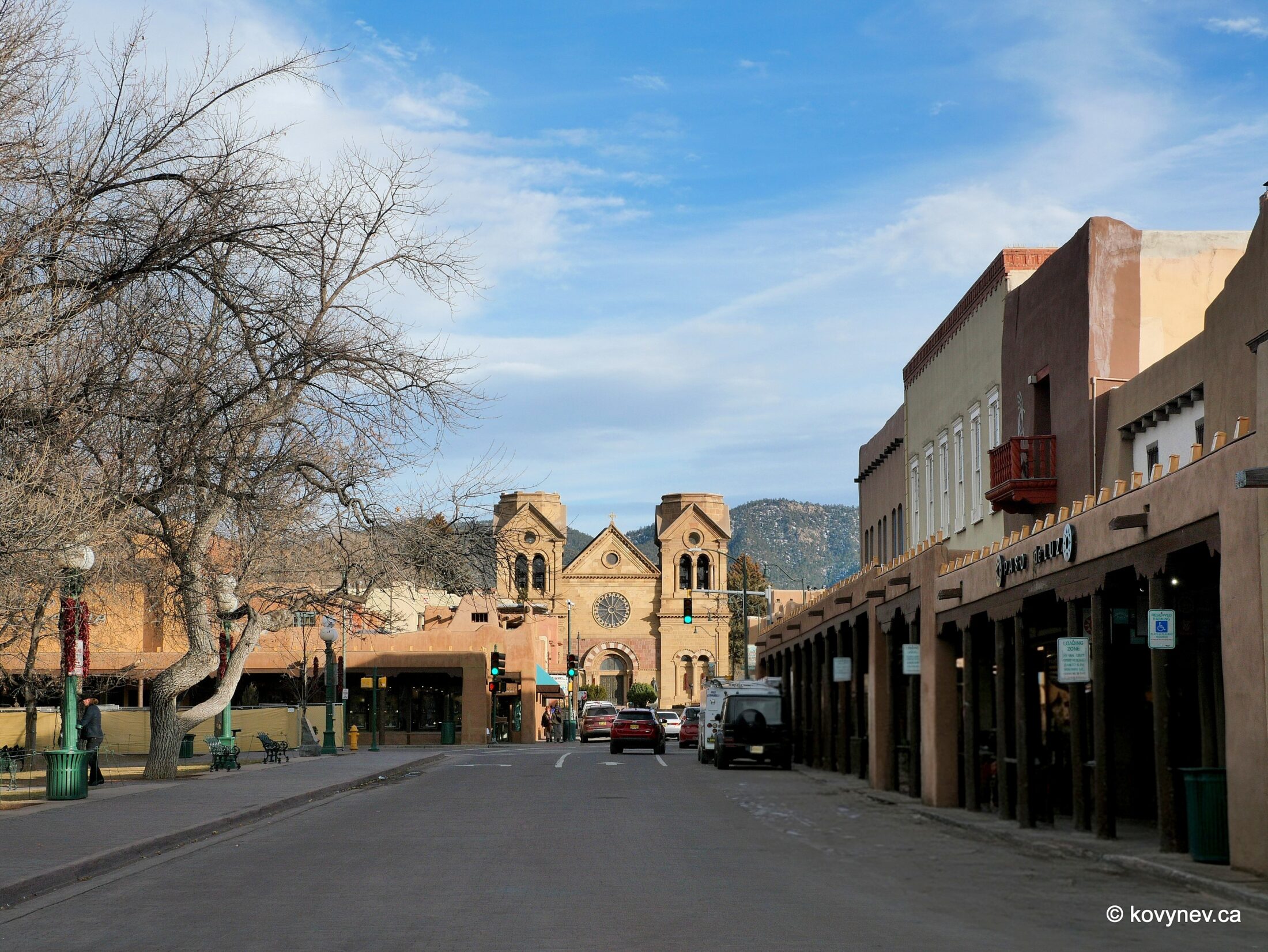
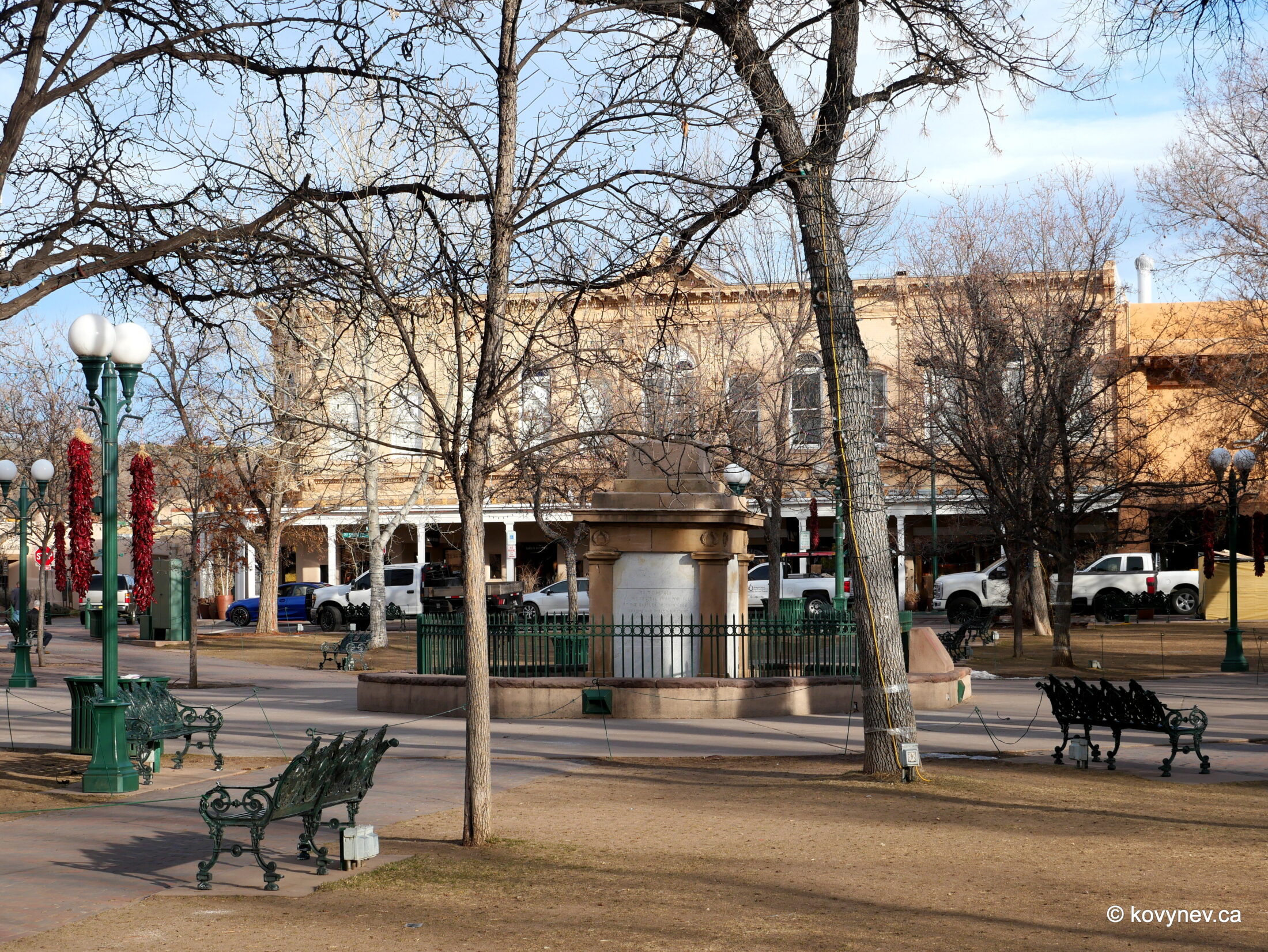
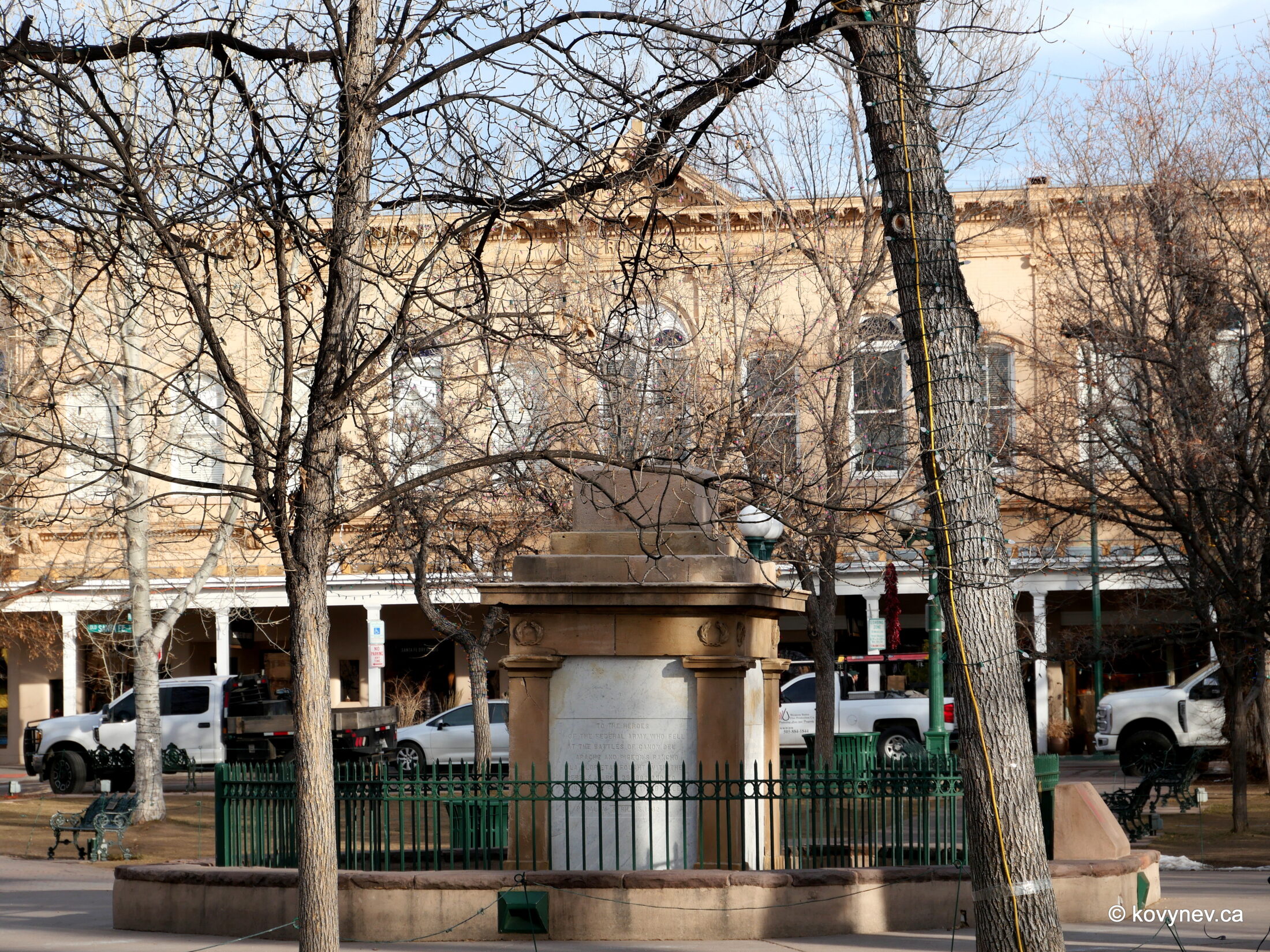
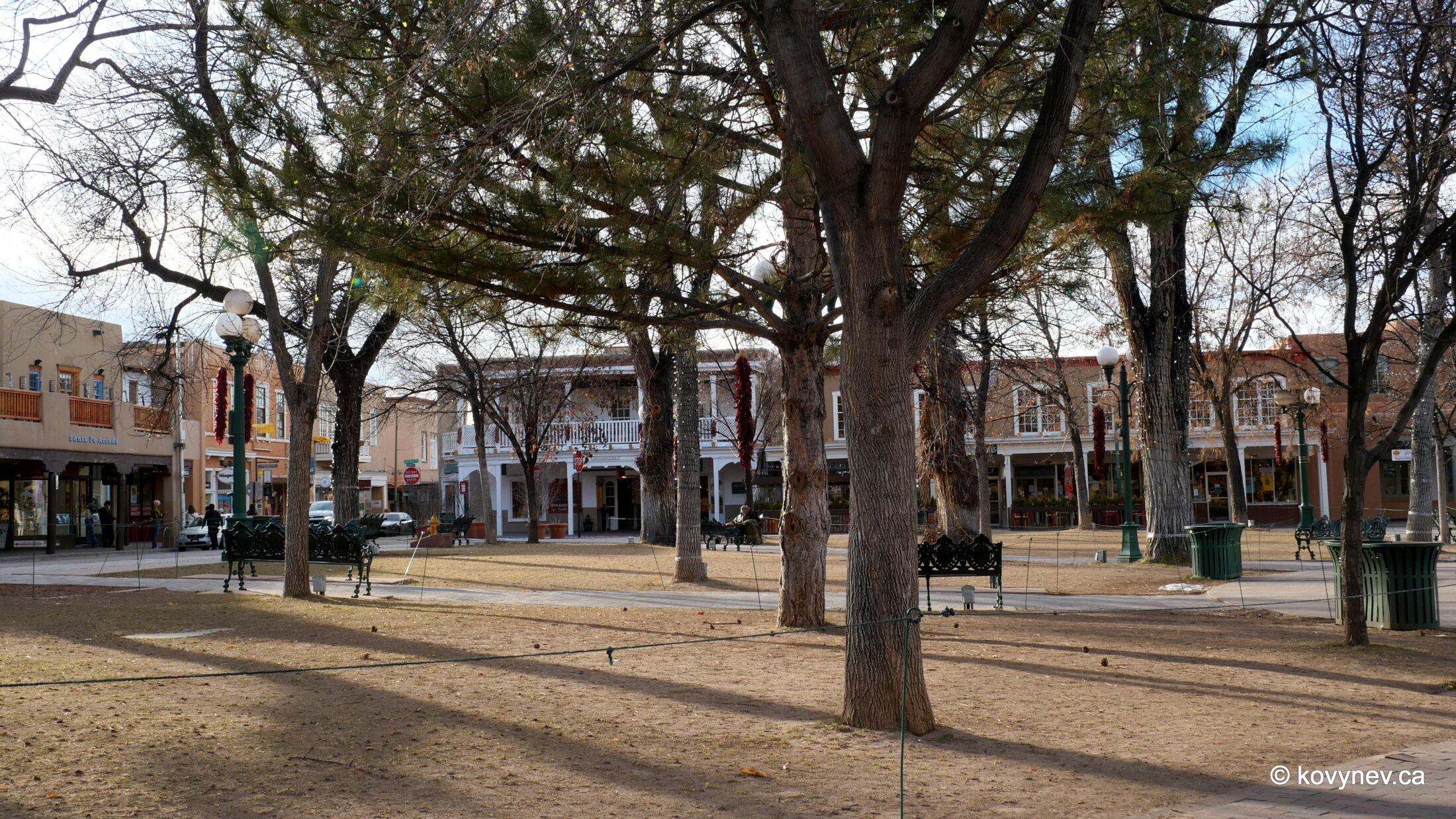
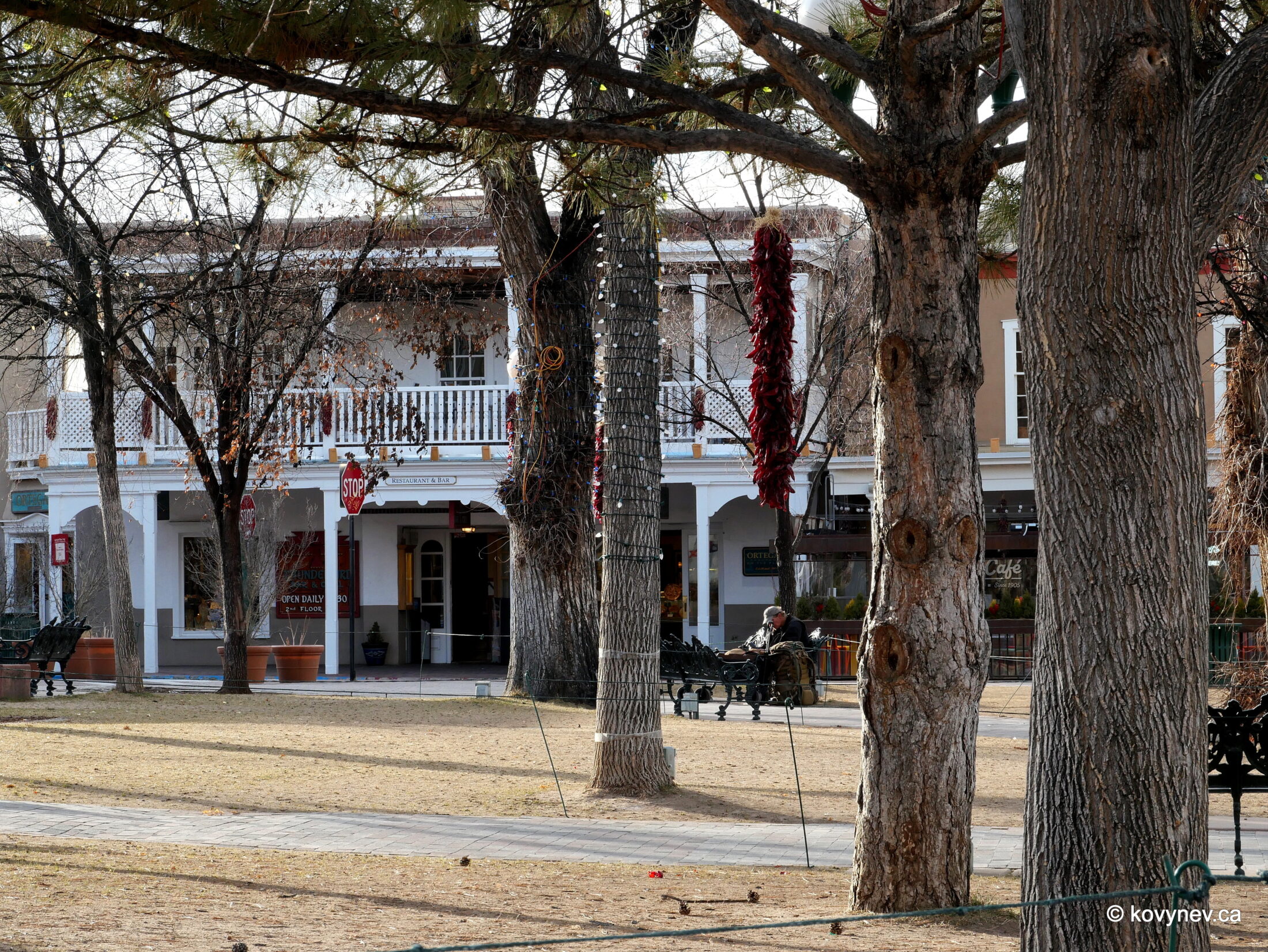
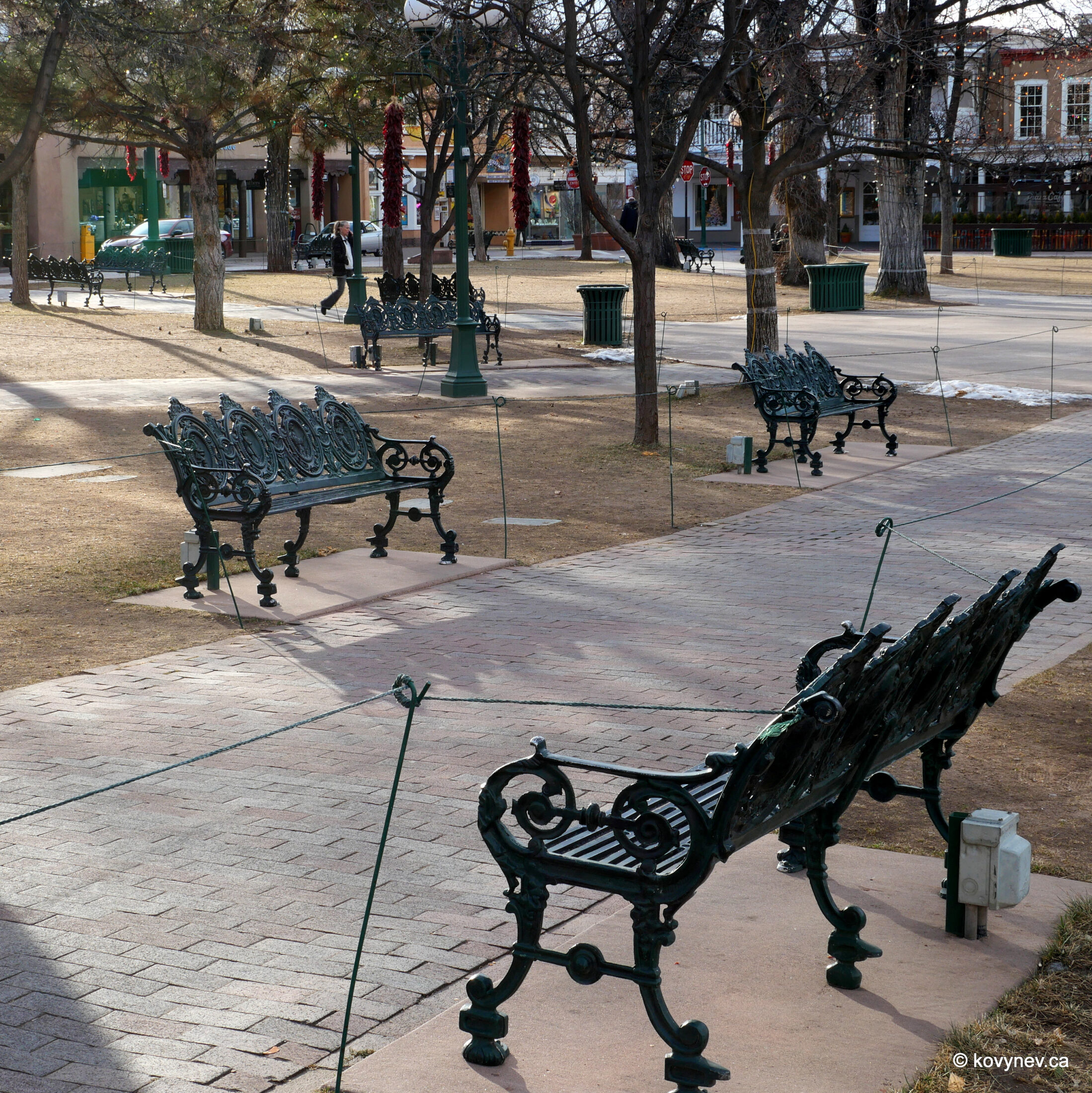
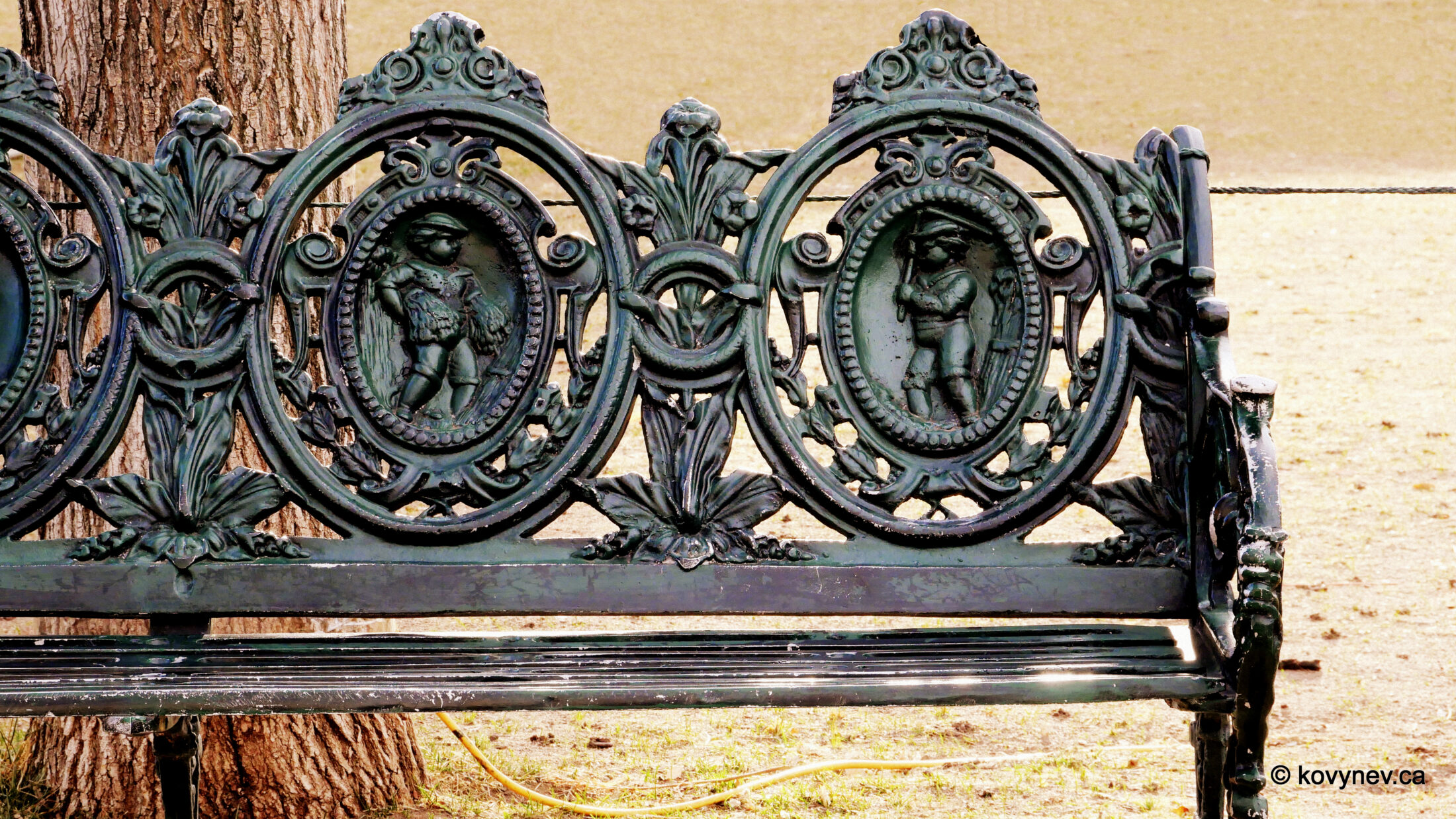
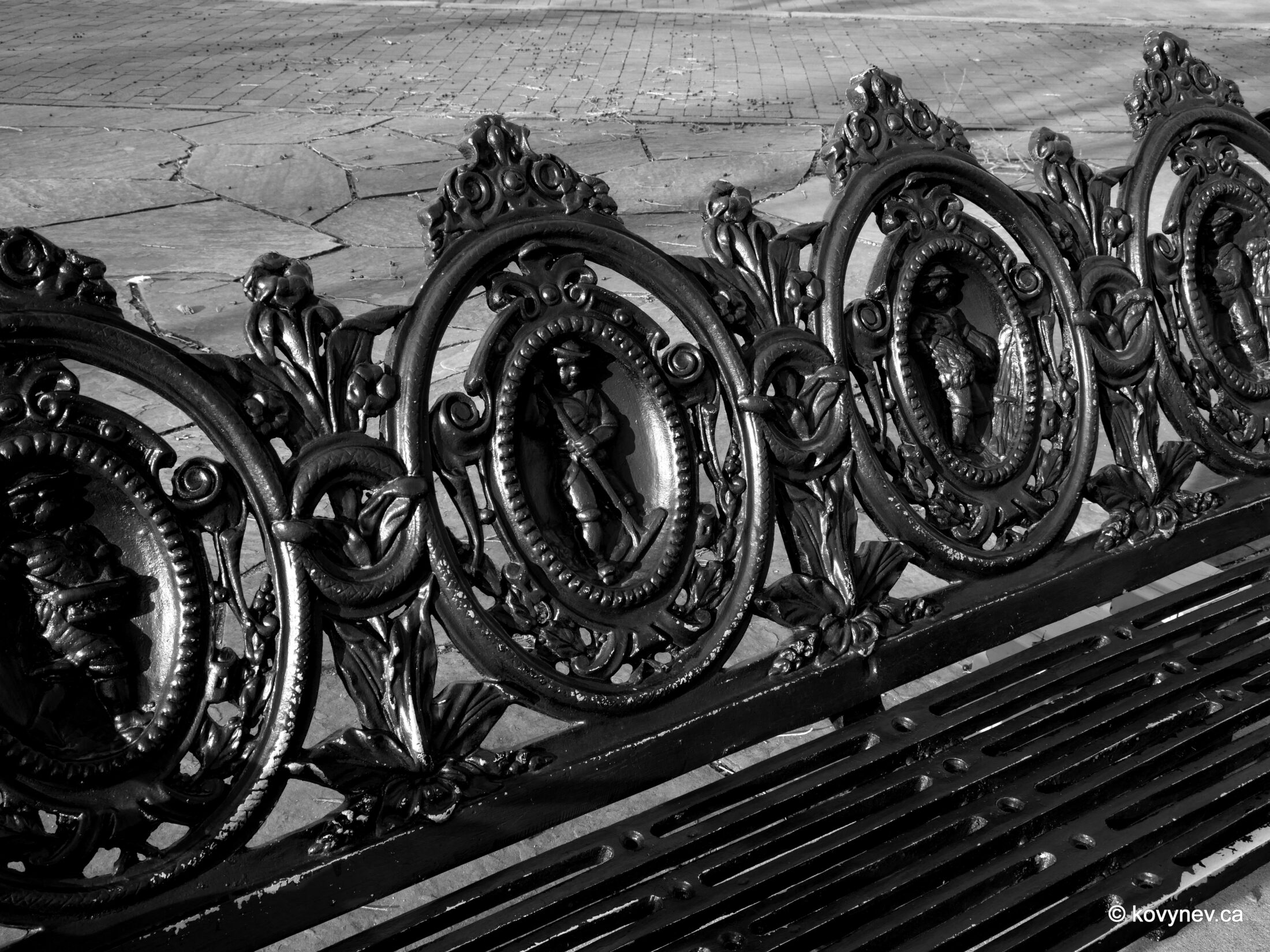
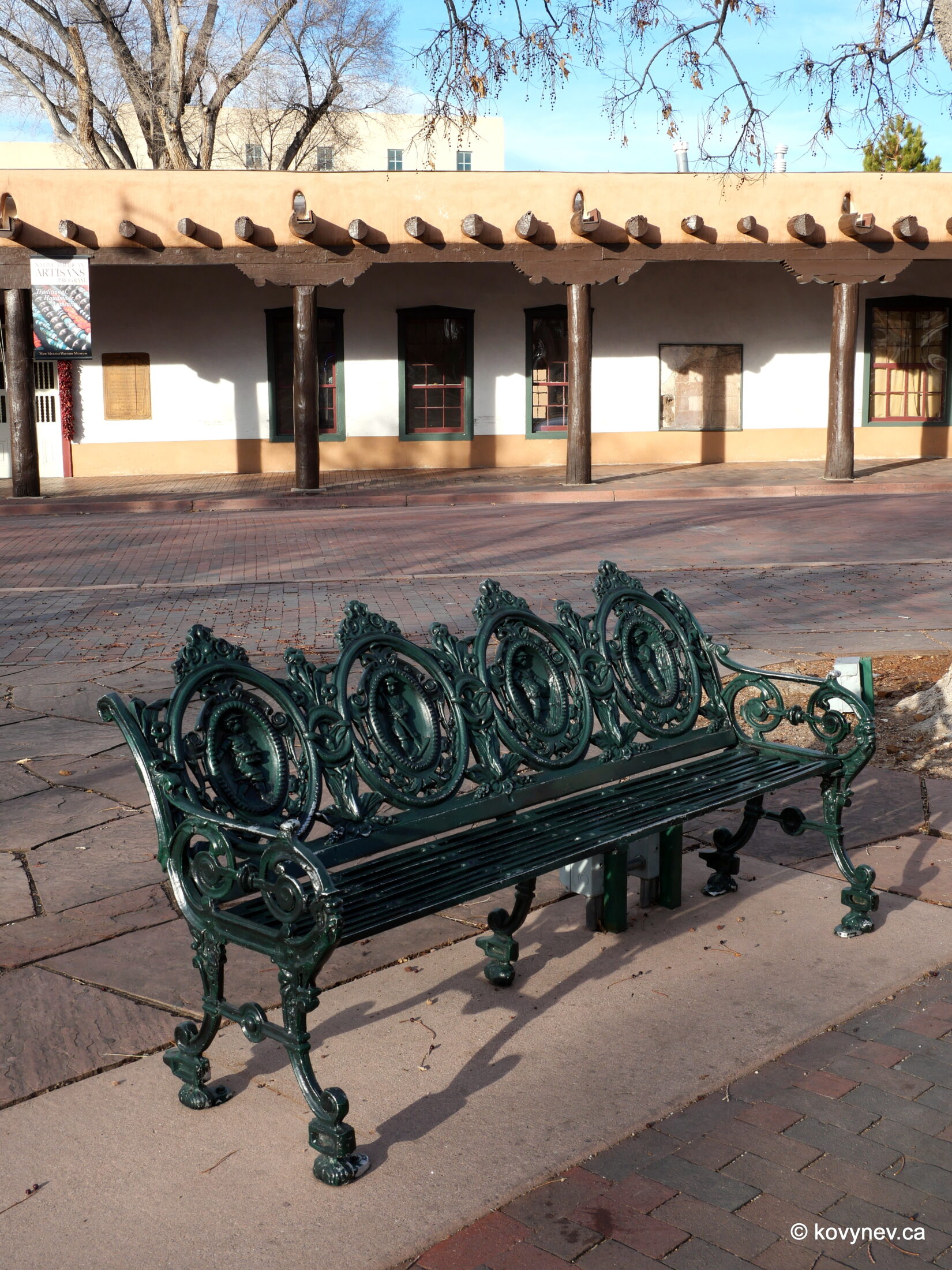
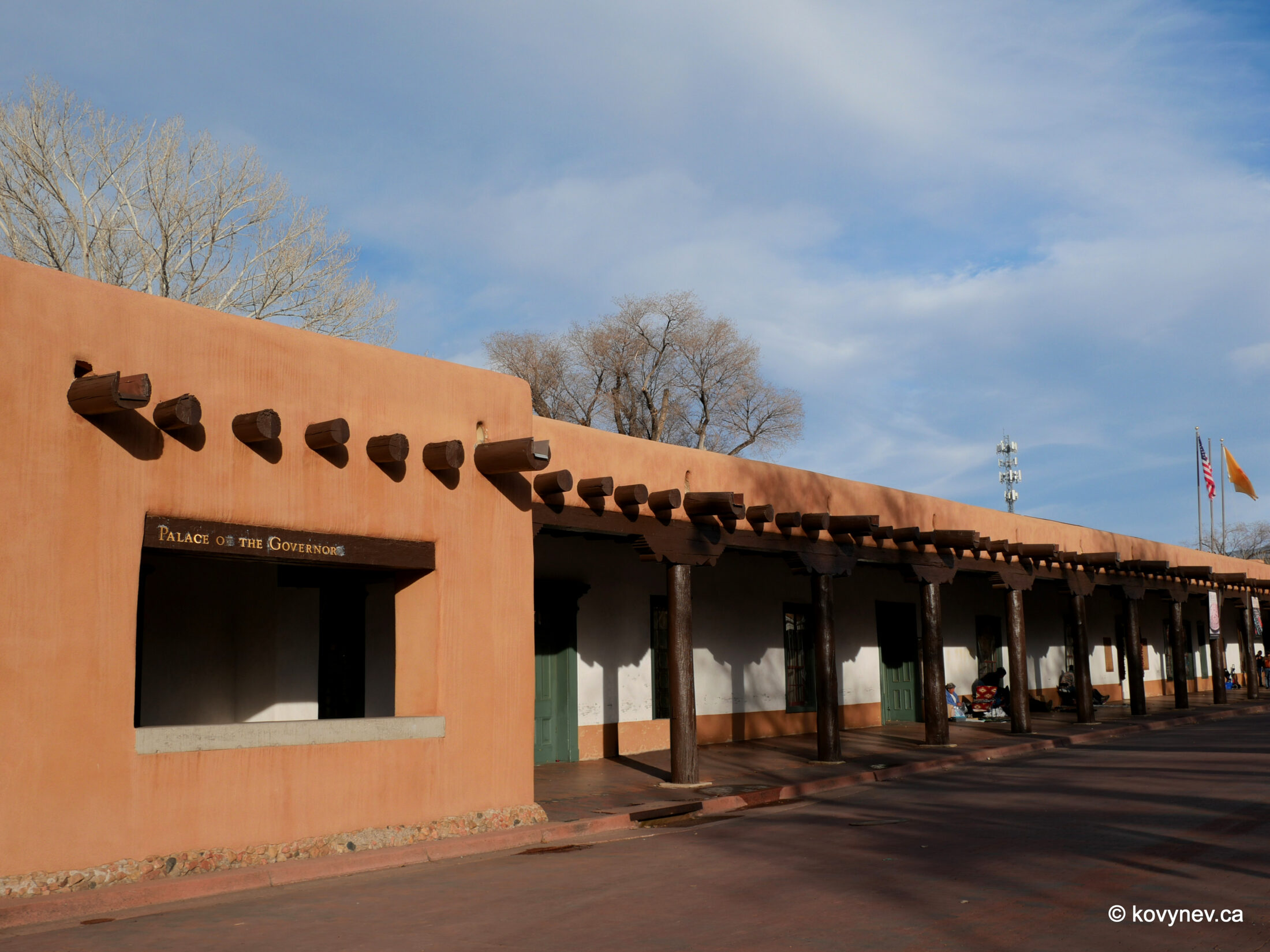
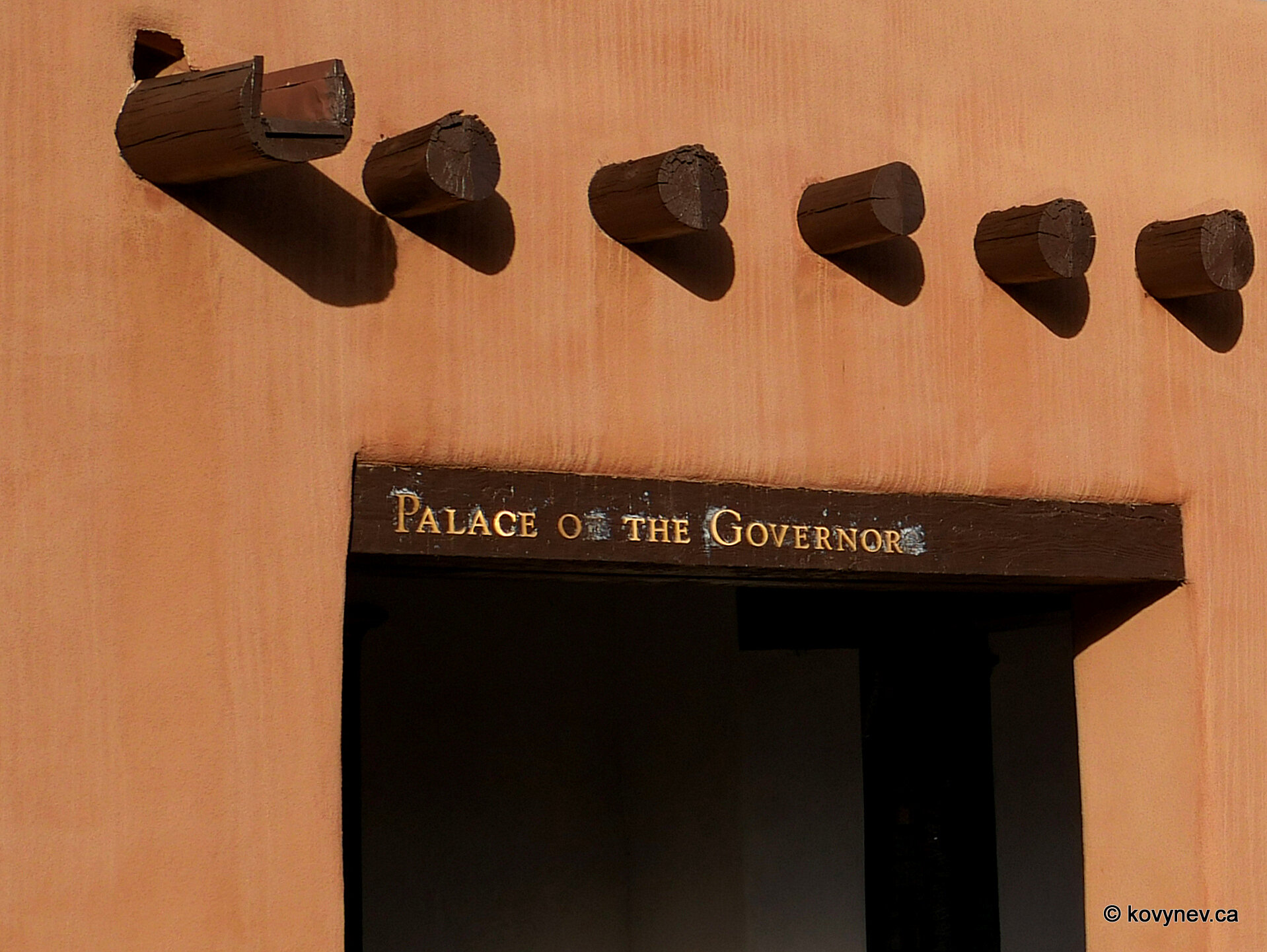
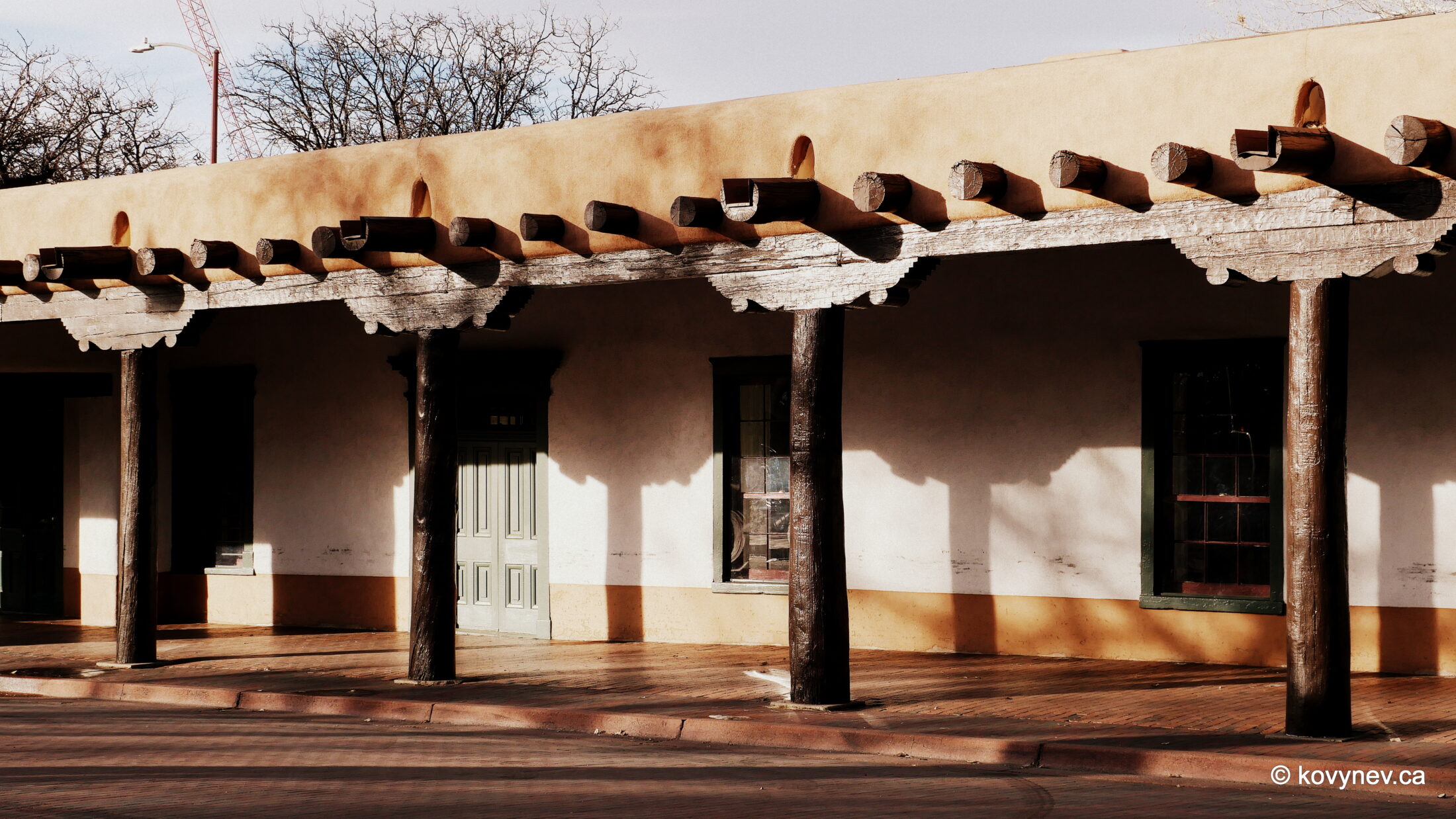
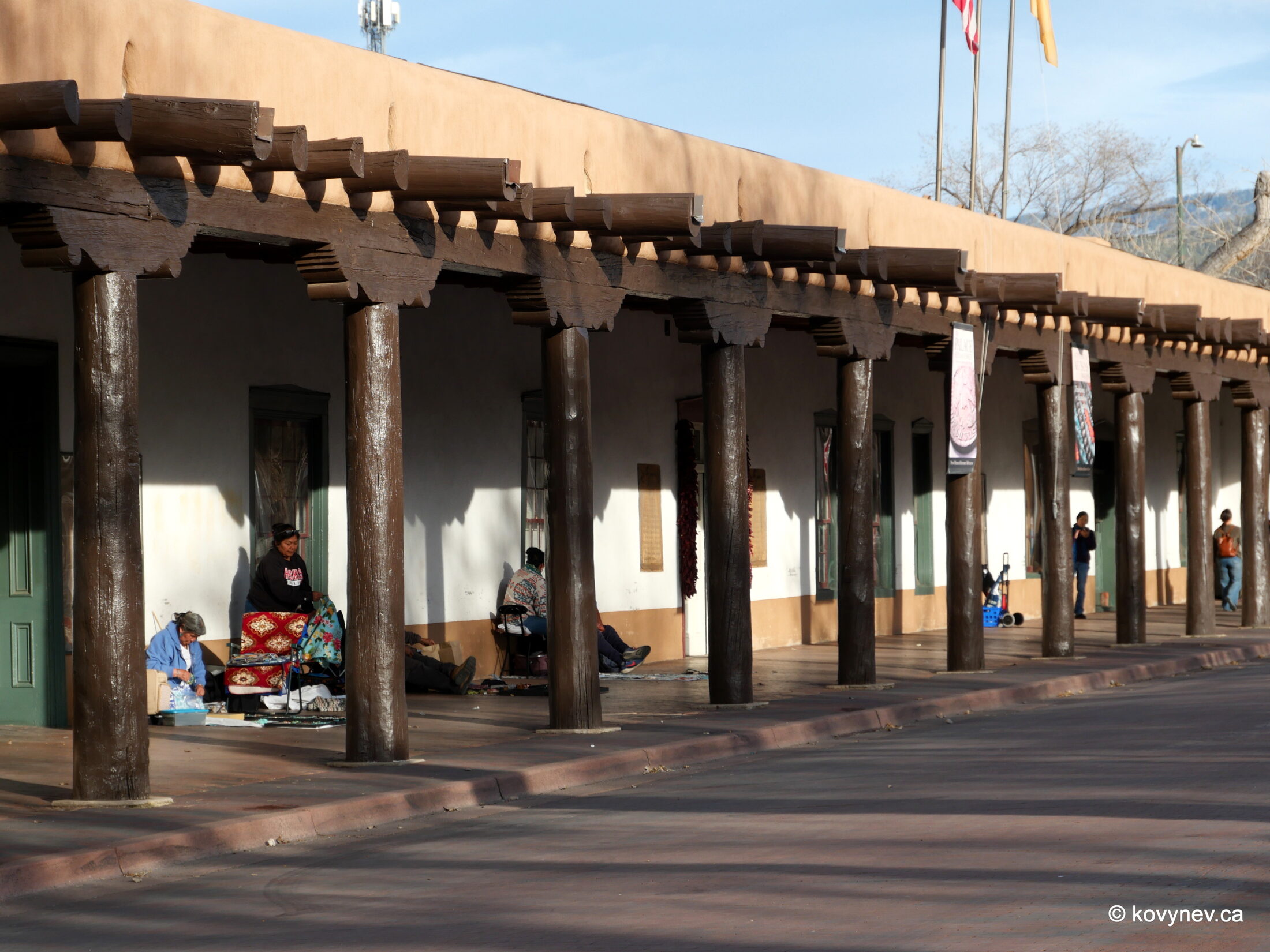
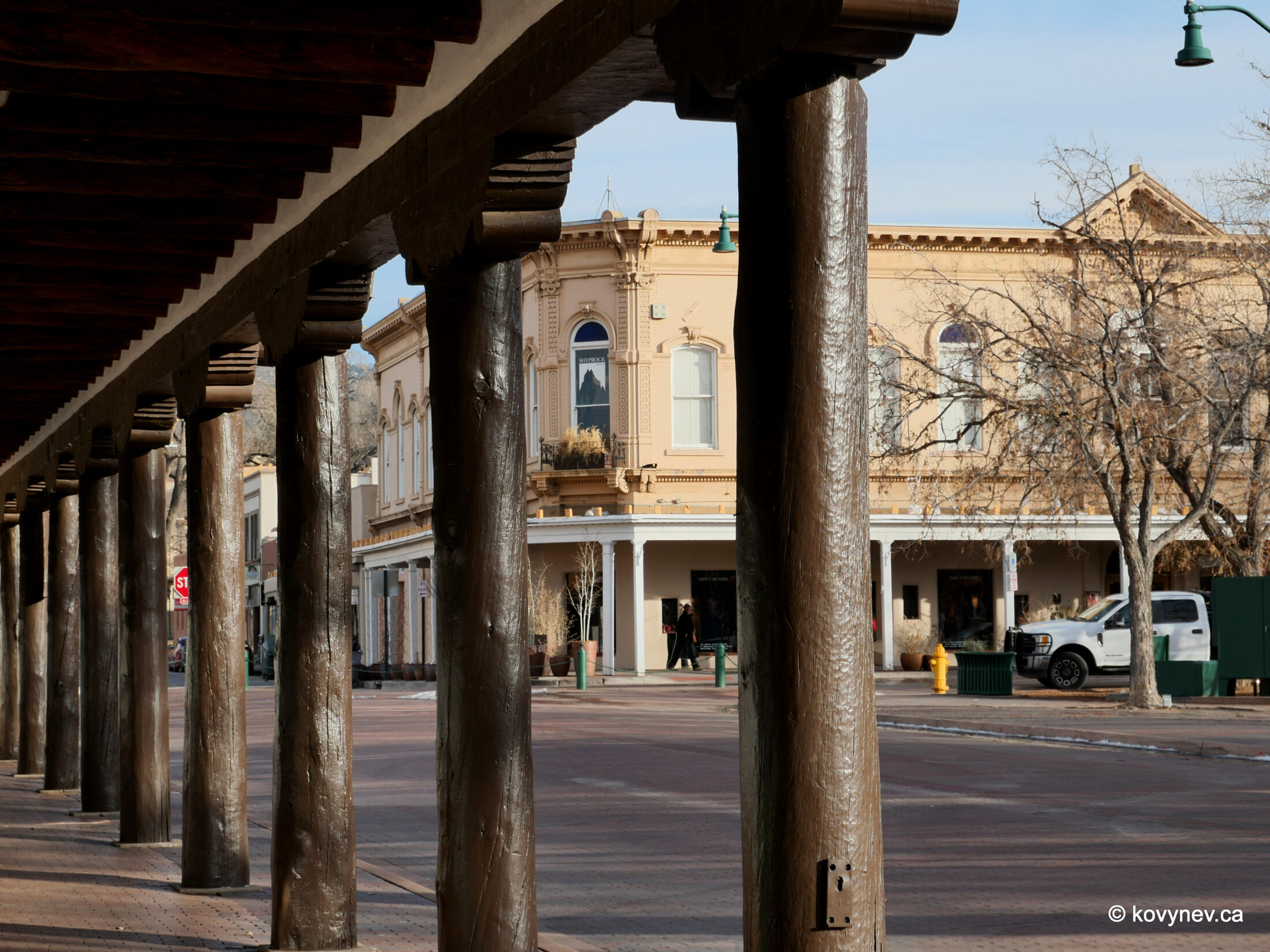
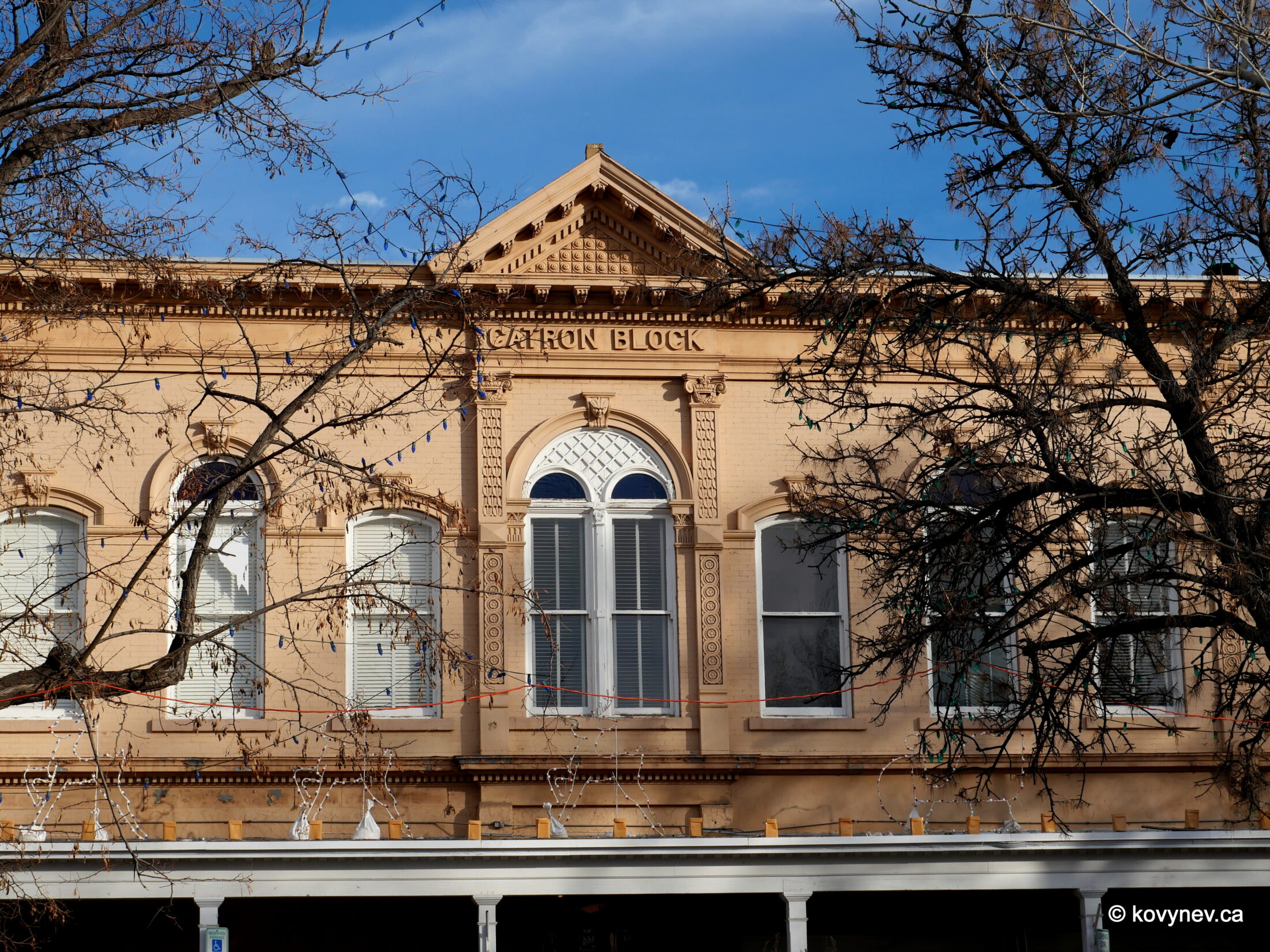
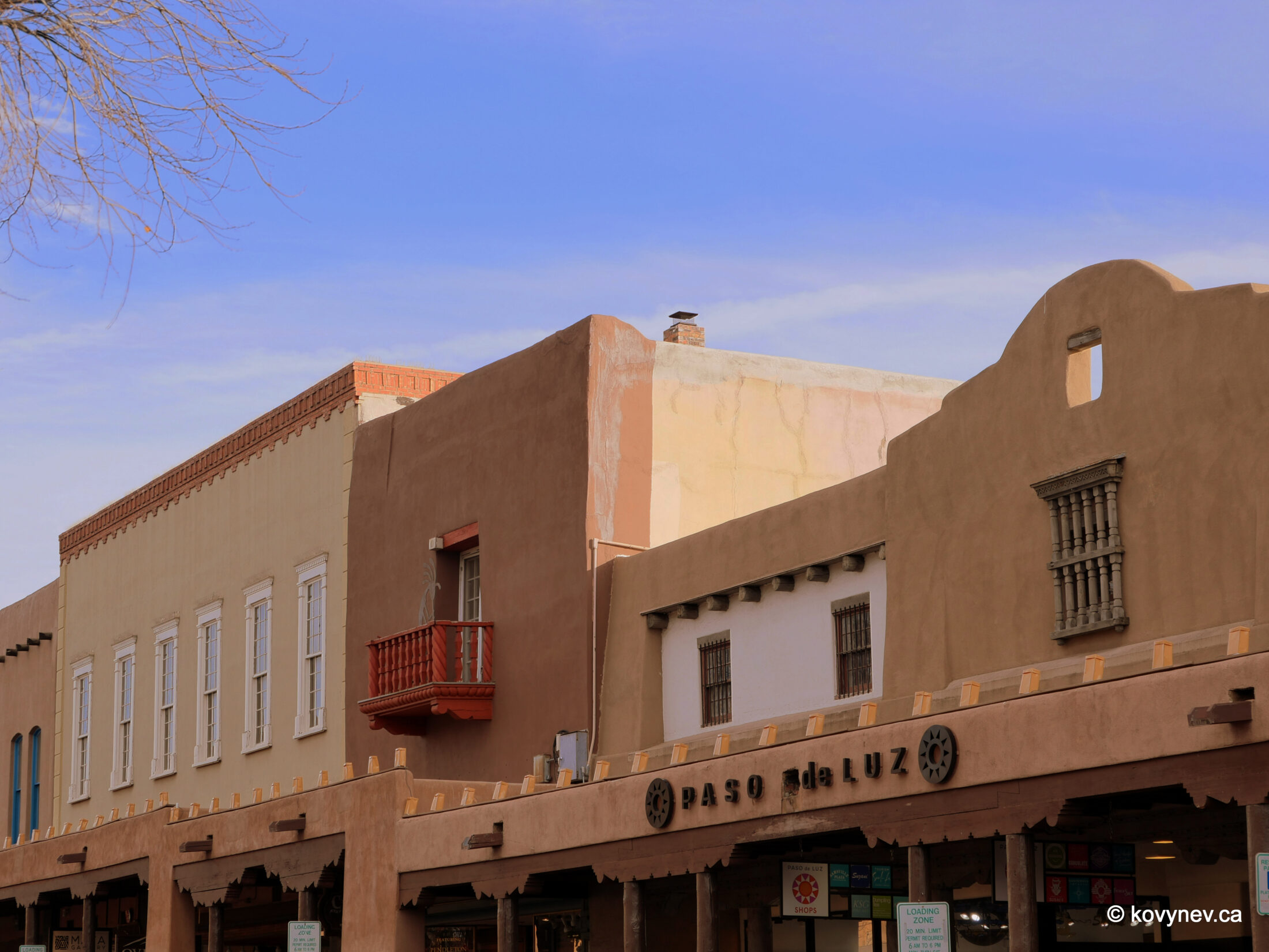
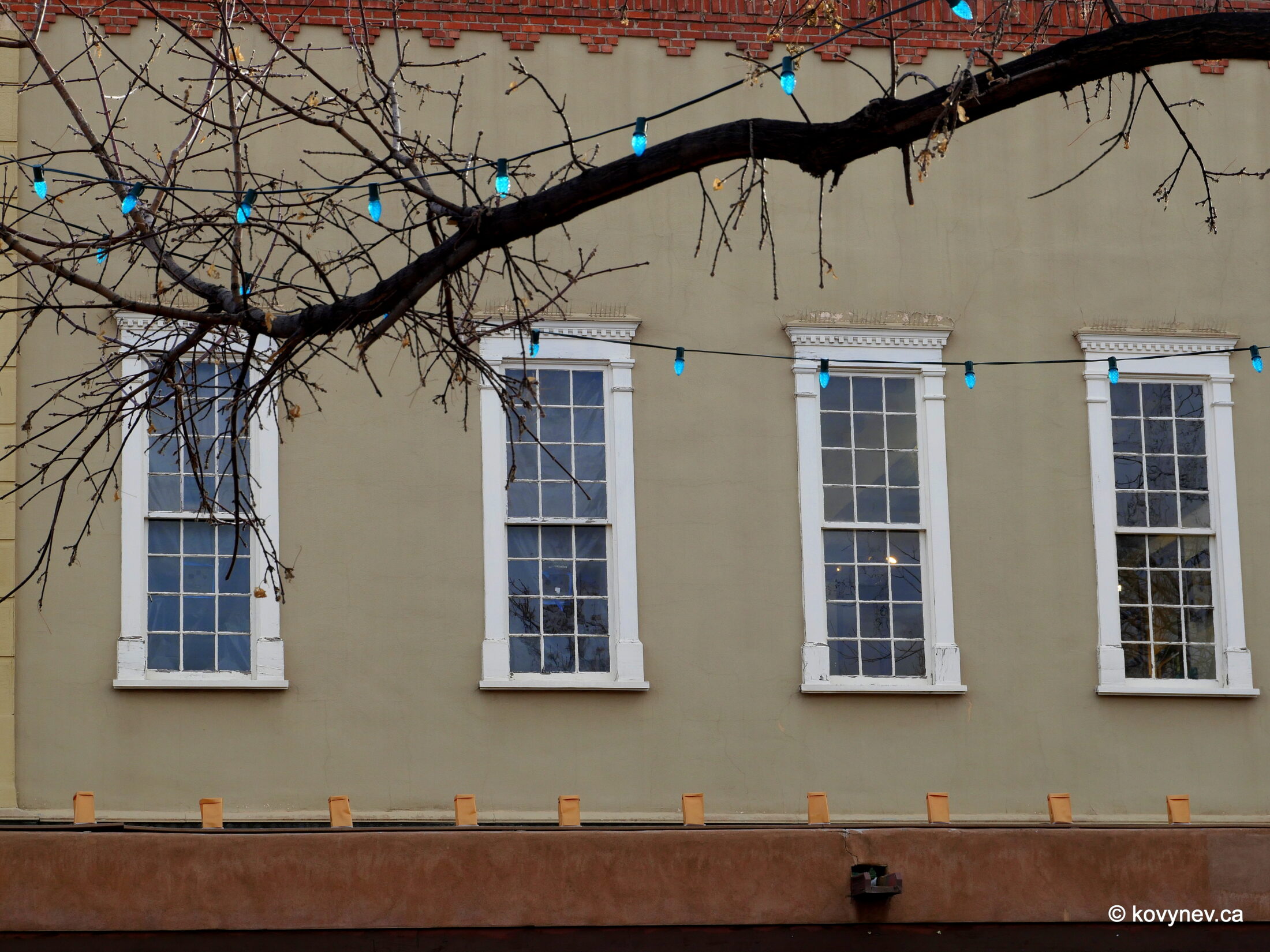
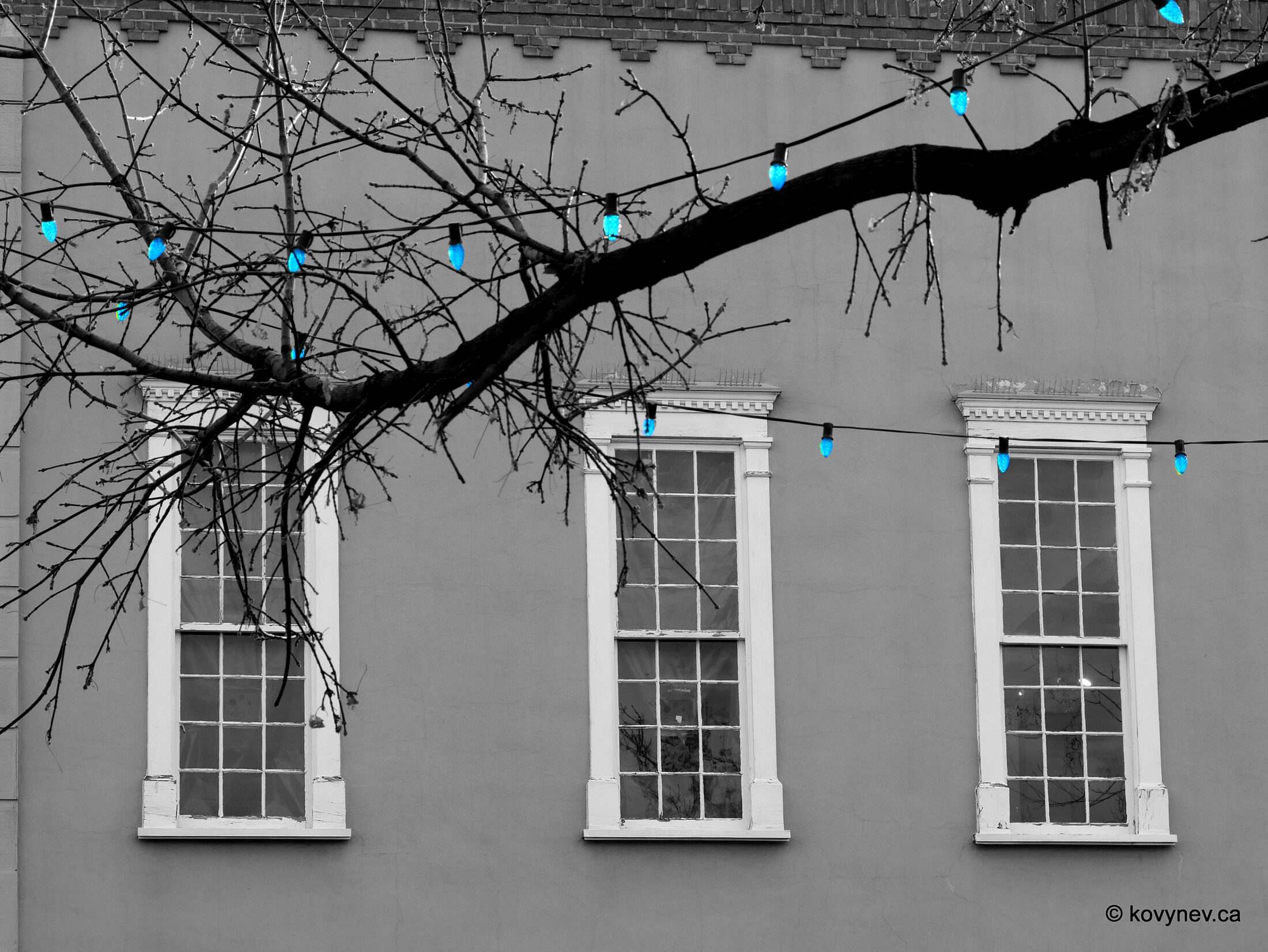
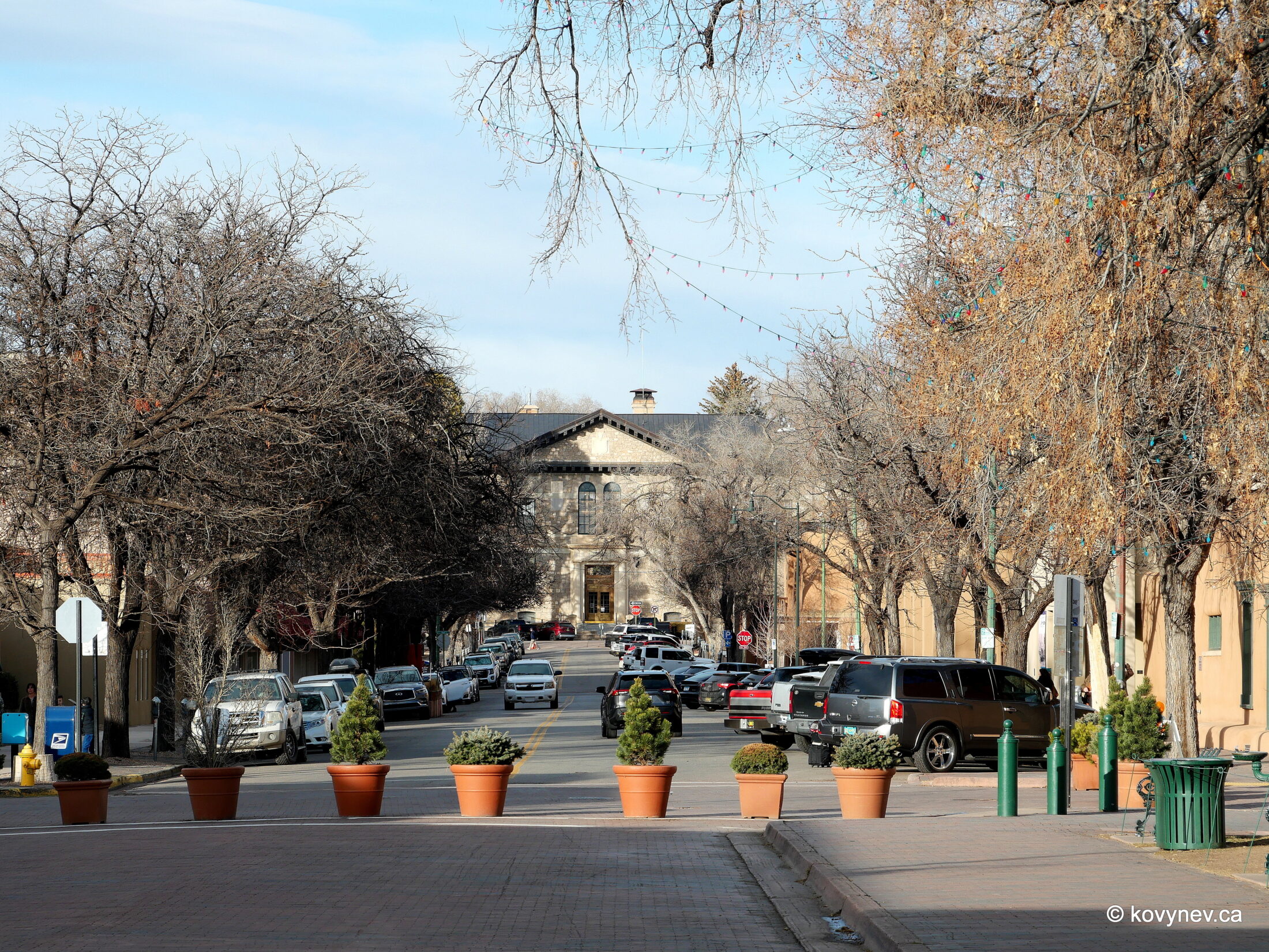
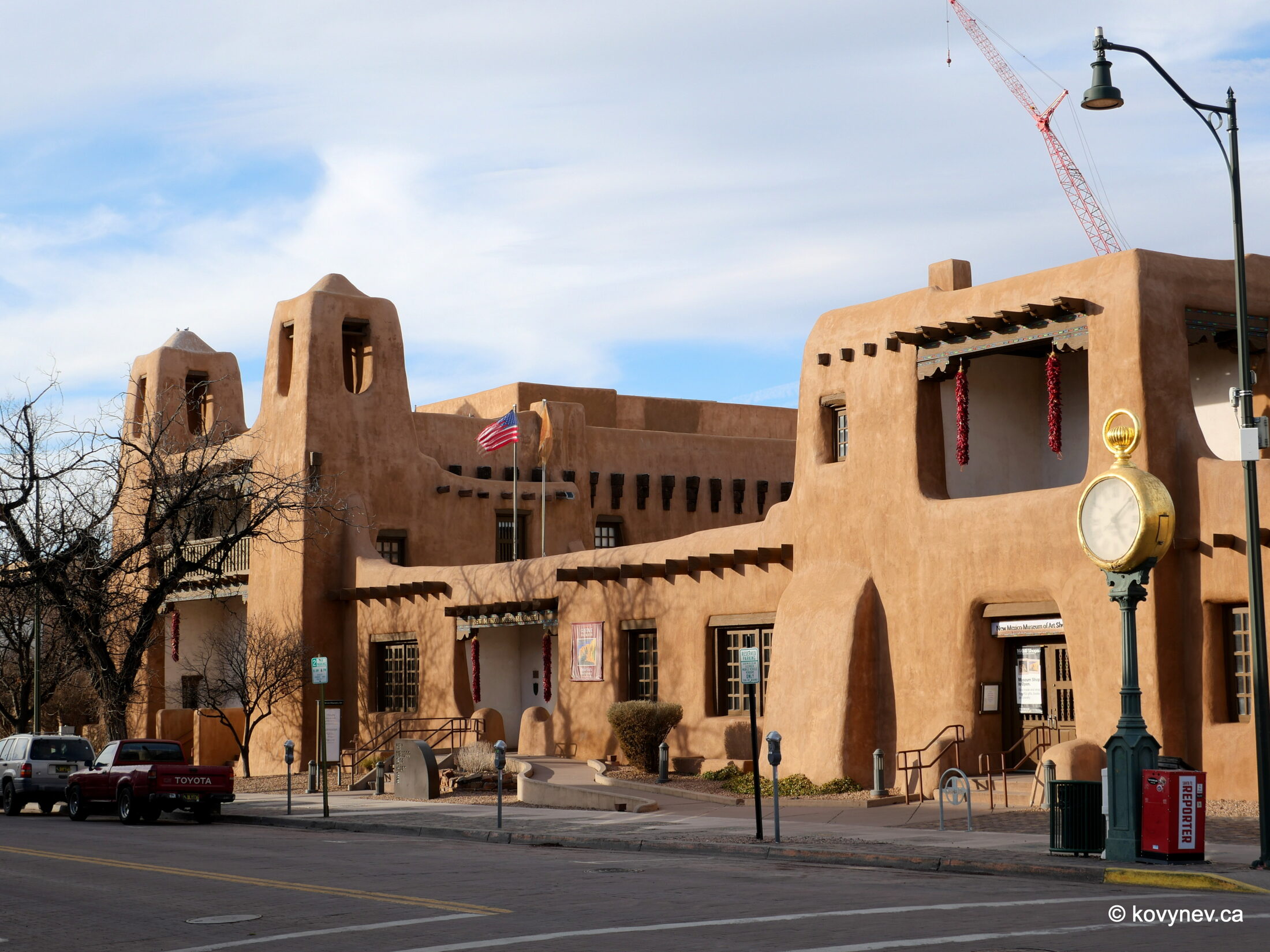
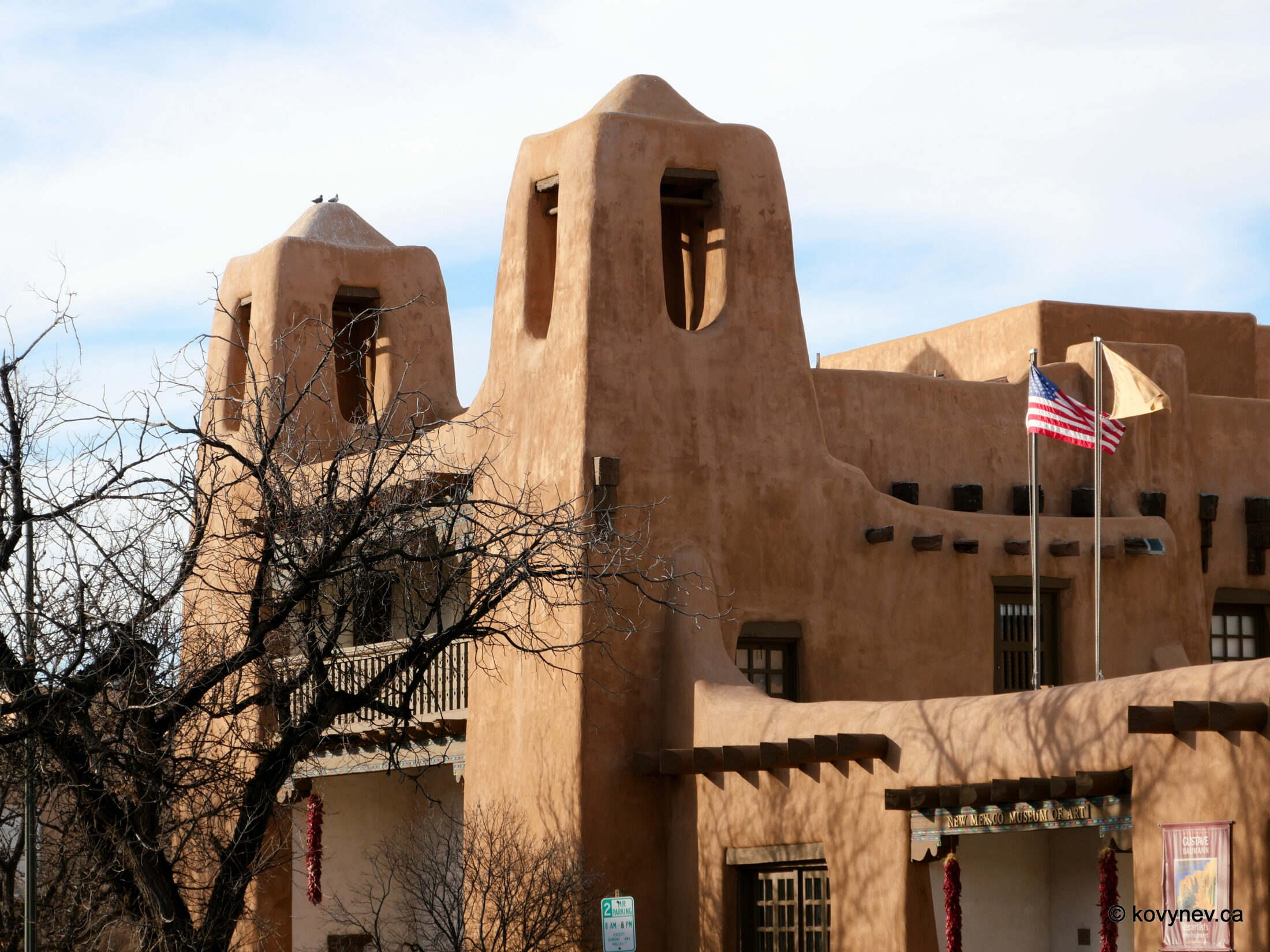
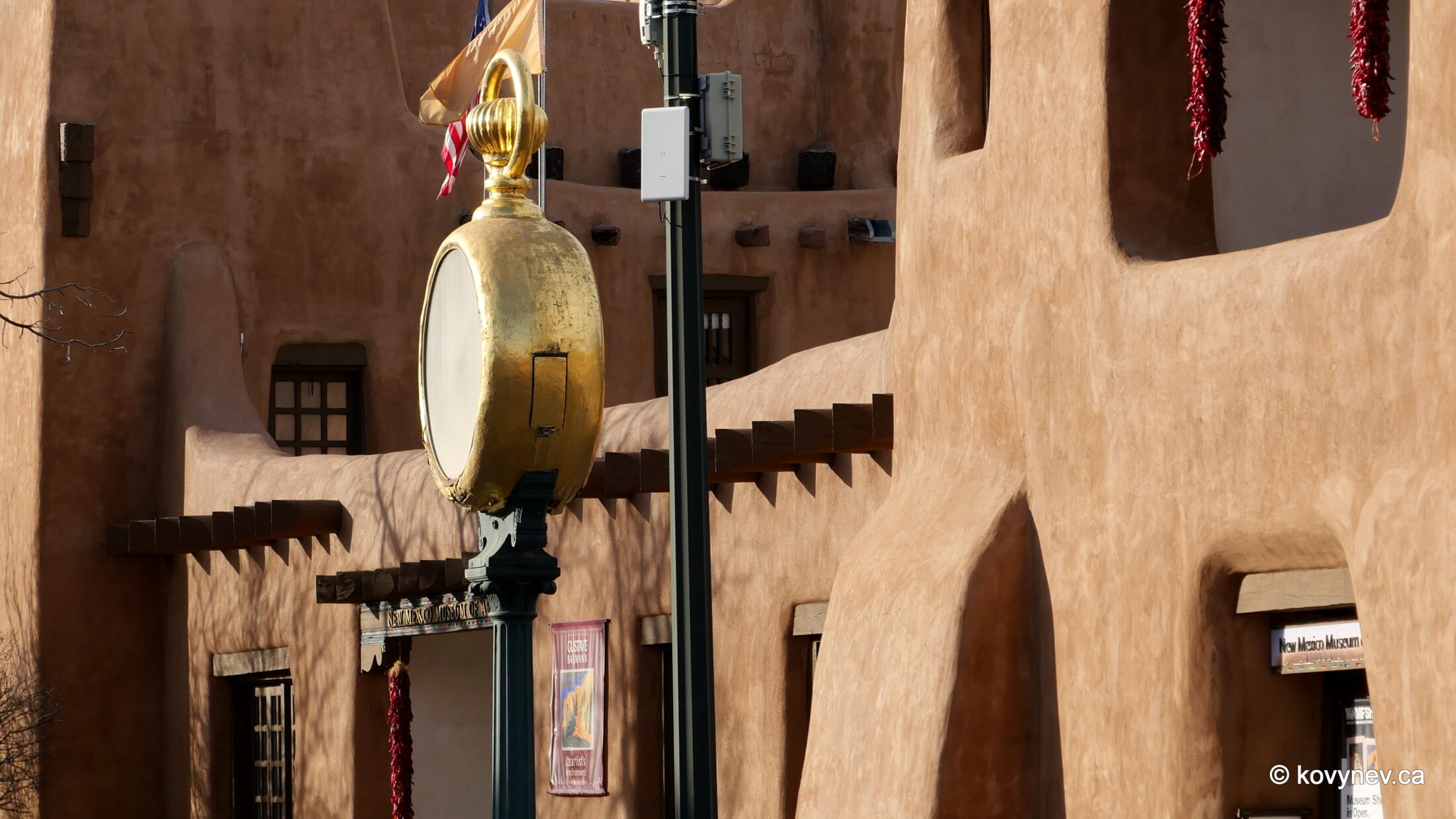
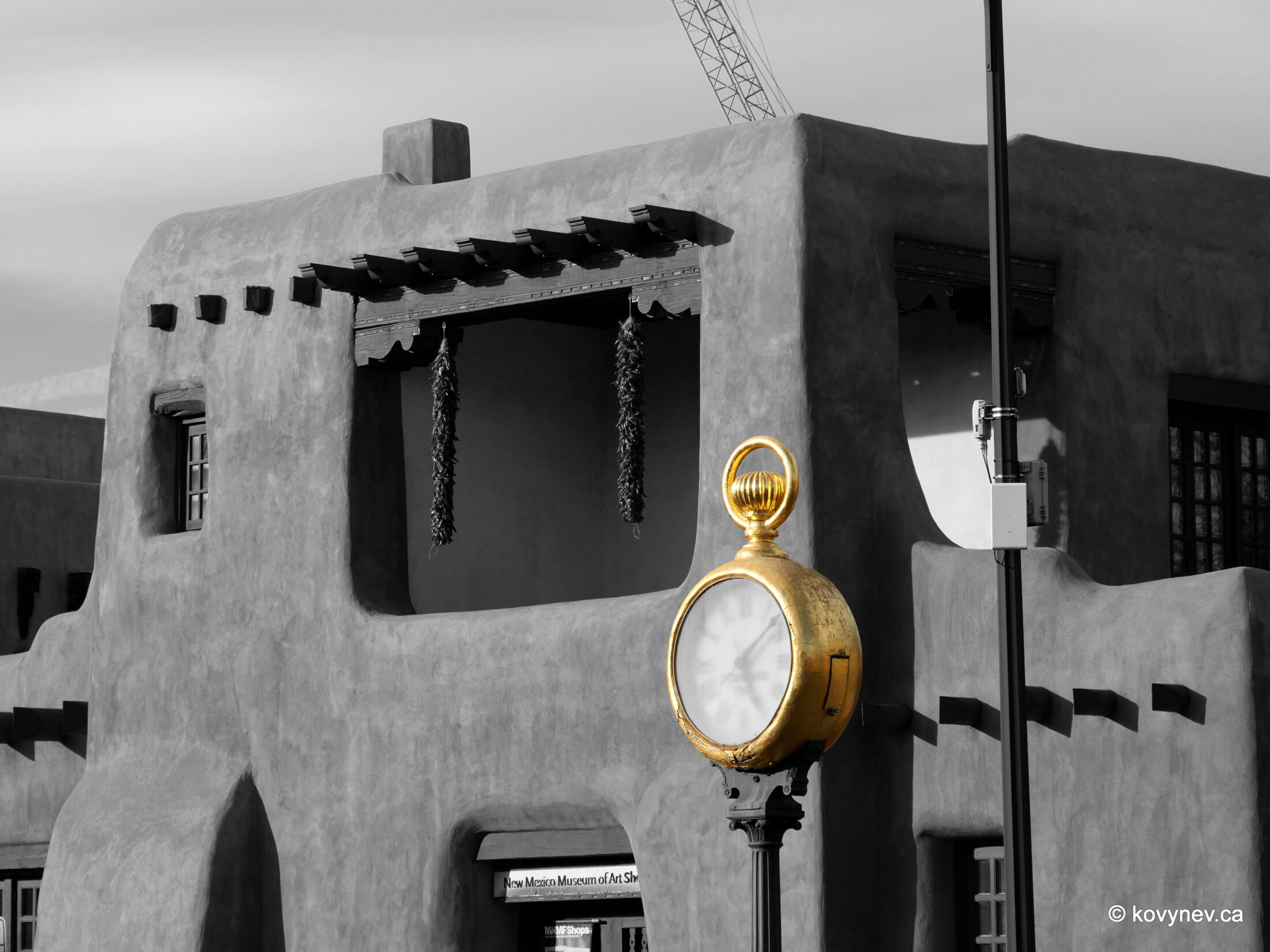
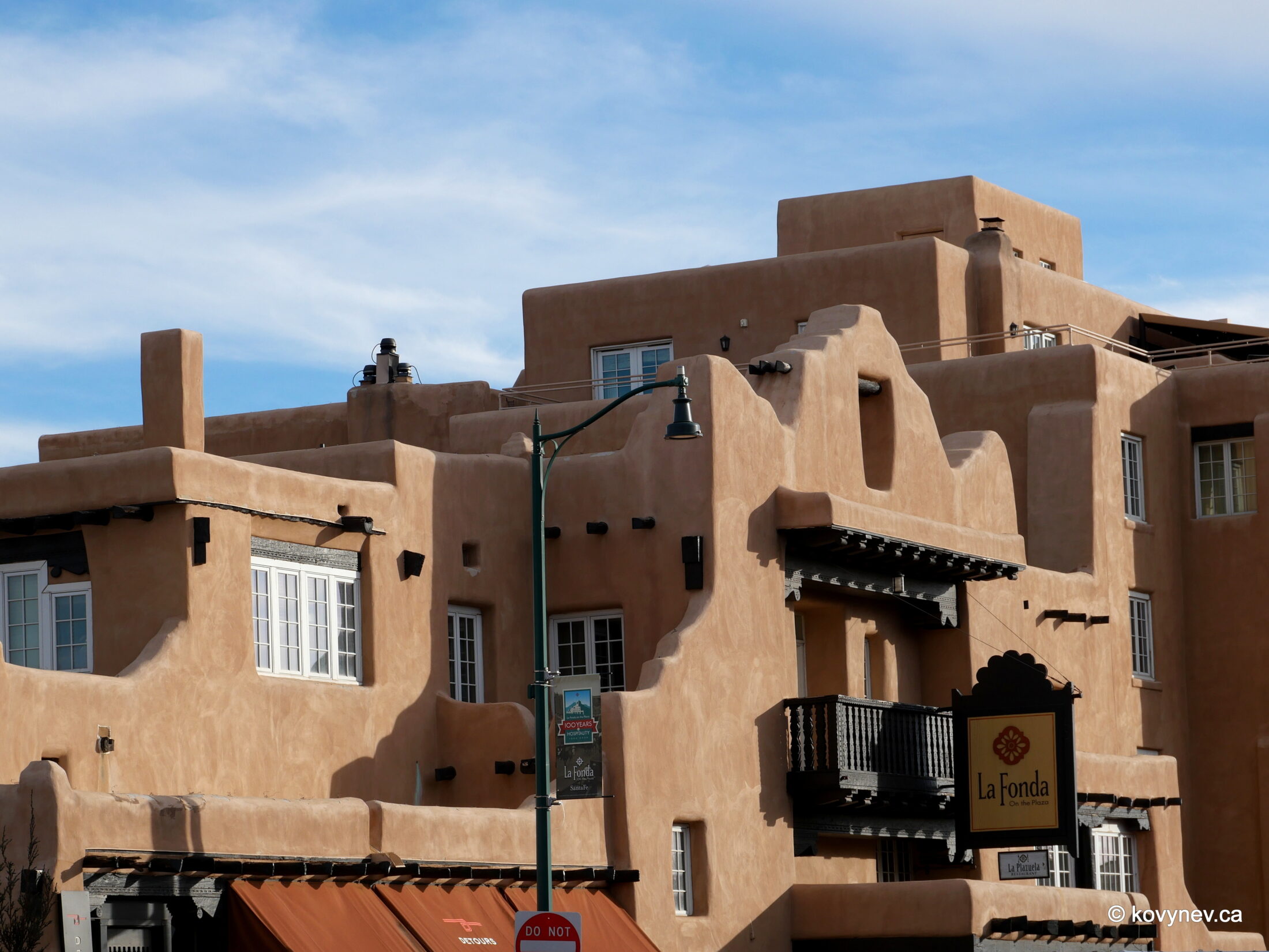
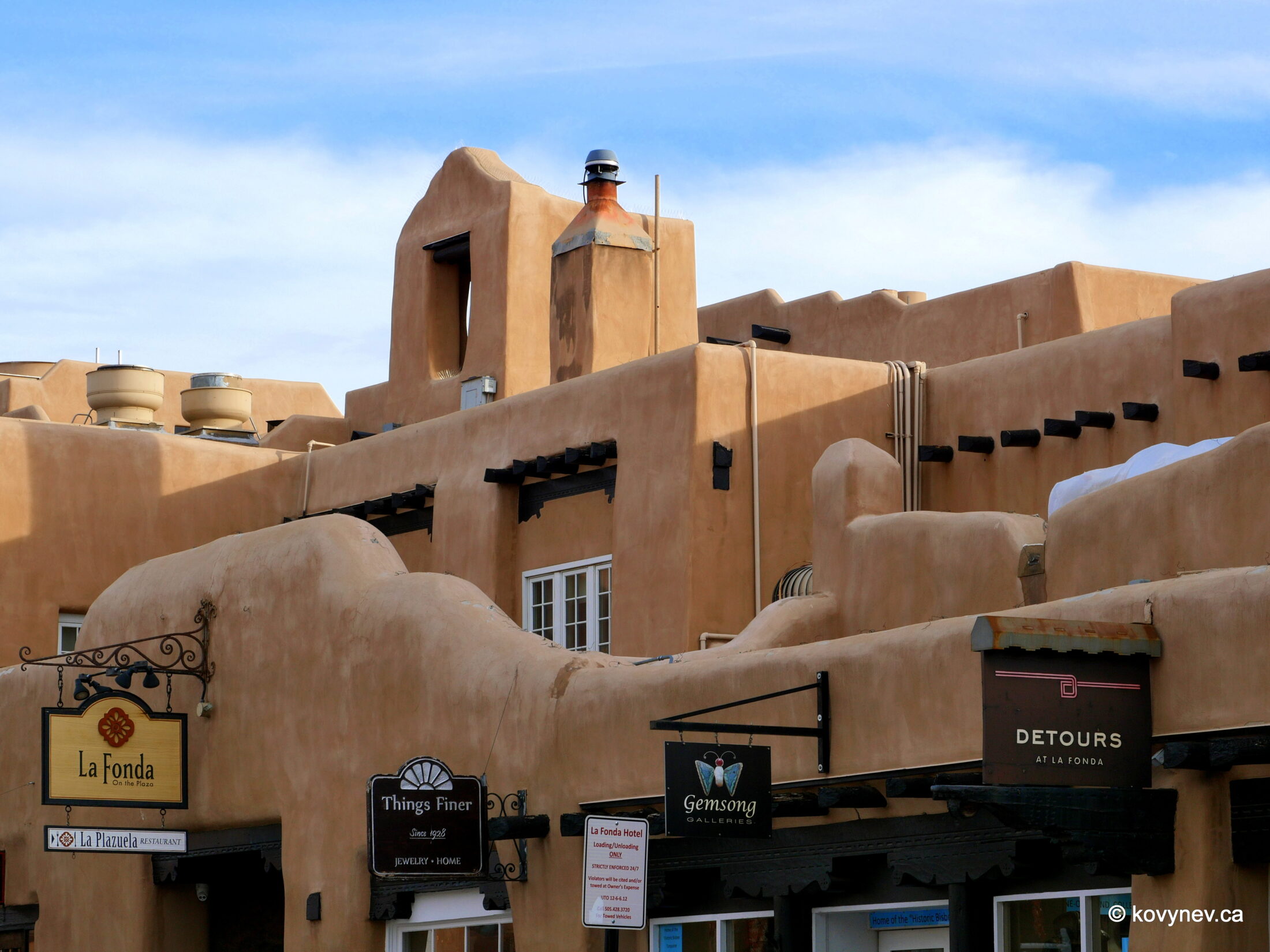
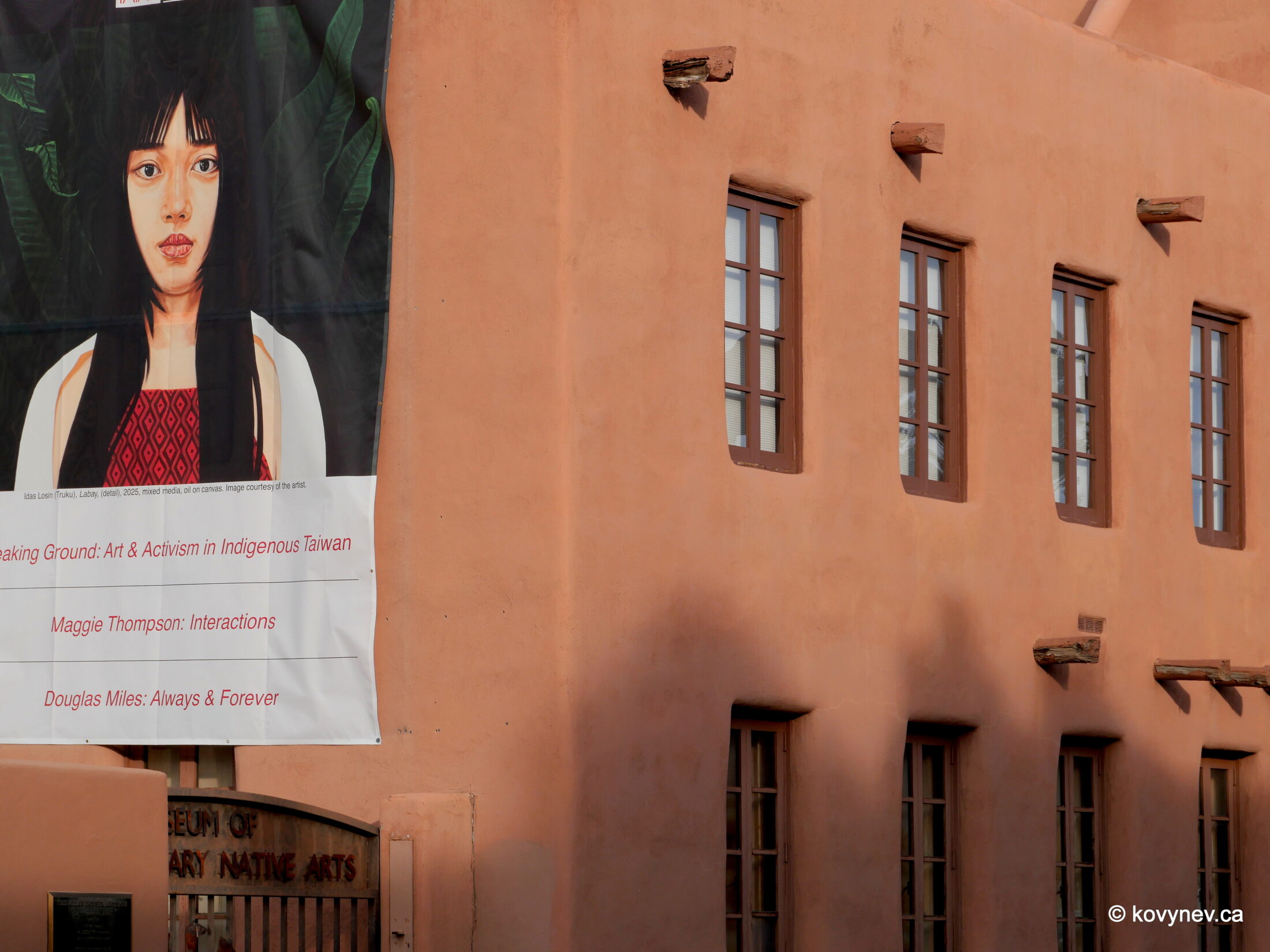
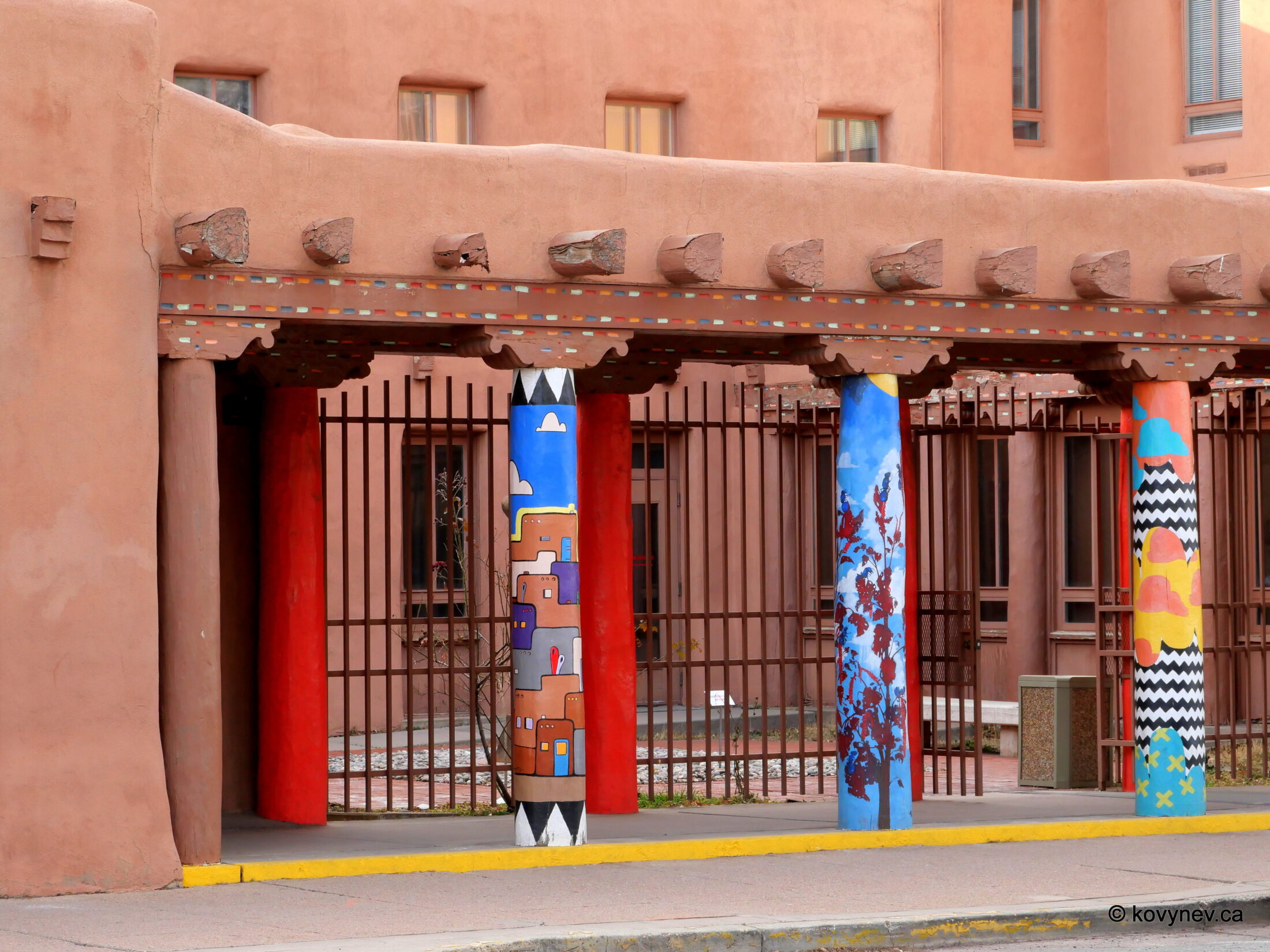
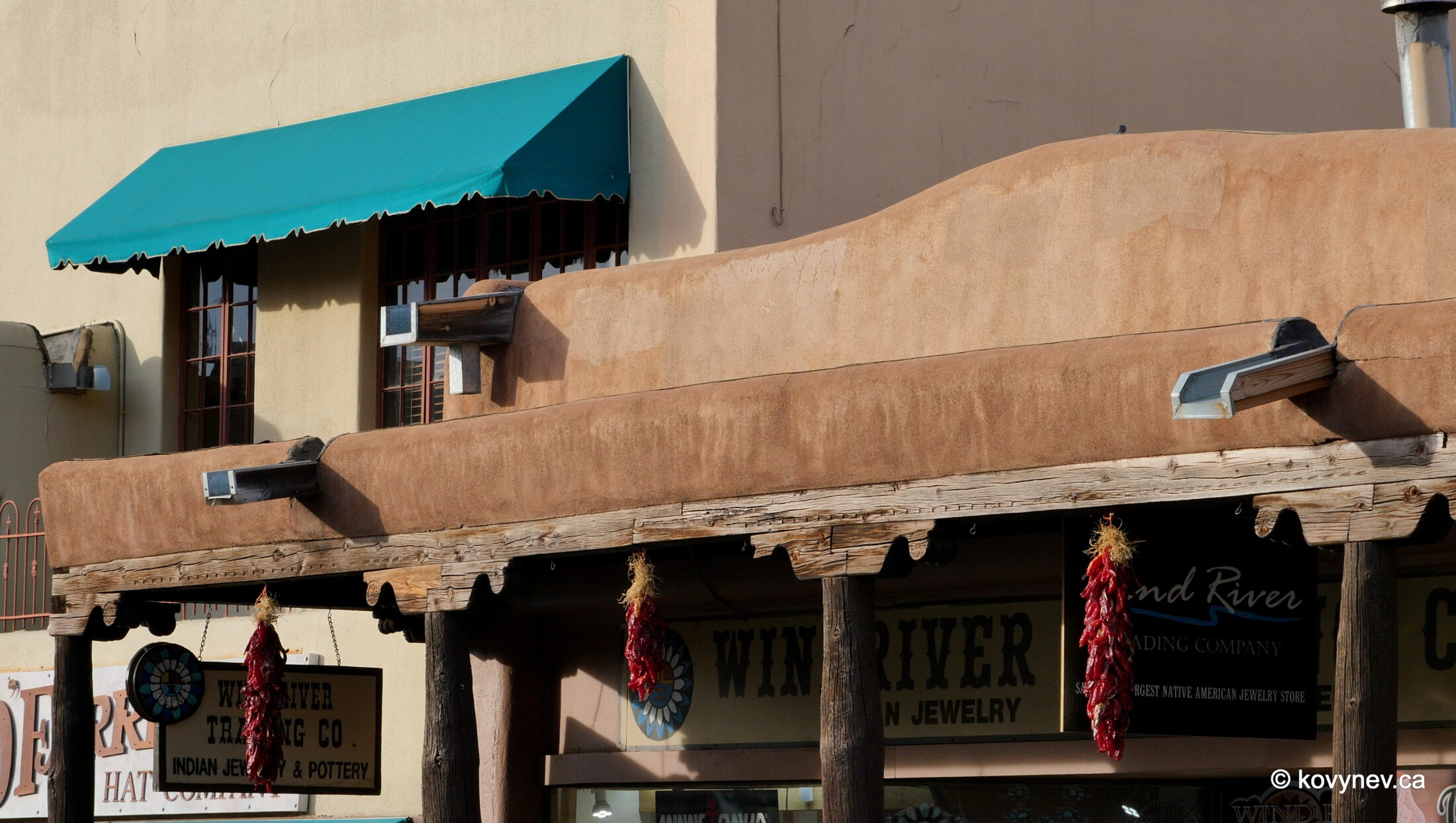
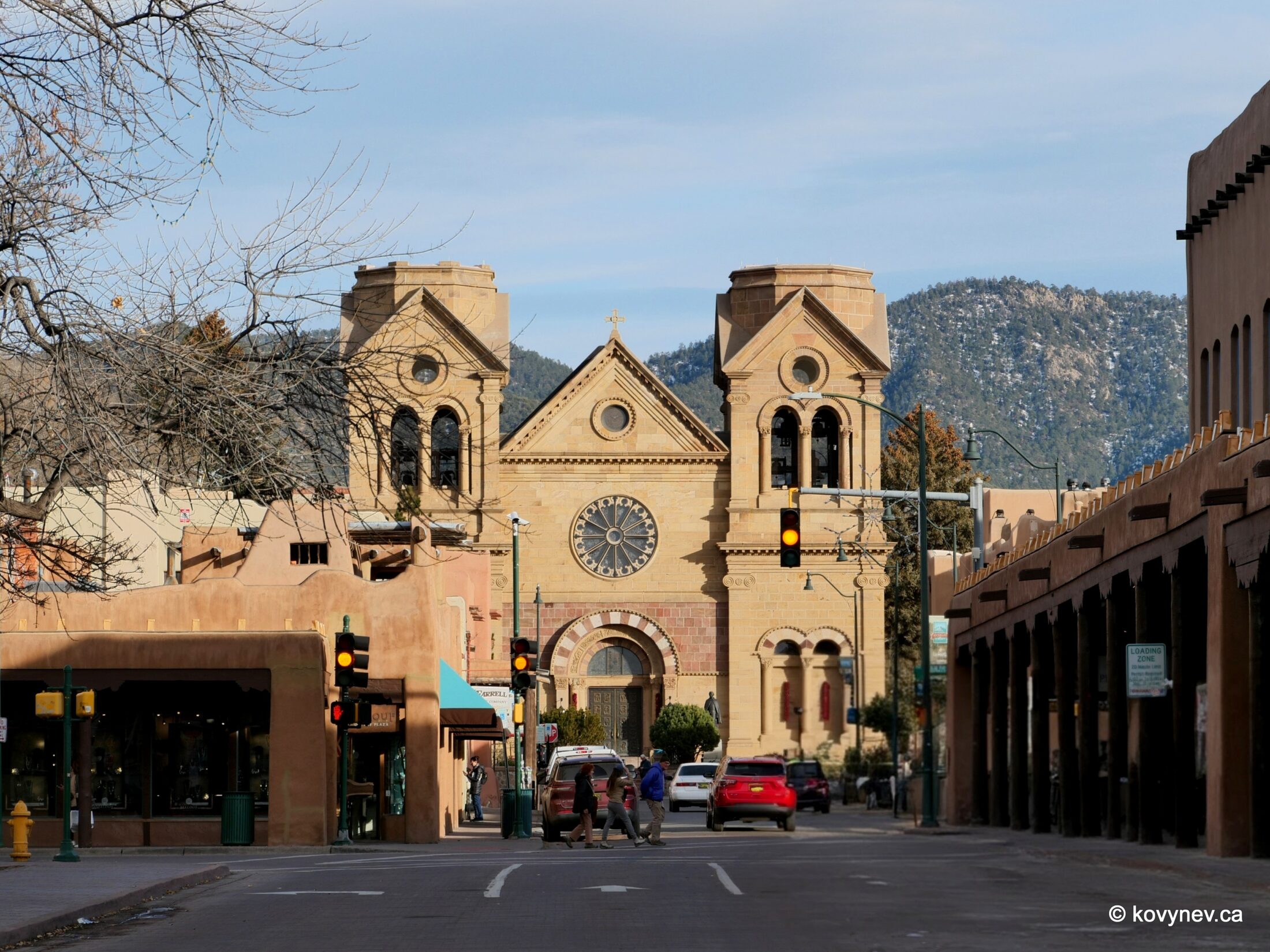
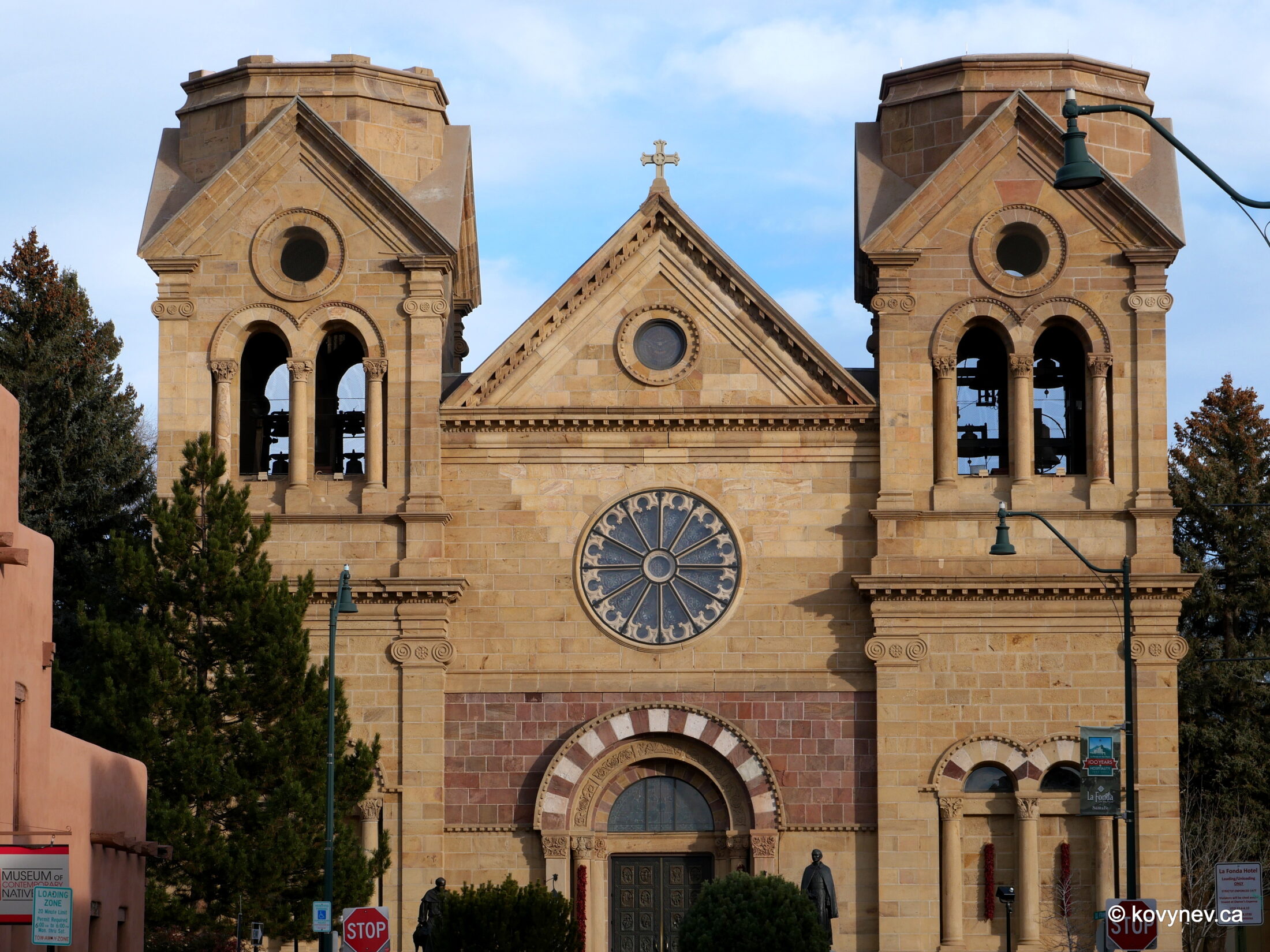
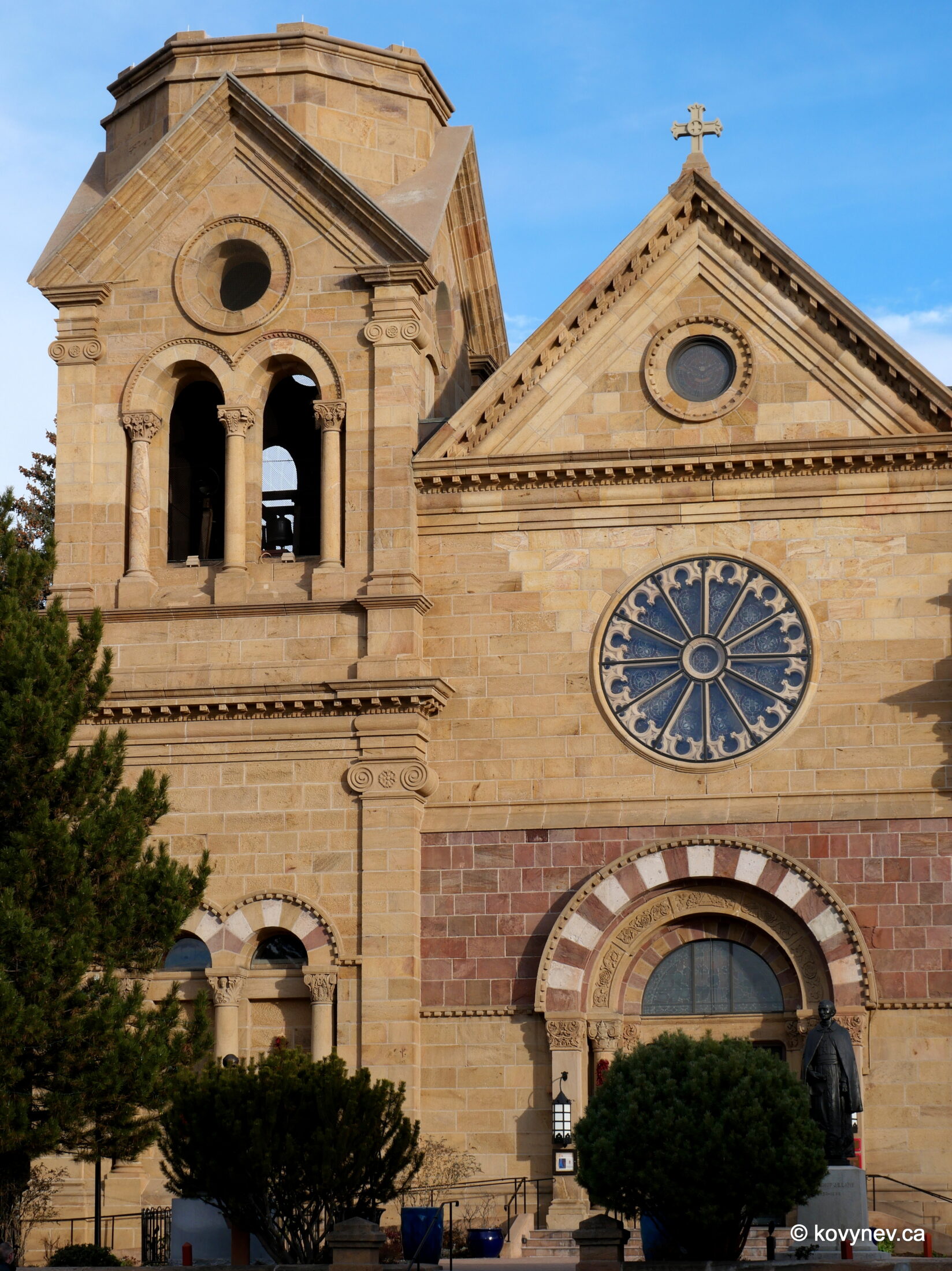
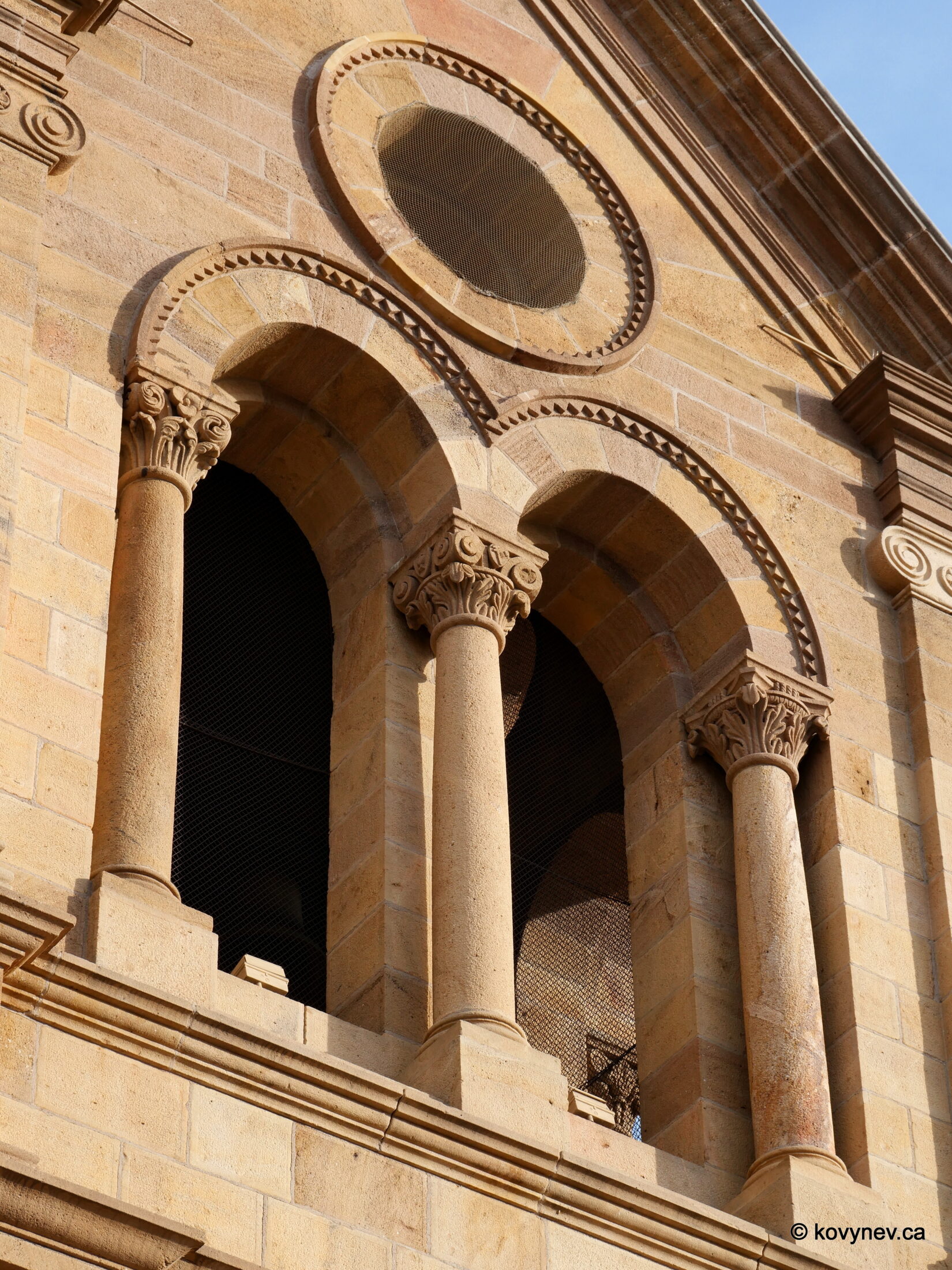
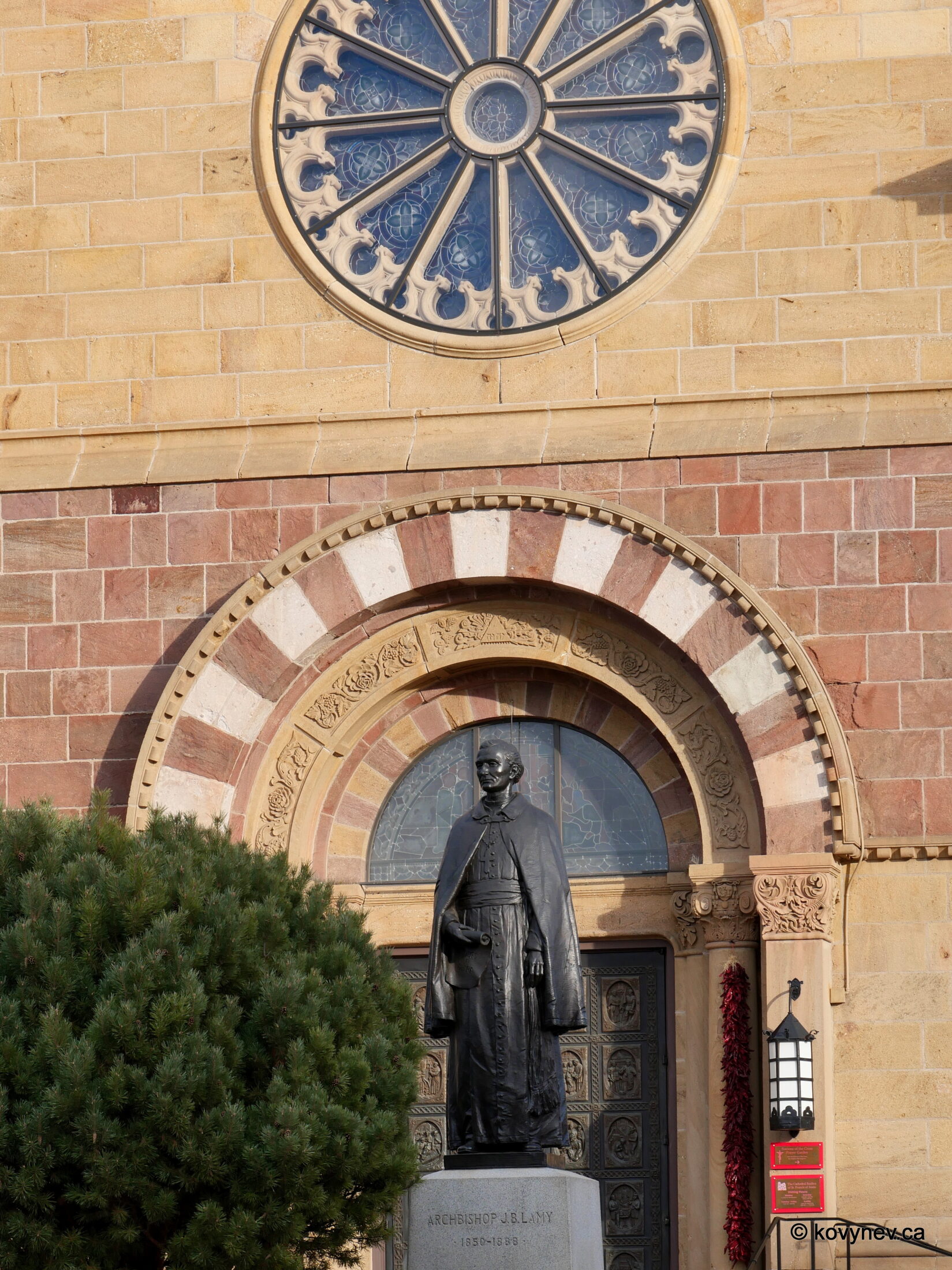
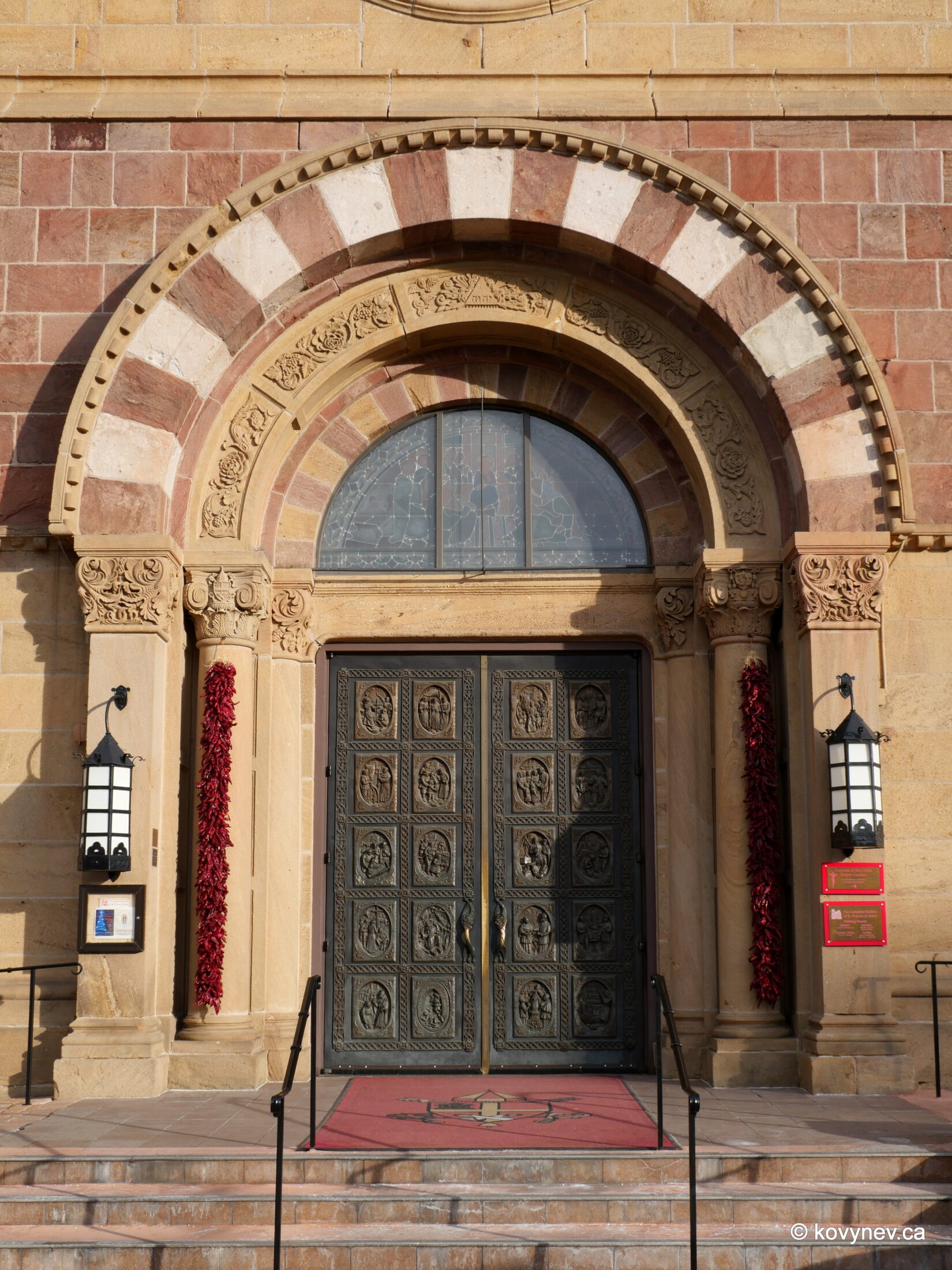
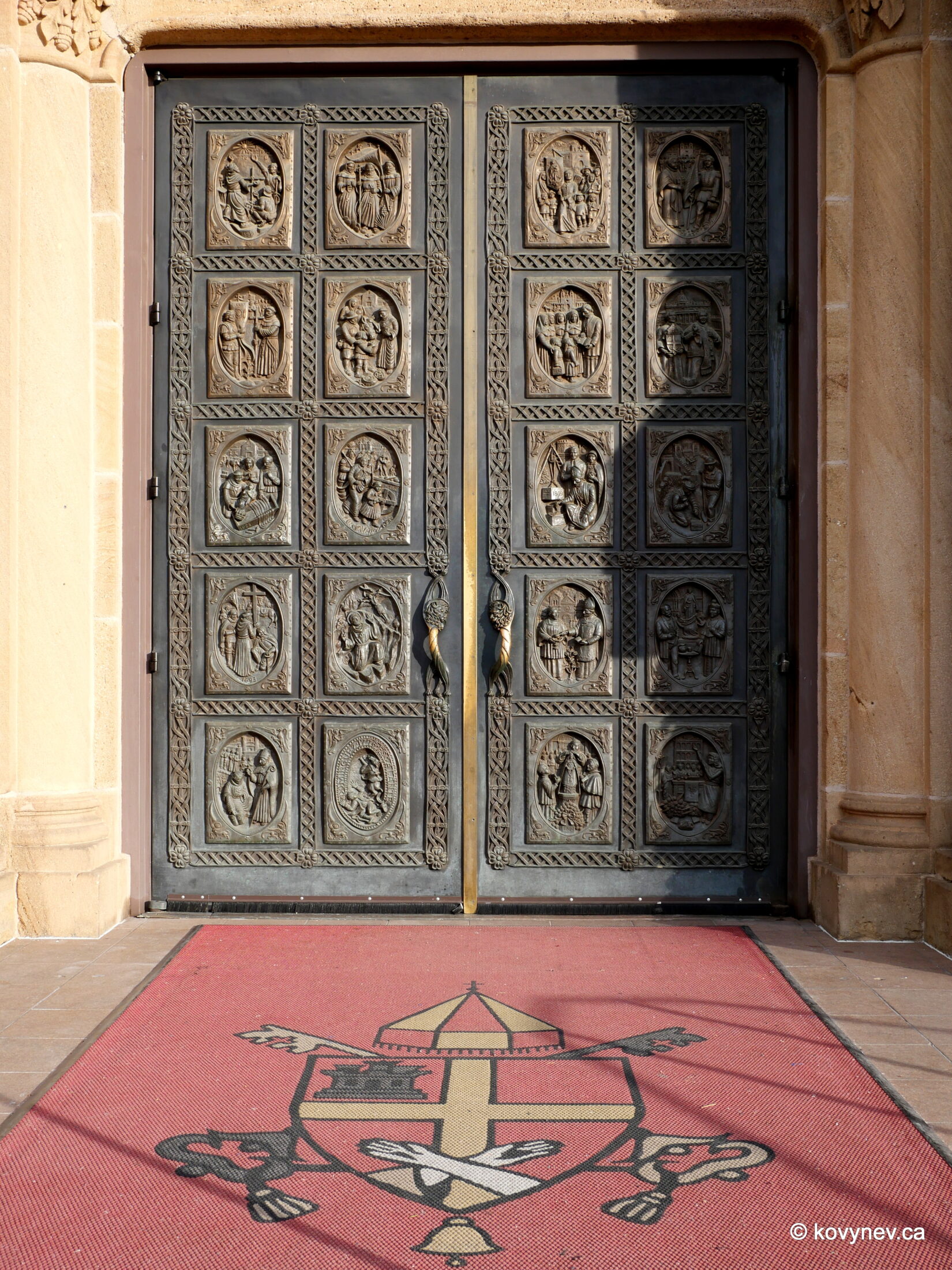
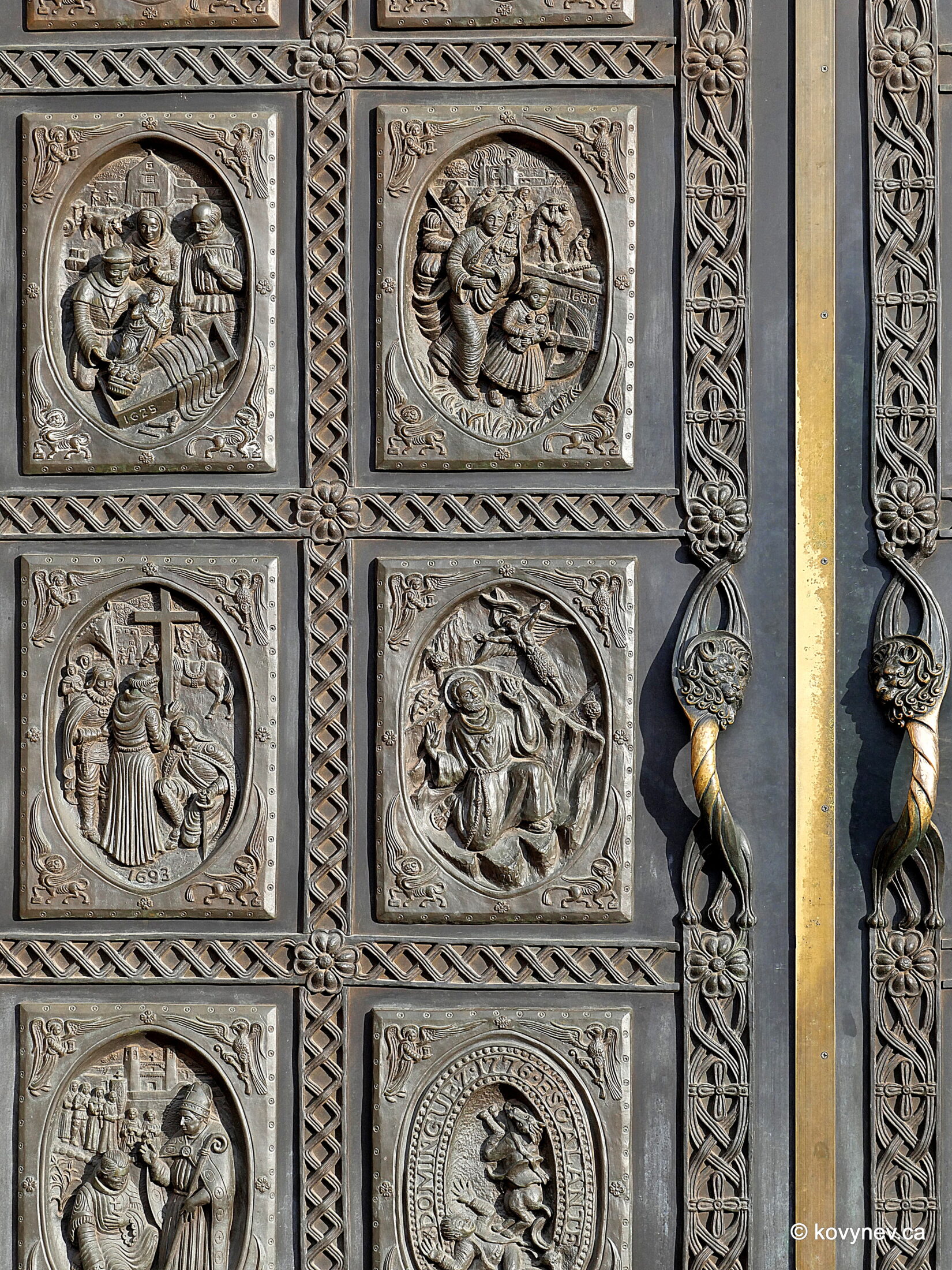
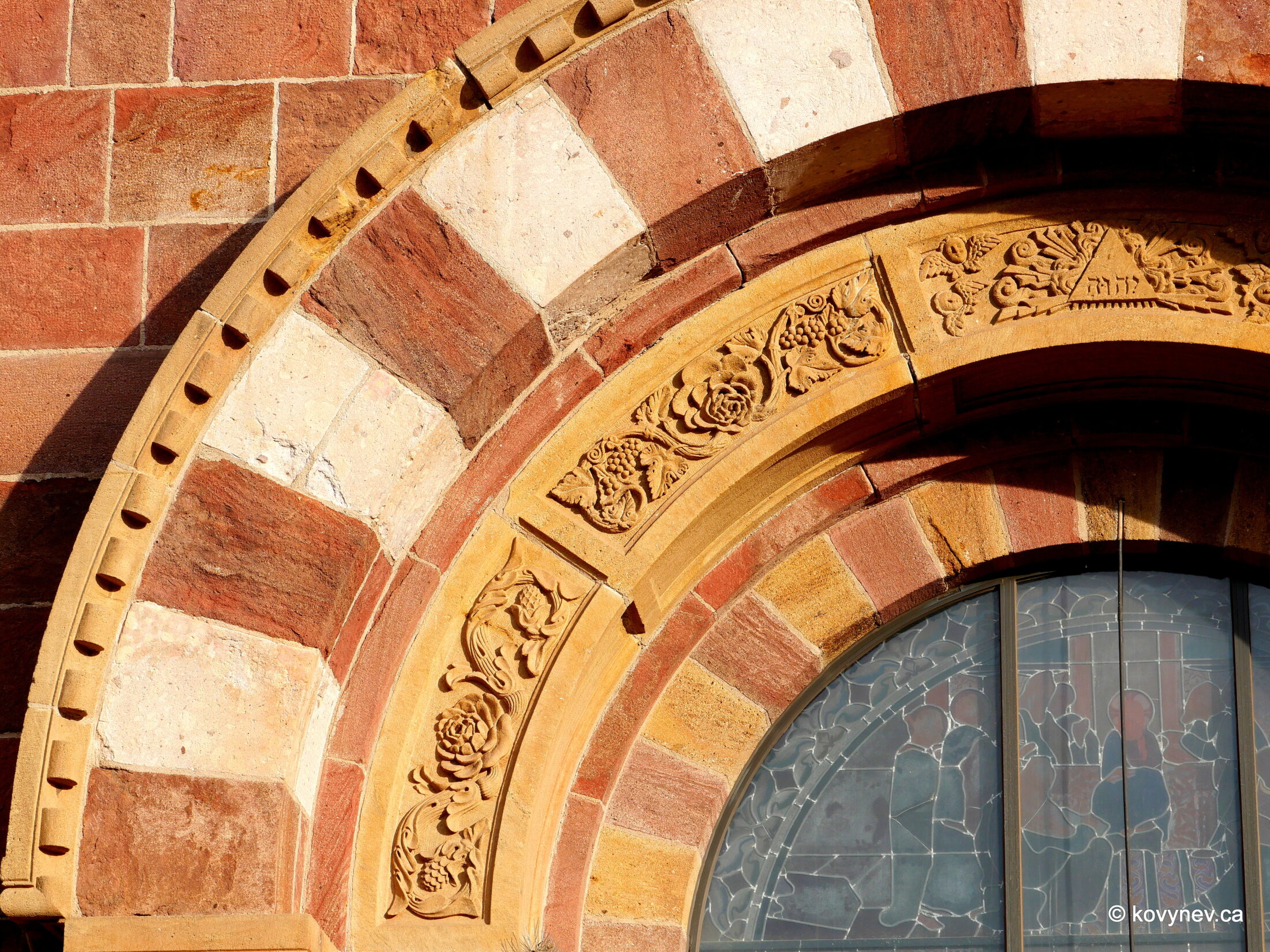
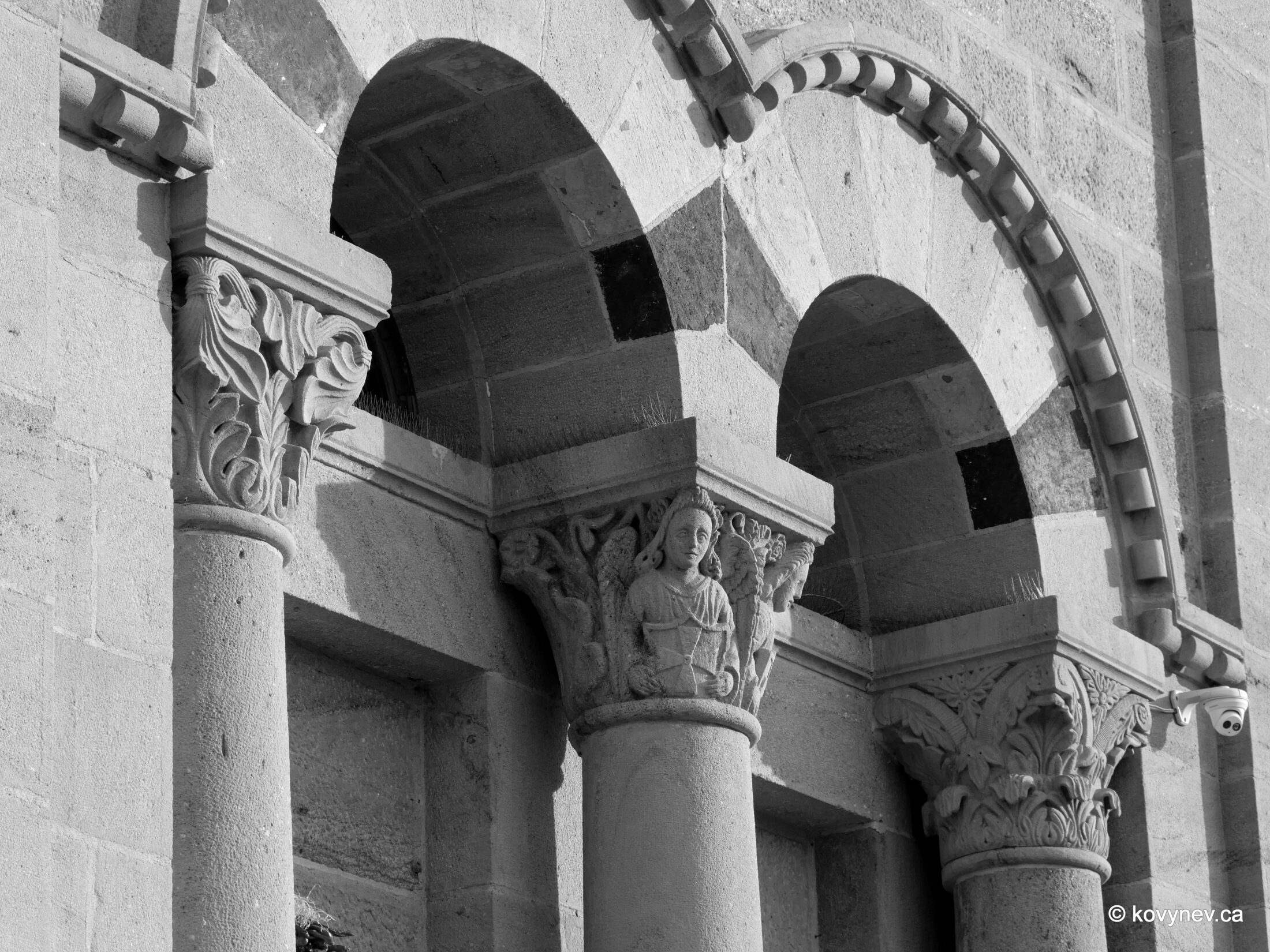
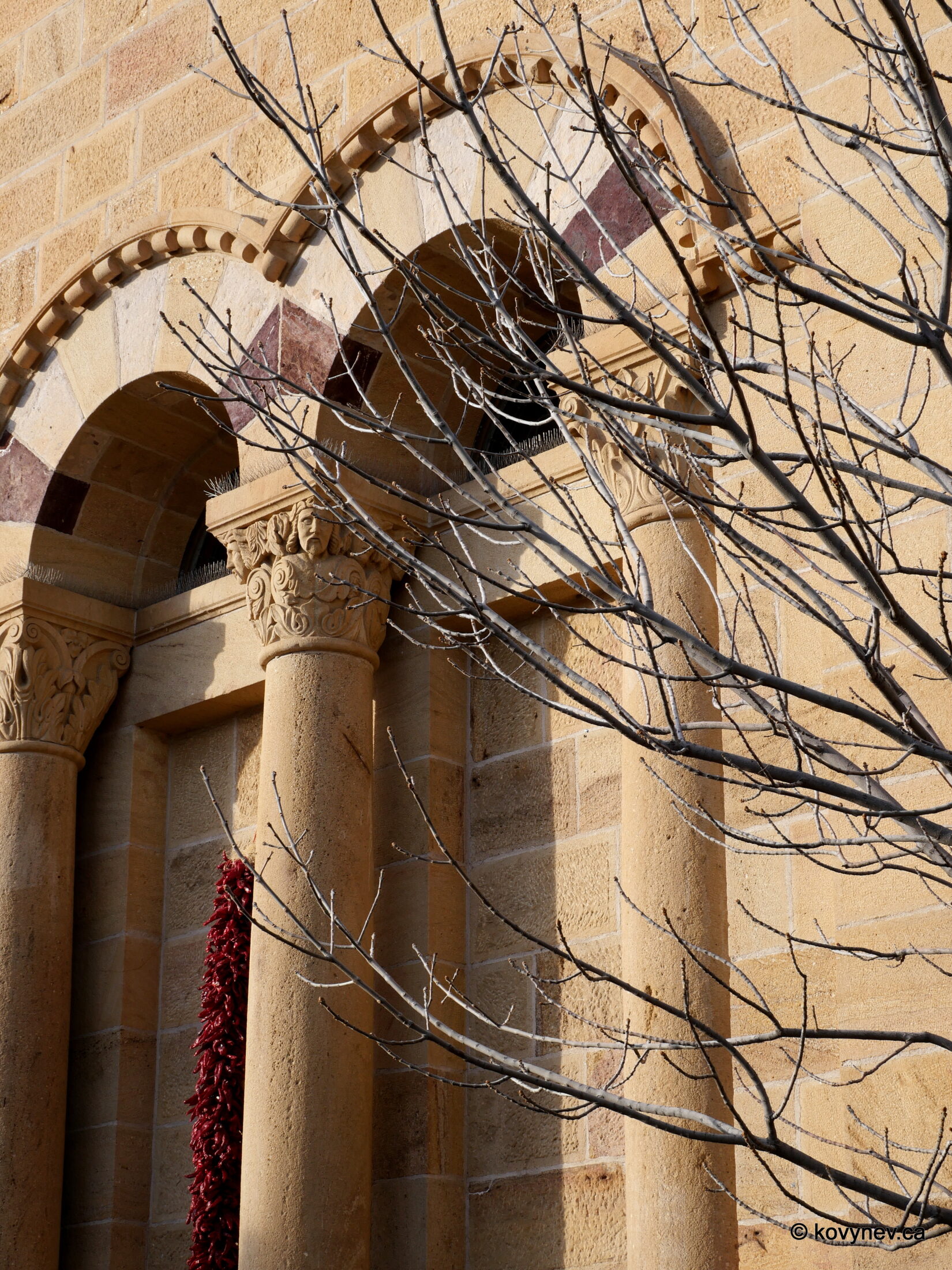
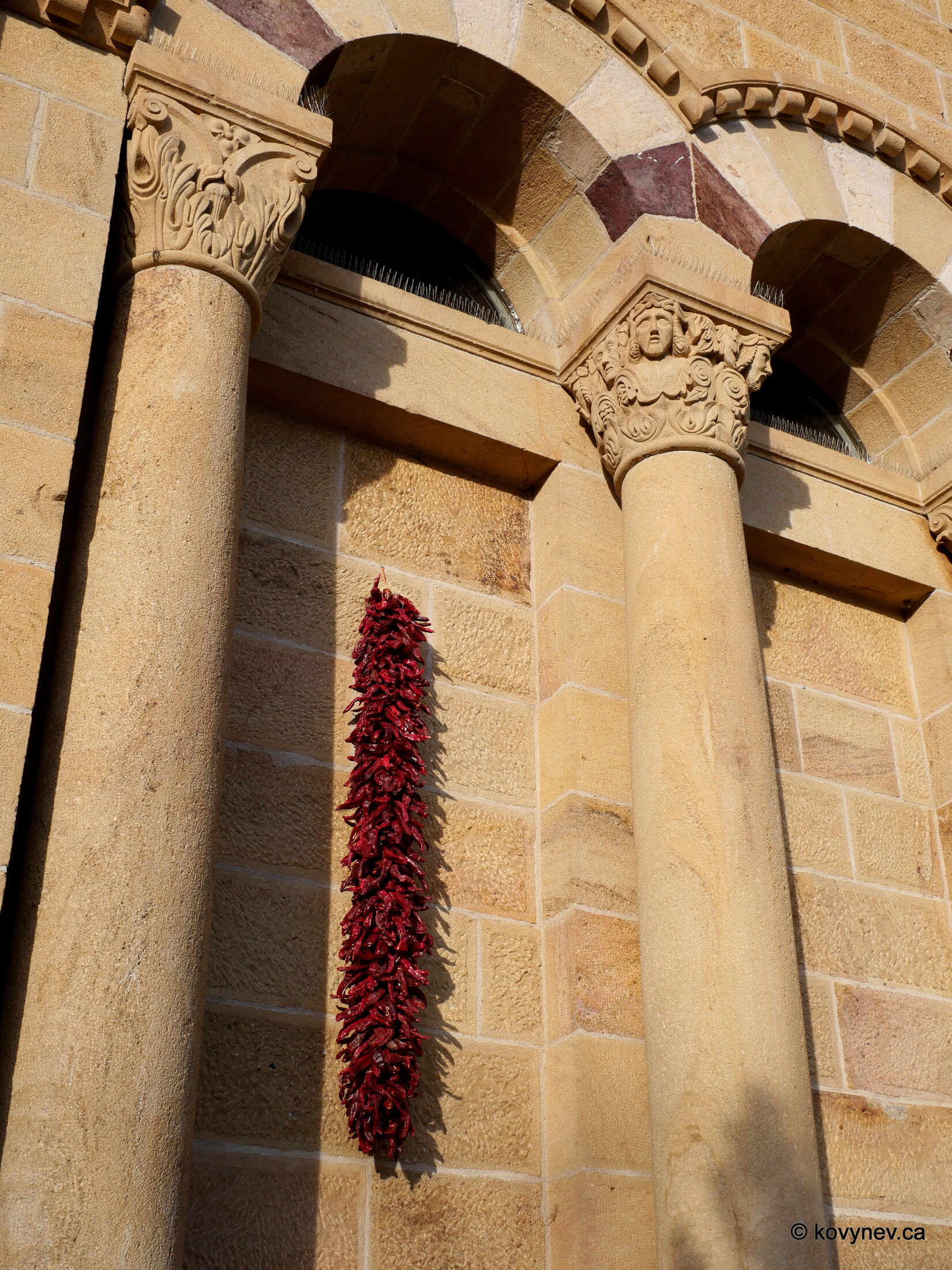
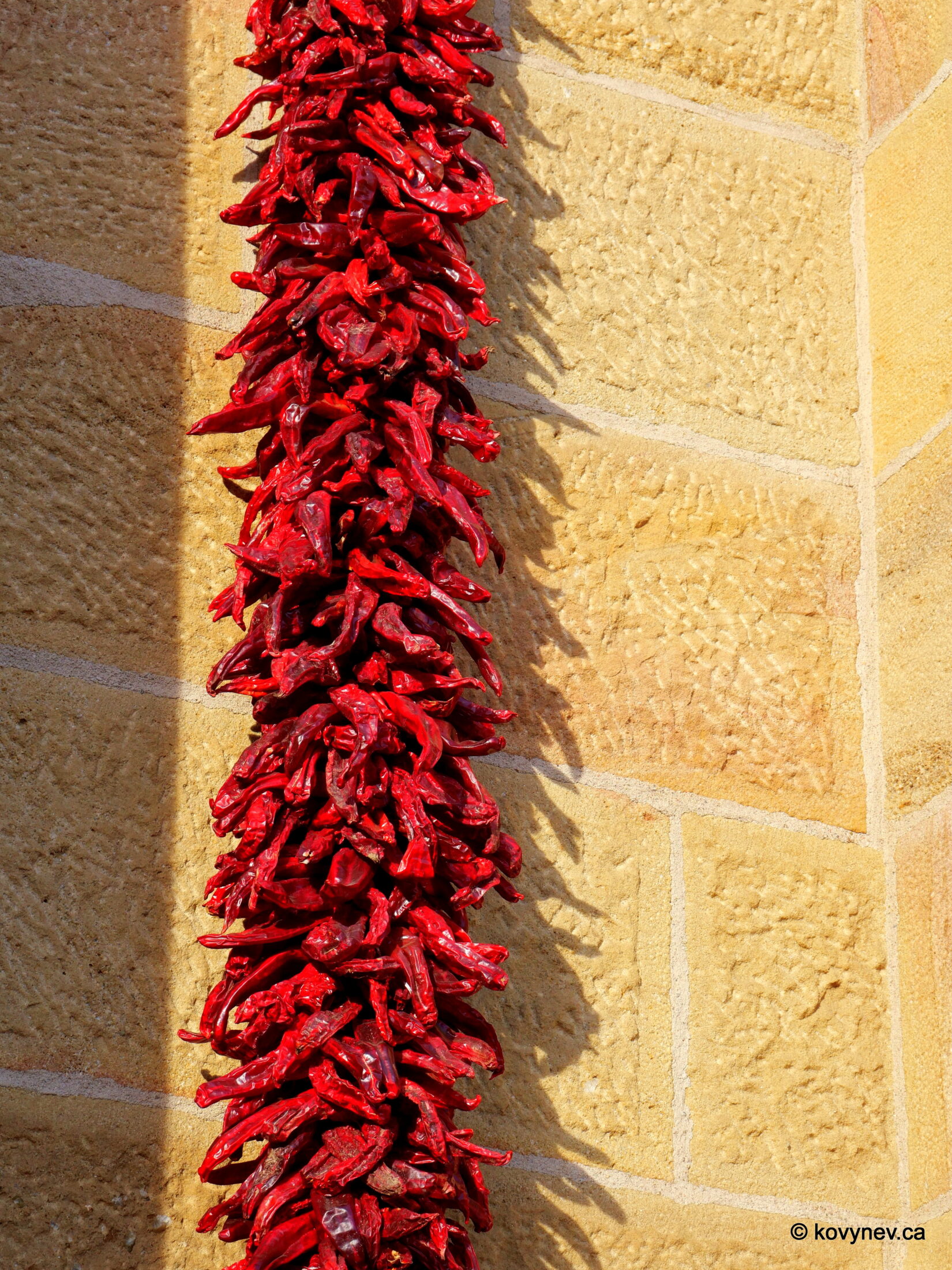
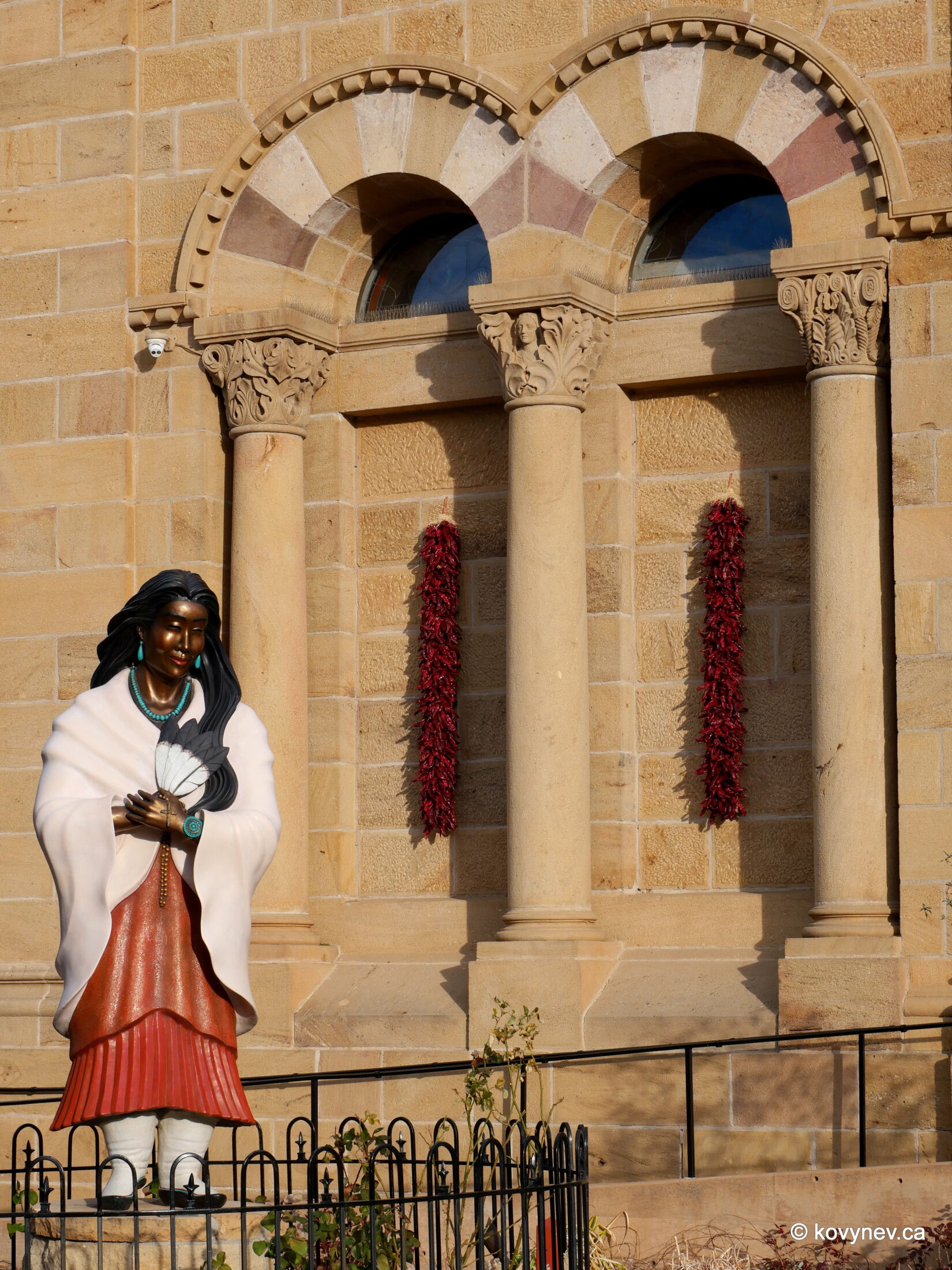
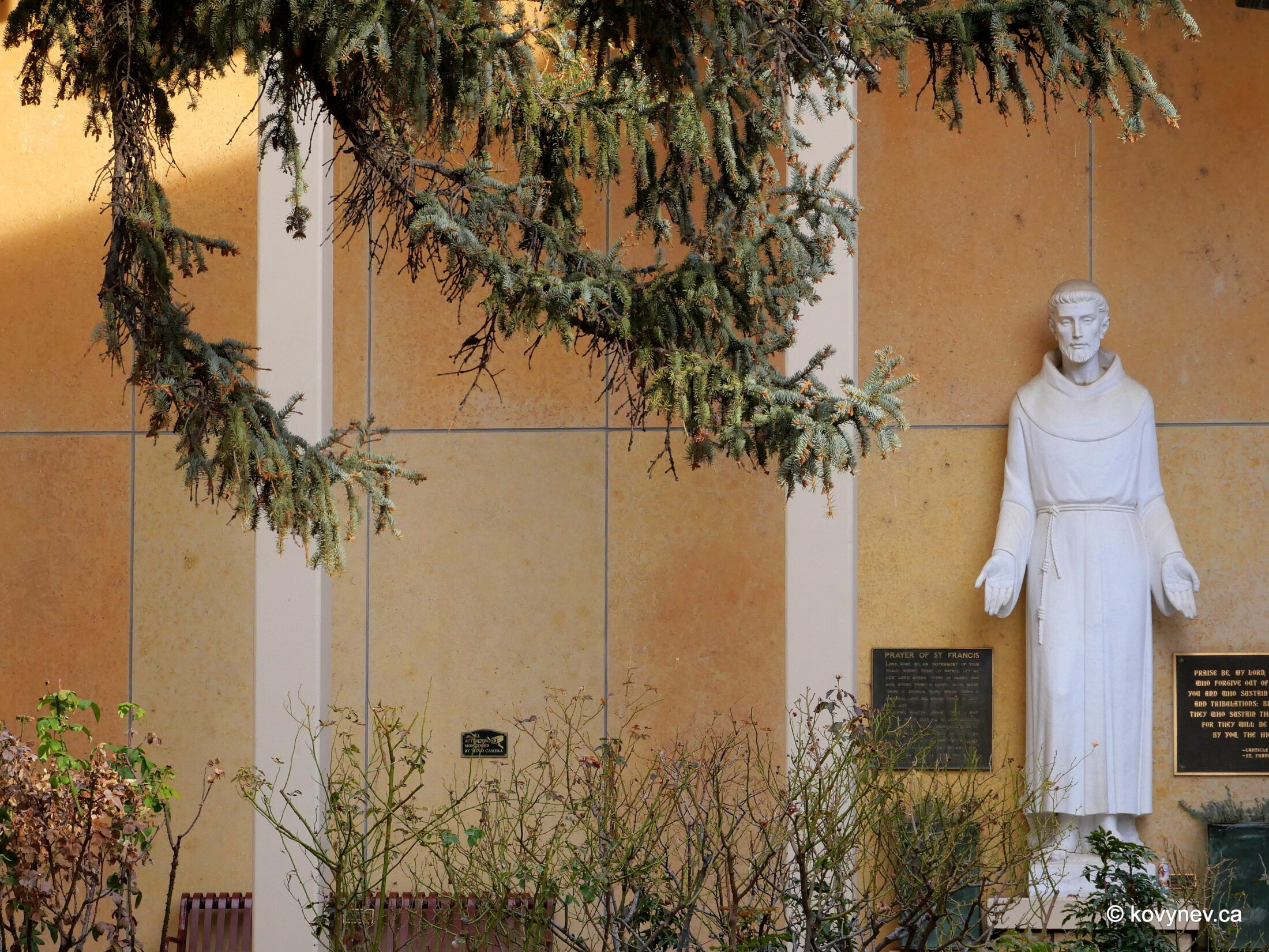
Probably, the best way to approach Santa Fe Plaza is from the west, along St. Francisco St. That way you have a nice perspective, with the Cathedral Basilica of St. Francis of Assisi in the background. Santa Fe is special the way that the main city church is not located directly on plaza mayor, but a block away.Another difference from the traditional layout of Spanish colonial towns is that quiosco (the bandstand) is not in the very centre of the square, but a bit on a side. The centre is occupied by a cenotaph, so called Soldiers′ Monument. It was erected in 1867, after the American Civil War, in commemoration of the New Mexicans, who were killed in that war, as well as "in the various battles with savage Indians". ⇨ ⇨ This is what was written verbatim on the pedestal until 1974. That year, someone chiseled the word “savage” off. And quite recently, in 2020, the obelisk, which was sitting on top of the pedestal, was toppled by protesters. Since then, the cenotaph is looking like this – a pedestal without the stela. Beyond this drama, Santa Fe Plaza is a peaceful little park, with benches between the trees, which, I imagine, provide a welcome refuge from the summer heat. (I am only assuming, I was there in February).The benches are decorated with figures depicting different types of honest labour. Specifically, here: sheaving and threshing.And here we add sowing and tilling as the earlier stages of the process.In this pic, the more important piece of the image is not the bench, but what’s behind it. It’s called the Palace of the Governors, and this was the place from where New Mexico was administered for centuries. Which means, this building is really old. It was constructed in the early 1600s by the governor Pedro de Peralta, the one who built the royal city of Santa Fe itself. This makes the Palace of the Governors the oldest public building in the US.Over the centuries, the Palace of the Governors has served as the seat of government for the Spanish colony of Santa Fe de Nuevo México, for the province of the independent Mexico under the same name, and for the Territory of New Mexico within the United States, consecutively.After New Mexico became a US Territory, for 40 years, between 1846 and 1886, the Palace of the Governors served as the seat of the territorial legislature (the Capitol #1, as we discussed in the previous gallery).Once the legislature moved out, into a building specifically constructed for that purpose (right around the corner from here), the Palace of the Governors went into disuse and disrepair. Until 1909, when the building underwent an extensive renovation and became a museum.The architecture of the Palace follows the traditional style for Las Casas Reales – a long 1-storey building with an open gallery along the full length. (Such gallery was called portales in Spanish.) Not having too many storeys is essential in a hot climate – the hot air goes up. And the gallery was essential for the supplicants, sitting outside waiting for their turn, to have some protection from the sun.The building we see through the columns is just an office building and it always was. What′s interesting about it, that it also bears the elements of the Territorial Revival style - note the portales with white slim columns almost exactly like the one we saw at the Capitol.The building is called the Catron Block, by the name of a wealthy and influential New Mexico businessman and politician Thomas B. Catron, who built it.You′ve, probably, already noticed the orange fixtures lining the edges of galleries′ and buildings′ roofs. You can see them here along the portales. These are farolitos, or luminarias. Traditionally, they were paper lanterns, or simple brown bags with a light inside, which would be lit on Christmas Eve to symbolically light the way for Mary and Joseph in their search for overnight lodging.Now farolitos are made of durable, weather-resistant plastic to allow them to be left up all year round. Inside the bags are electric bulbs or LED fixtures, mimicking the appearance of traditional paper luminarias. They are everywhere in old Spanish towns of New Mexico, including this store next to the Catron Block. Here, on the south side of the square, opposite the Palace of the Governors, the decorative bellcote on the façade is a reminder that there was a chapel once in this place. Most probably, it was destroyed during the Pueblo Revolt of 1680, when the indigenous people drove the colonizers out of New Mexico completely. The "Spanish-free" period lasted for 12 years. Now, let’s explore the vicinity of the square. Here, for example, we are looking down Lincoln Ave, going north, at the Santiago E. Campos Courthouse. This is the former Double Domer, the building that was originally designed as the second capitol, but burned down, and was demoted to “just” a courthouse. This next building, at the same north-west corner of the Plaza where we are standing right now, is the New Mexico Museum of Art. This is one of the best classic examples of the Pueblo Revival architectural style, also known as Santa Fe style. It is such a notable product of this type of architecture (and also one of the very first specimens of it), that it came to define the style itself. The elements of Santa Fe style amply present in the New Mexico Museum of Art are: flat roofs, wood log beams projecting out of the walls, rounded corners, smooth plaster over the adobe walls, the earthy brownish colour to resemble the desert colours of the area. This building was constructed in 1917, as a museum from the get-go. It’s important to note that pretty much everything that you see today in Santa Fe that looks old, is really not. The present-day signature look of the city was created in the first half of the 20th century, by bureaucrats and architects, on purpose. And there is a reason for that. It′s called "The Santa Fe Plan", adopted in 1912. The city was not in a good shape back then. A major railroad line bypassed Santa Fe and went through Albuquerque instead, so the capital was left by the wayside, so to speak, and went into a decline. This is when the city top brass decided to turn things around, and created a plan of building (literally) a place very distinct and different from usually boring (let′s face it) American towns. The architects embraced the idea and came up with a new style. It was around that time when the interest in the Spanish colonial architecture resurged (was revived). The new style was based on authentic buildings in old Spanish settlements in the area (called pueblo, "village" in Spanish), mostly mission churches. So the style was named "Pueblo Revival". (We will see one of those mission churches later).And since Santa Fe was the place where the style was born, and flourished, it′s also called the "Santa Fe style". This picture (still of the New Mexico Museum of Art) is a perfect sample of what Santa Fe looks like - the waves of rounded edges of an adobe building in a tan, terracotta colour. Maybe not very old, but very pretty and picture-worthy.Now, we have moved diagonally across the square from the museum, kitty-corner, as the Americans would say. And there we see another significant (and huge) building in the Santa Fe style – the La Fonda Hotel.Like the museum across the plaza, La Fonda was built in the 20th century (in 1922, to be exact), and it was intended as a hotel from scratch. The existence and the position of the hotel is the result of a concerted effort to create the Santa Fe Plaza ensemble, with two big buildings in Santa Fe style "anchoring" the square from two opposite corners.The Museum of Contemporary Native Arts (so-called MoCNA) across the street tells a similar story - another huge building in Santa Fe style near the plaza, constructed at the same time as the previous two buildings. It was built in 1922 as a post office. And that it was until the museum moved in 1992, after a restoration.A building next door to the museum is pretty recent also, but its quaint portales is begging for a picture. Right next to the Museum of Contemporary Native Arts, there is the main church of Santa Fe - Cathedral Basilica of St. Francis of Assisi. Here, we see it from a little distance back, halfway into the square, just to give you a better view of the Cathedral as a whole. The current church was built in 1869-1886, in the French Romanesque Revival style. Revival again... Meaning - they were trying to mimic the "real" French Romanesque style - massive, fortress-like churches of the 11th-12th centuries France. Archbishop Jean-Baptiste Lamy, who commissioned the Cathedral, chose this style on purpose, to "water down" a little the old Spanish, adobe look of the city.These flat-topped belfries (officially called truncated towers), however, are not the architectural choice. The cathedral was never finished. The bellfries were supposed to have 160-foot steeples on top. But the construction was halted for a very prosaic reason - the lack of funds, and was never restarted.The church is called both "Cathedral" and "Basilica", because it′s a home church of a bishop (meaning, it contains cathedra - the official ceremonial throne representing bishop′s authority), and at one point it was granted the denomination of Basilica, which is only given by the Pope himself. It makes a basilica "the Pope′s church" - this is where the Pontiff will celebrate Mass, if he′s ever in town.A basilica must be significant in some way. In this case, it′s a painted wooden statue of the Virgin, called La Conquistadora and considered the oldest statue of Saint Mary in the US. Because of it, the Cathedral is a major pilgrimage site. I don′t have a picture of La Conquistadora (I never stepped inside the Cathedral), but here I have the statue of Archbishop Jean-Baptiste Lamy for you.The front portal of the Cathedral. On the portal arch, if you look closely, you can see a small triangle at the top, which bears Hebrew letters for YHWH. It′s the Hebrew Tetragrammaton - the representation in writing of the Jewish God′s name. According to the legend, Archbishop Lamy himself added the Tetragrammaton in order to honour the local Jewish merchants, who contributed to the Cathedral building fund. The bronze doors are not original. They were added during the 1986 restoration of the church. Local sculptor Donna Quasthoff modelled them after the famous "Gates of Paradise" of the Baptistery in Florence. [The coat-of-arms in front of the doors is of Pope Benedict XVI, the one who granted the Cathedral the status of Basilica in 2005.]While Lorenzo Ghiberti′s masterpiece in Florence is all about the Bible, the Santa Fe doors depict the history of the Catholics in New Mexico, from the arrival of the first missionaries, through the Pueblo Revolt of 1680, to the Reconquest (the return of the Spanish) in 1693, all the way to the modern era with the celebration of the Cathedral’s centenary in 1987. Check out stylized lions as the handles.As we saw before, the cathedral stands a little away from the square, not in compliance with "The Laws of the Indies". This is because the original plaza mayor was triangular, and one of its corners extended to this spot. Later, the square was truncated significantly, to its current shape and size. The first church in this corner was dedicated to Nuestra Señora de la Asunción (Our Lady of the Assumption). That church was a jacal - a very rudimentary thatched hut. Later it was rebuilt, into an adobe structure, and was rededicated to the Virgin of the Immaculate Conception. It was this second church where they brought La Conquistadora to. That church was destroyed during the Pueblo Revolt of 1680, like most of the town. After the Spanish have returned, they built a new, third, church on the same spot in 1714. That 3rd church, also an adobe structure, was called La Parroquia ("The Parish church"). When it was being replaced by the Cathedral, it wasn′t demolished right away. The Cathedral was constructed around the church, so the parish would still have a place of worship during the 18-year construction. After the Cathedral was finished, they took out the old church, brick by brick.You′ve, probably, already noticed these dried chili peppers hanging outside buildings. They are one of the most common decorations in the Southwest. They are called ristras (Spanish for "string" or "braid"). Originally, pepper was hung to dry in the hot southern sun, to preserve it year-round for cooking, while protecting it from dirt and animals. Later, ristras started to symbolize hospitality, showing that there is food in the house, and guests are welcome. That′s why, almost every single store and restaurant (and a church, as we can see) - pretty much any establishment that is dependent on foot traffic - has ristras now.This is a statue of Saint Kateri Tekakwitha, the first Native American to be canonized as a Catholic saint. She is wearing a Pueblo-style attire, the traditional dress and jewelry of the indigenous people of the Southwest. And yet another statue - of St. Francis of Assisi, the patron Saint of the city (after all, Santa Fe was named after him), to whom the Cathedral is also dedicated. This is the last picture of the Cathedral and of this galley altogether.Press ESC to exit