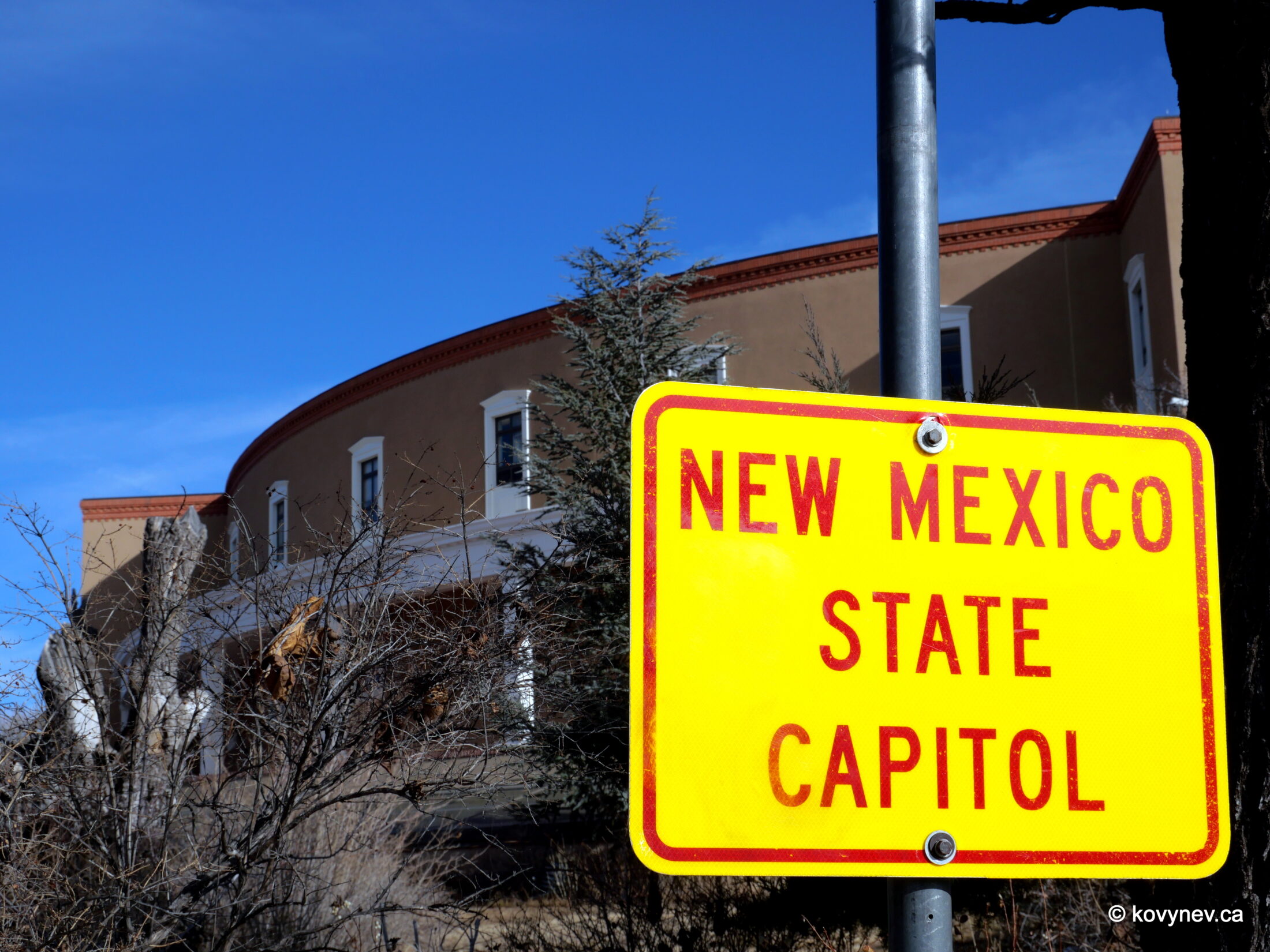
Santa Fe is the capital of the State of New Mexico, so, the State Capitol is located there. Since visiting all US state capitols is on my bucket list, this is where I started my visit to Santa Fe.
The Capitol we see today is the 4th building intended for the New Mexico legislature. The first was the Palace of the Governors in Santa Fe’s main square (we will see it later). Then they built a new Capitol, but it burned down just 6 years after completion. There was a rumour, it was an arson! In any case, the water main was mysteriously shut off, and the fire hoses slashed. Before the fire, that building looked very regal, exactly the way a state capitol should look like. It had not one, but 2 domes, one above each side-façade with a classical portico. Because of this feature, the buildings was called “The Double Domer”.
The fire was so devastating that only the skeleton of the building remained. So, they decided, the complete reconstruction would be too expensive and started the brand new, 3rd Capitol building instead. With the Double Domer, they salvaged what they could (not the domes, unfortunately, those were gone) and made a much smaller and plainer courthouse out of it. It still exists, and it’s still a courthouse. We will see in the next gallery. The third Capitol building we will see in this gallery, right after we’ve visited the current Capitol #4.
NIKONCOOLPIX S9300 22mm
/ 5.7
/ 10/1000s
/ ISO 125
Created: 125
Uploaded: 125
Likes: 125
Views: 125
Comments: 125
-1
-1
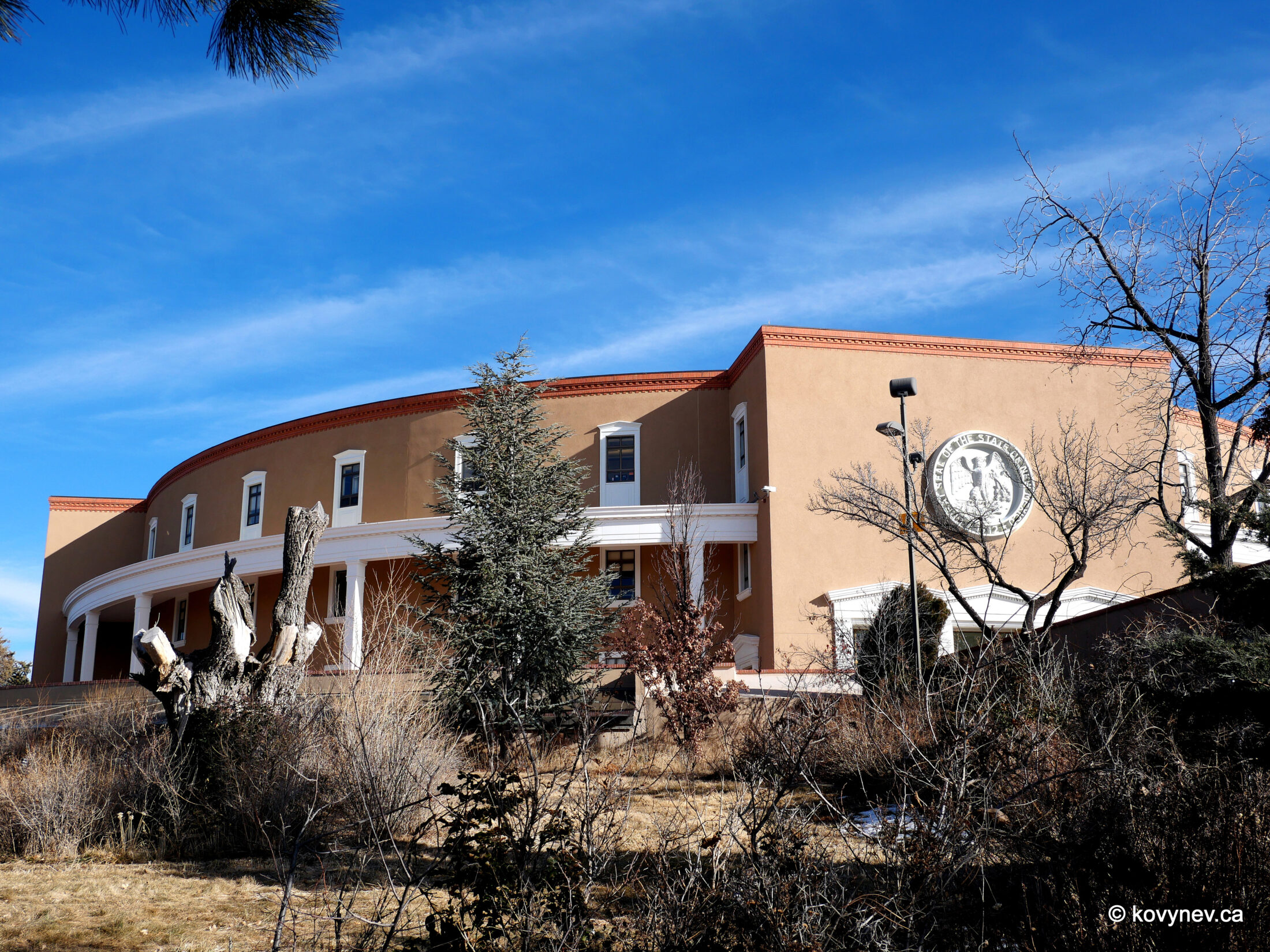
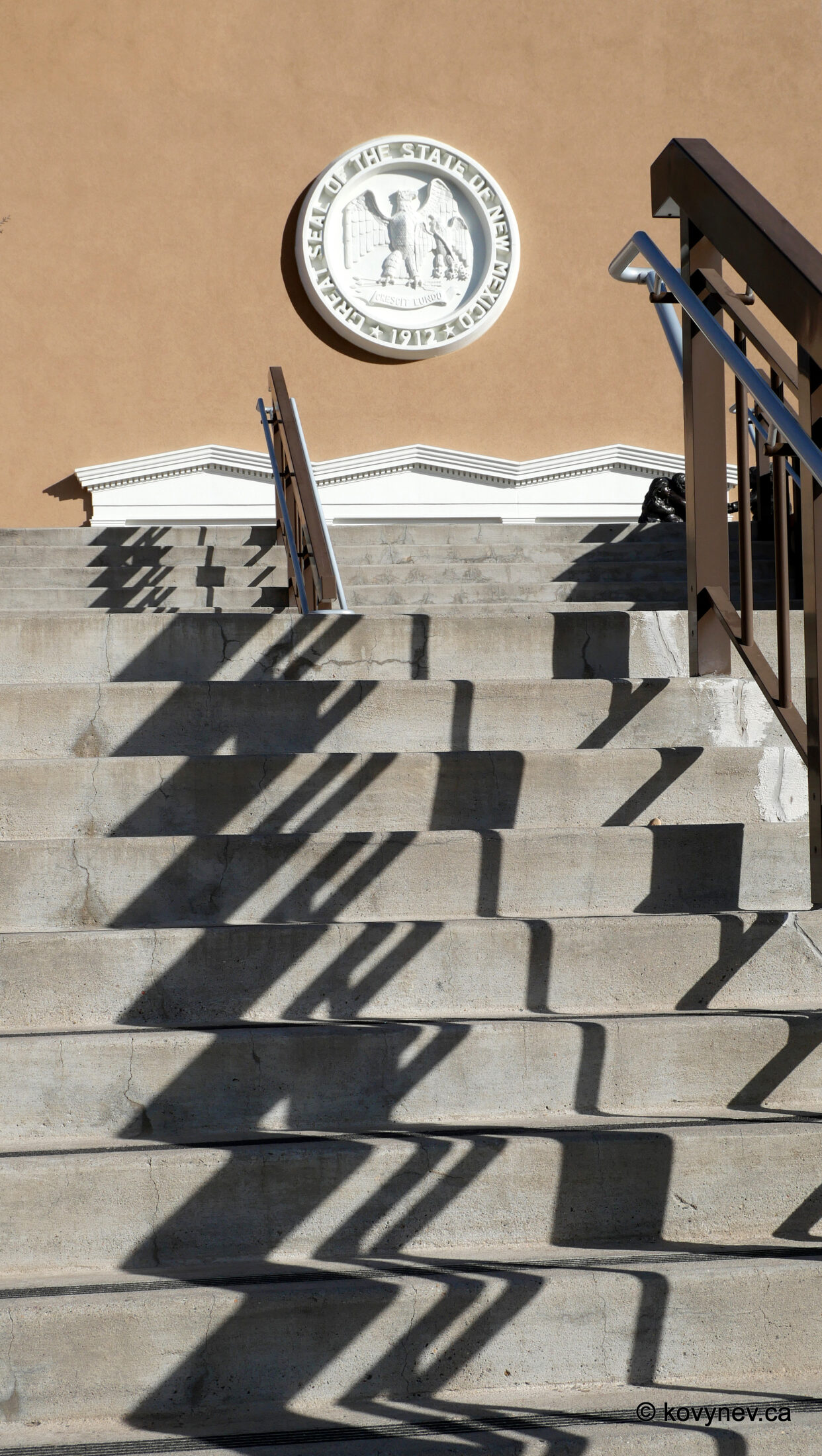
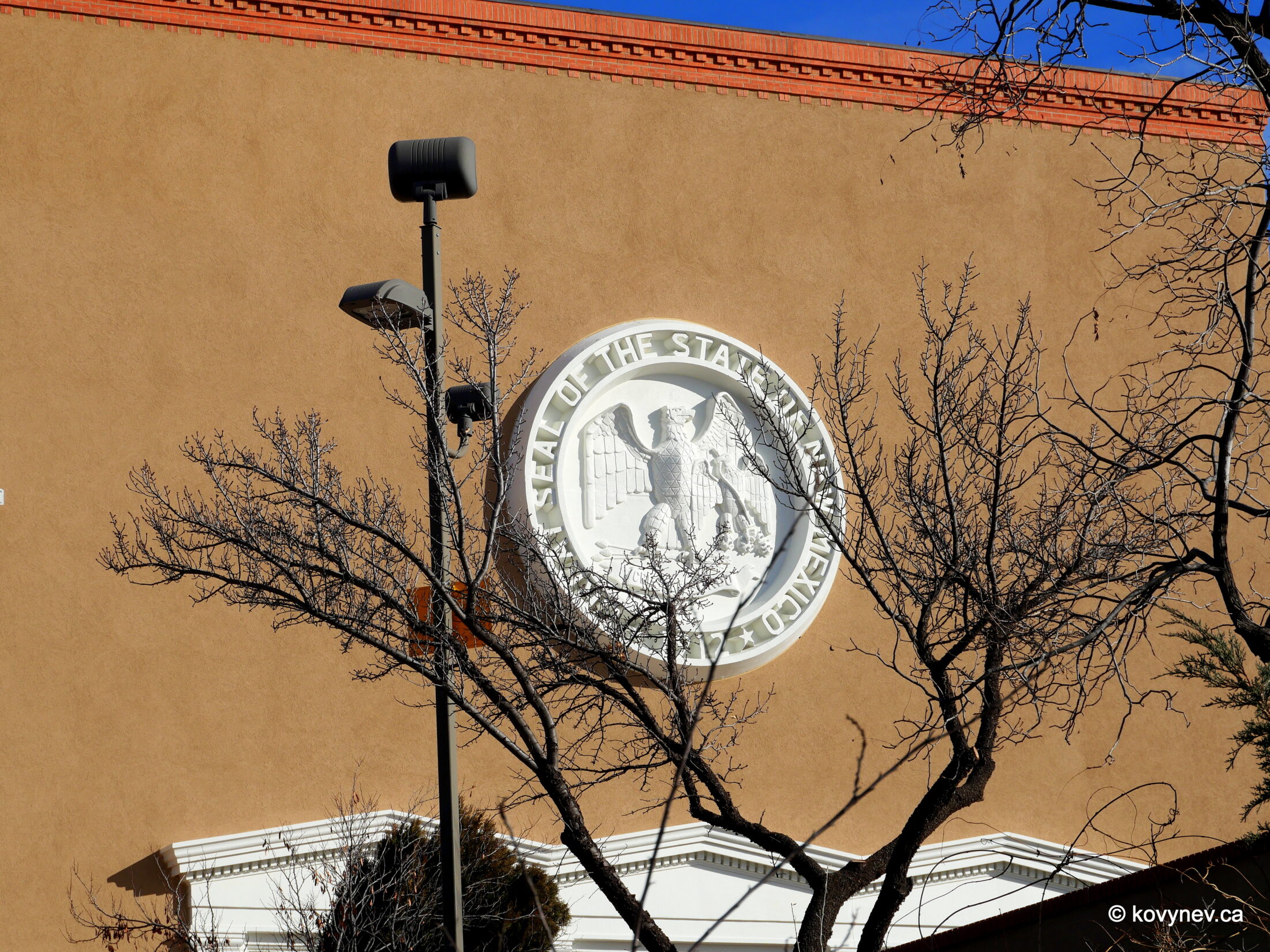
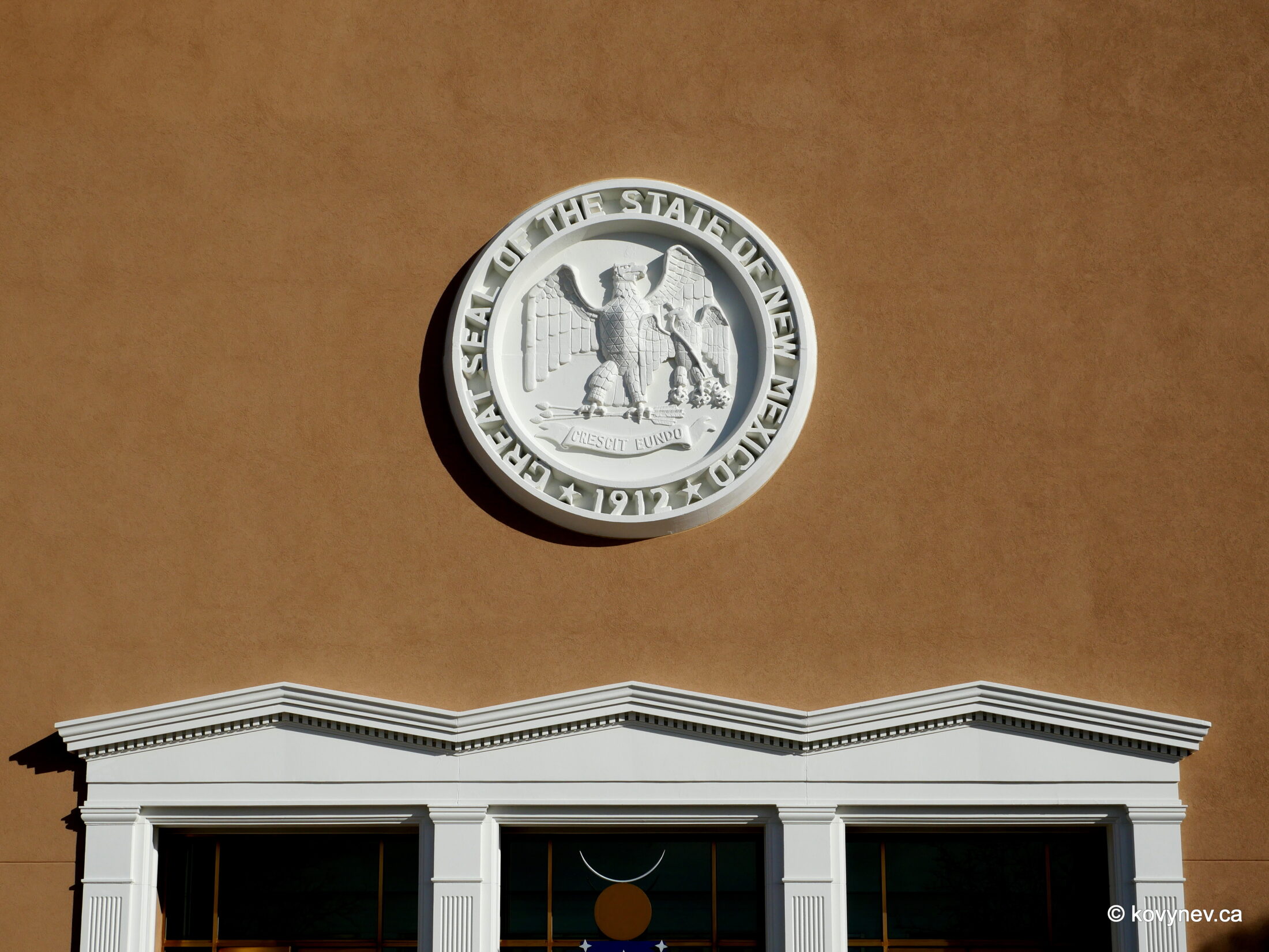
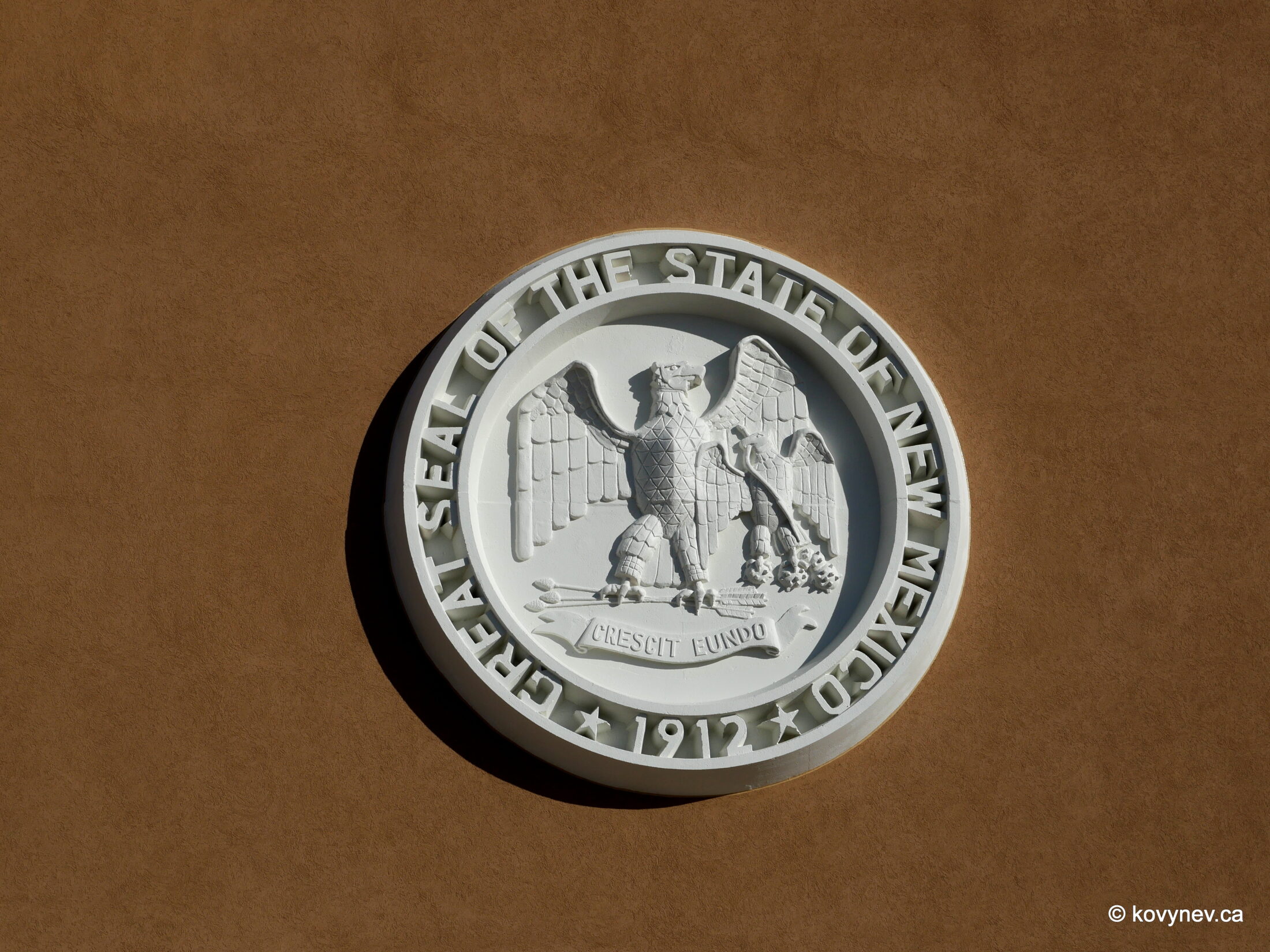
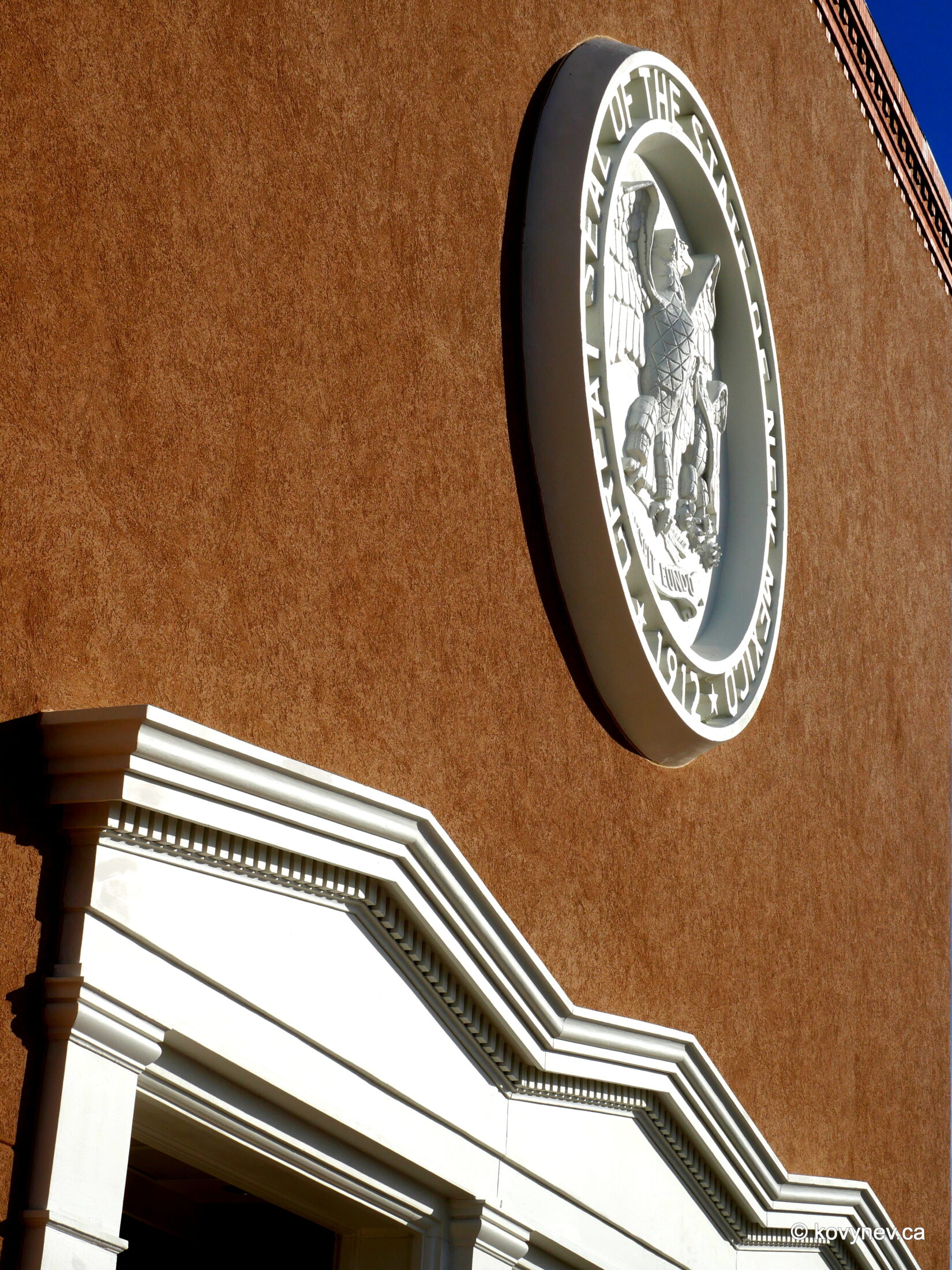
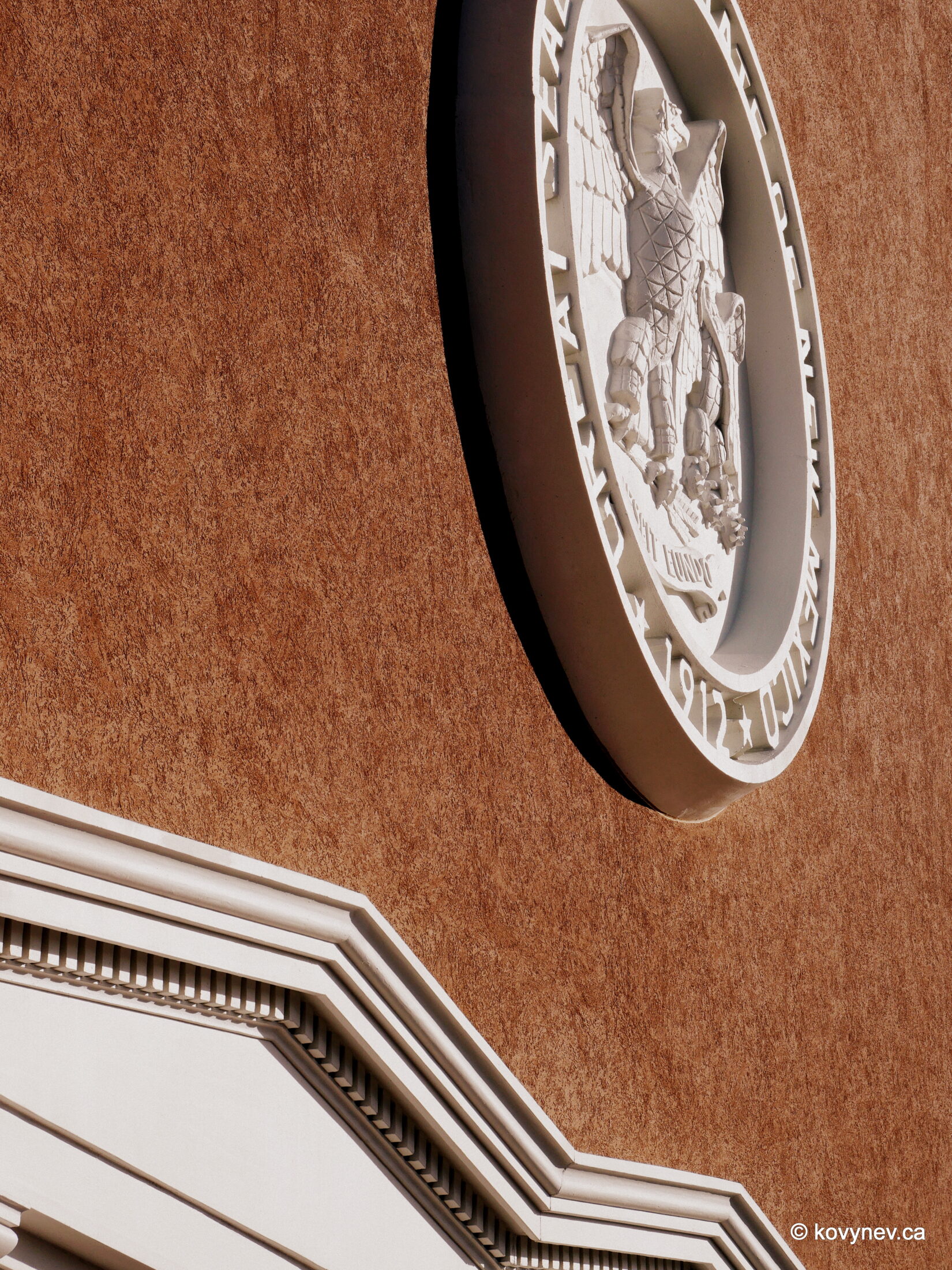
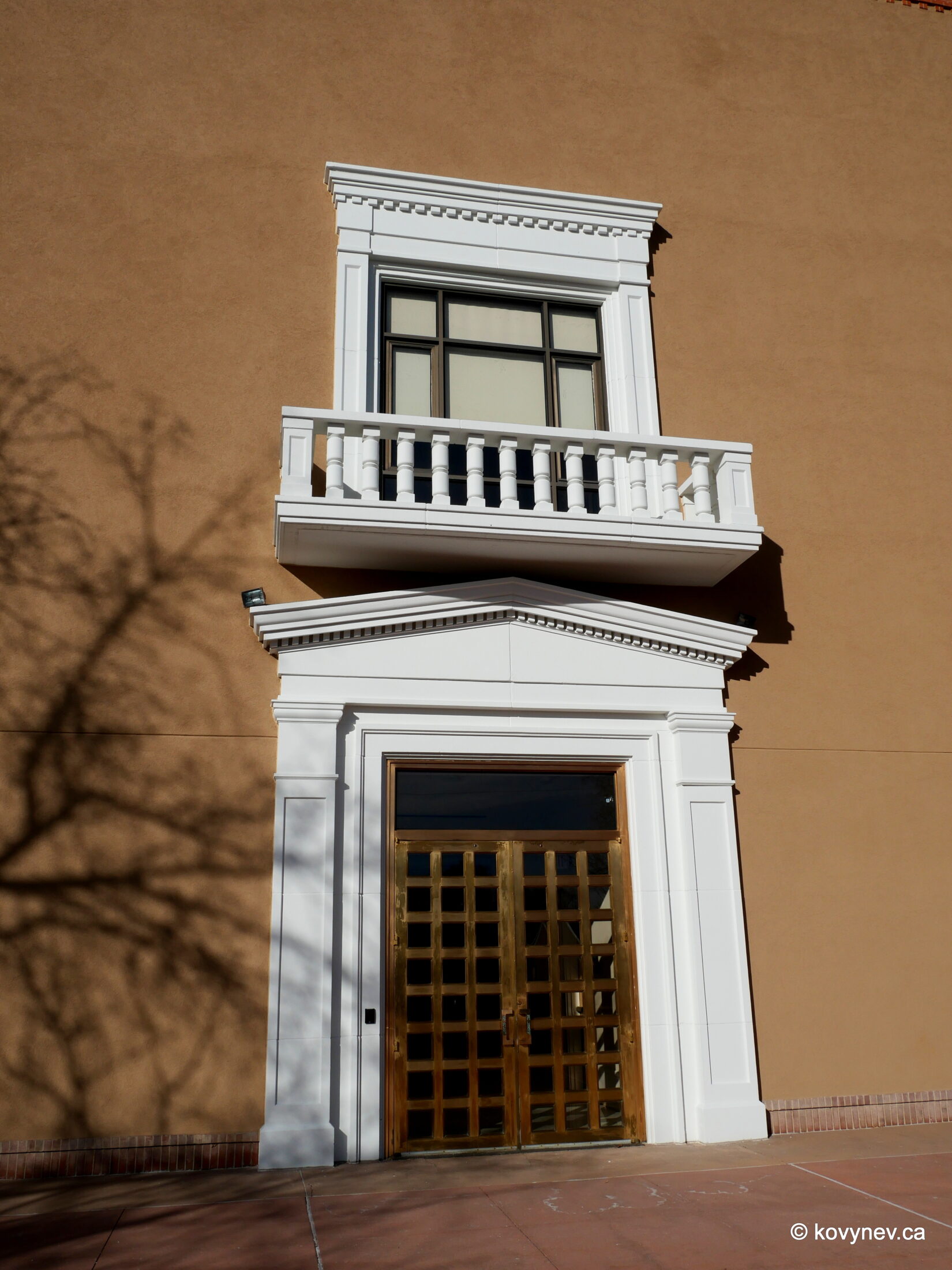
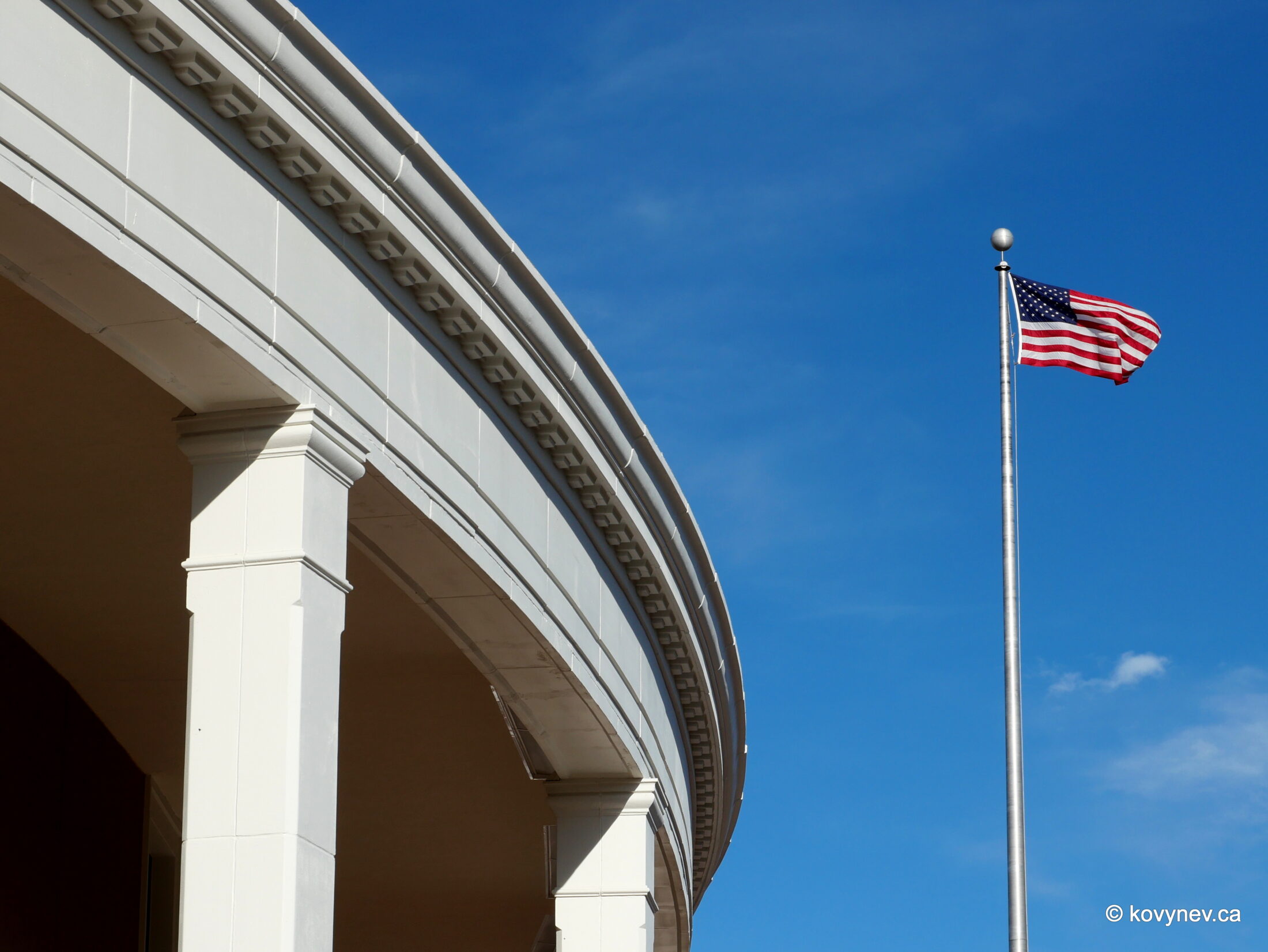
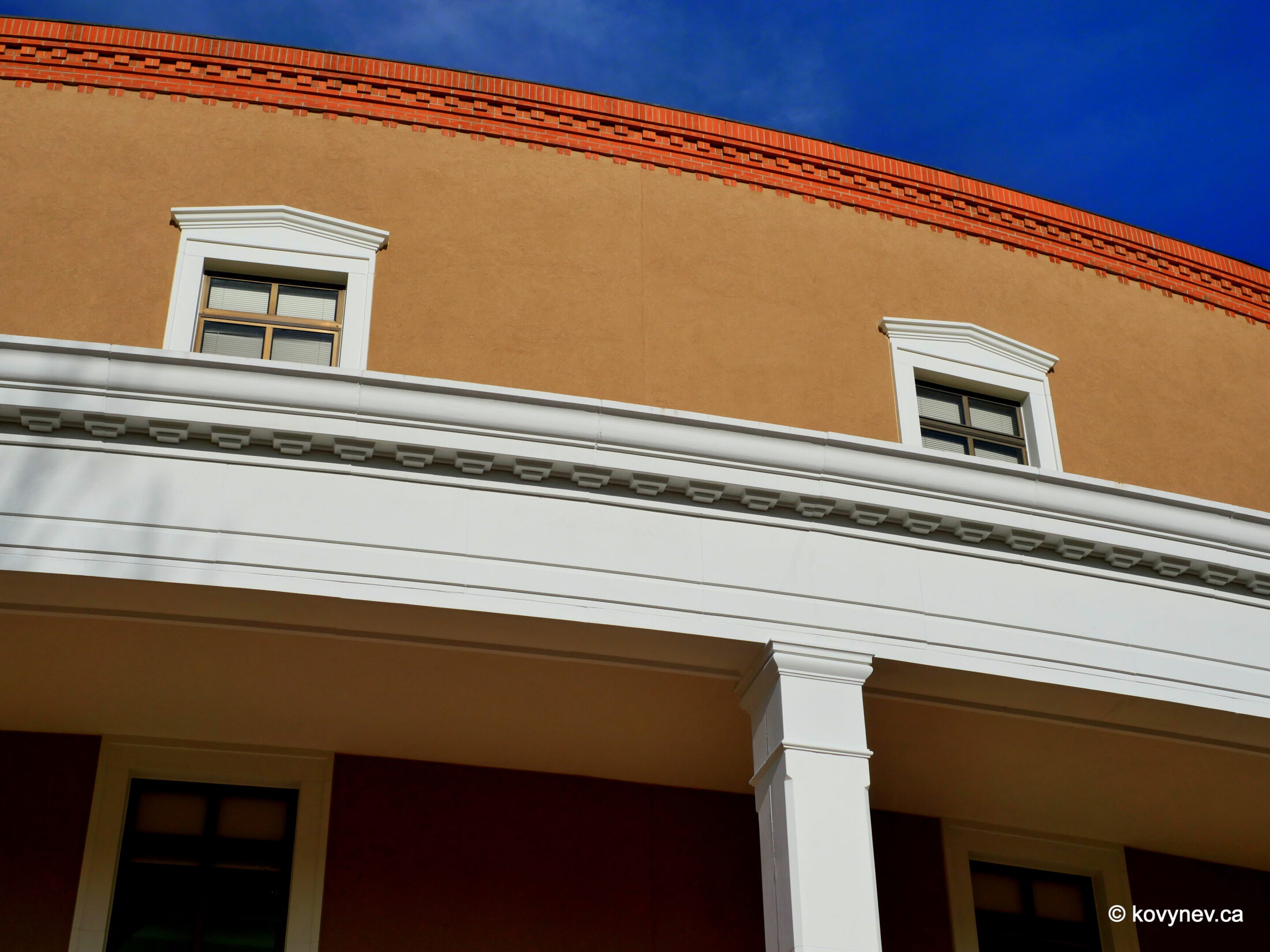
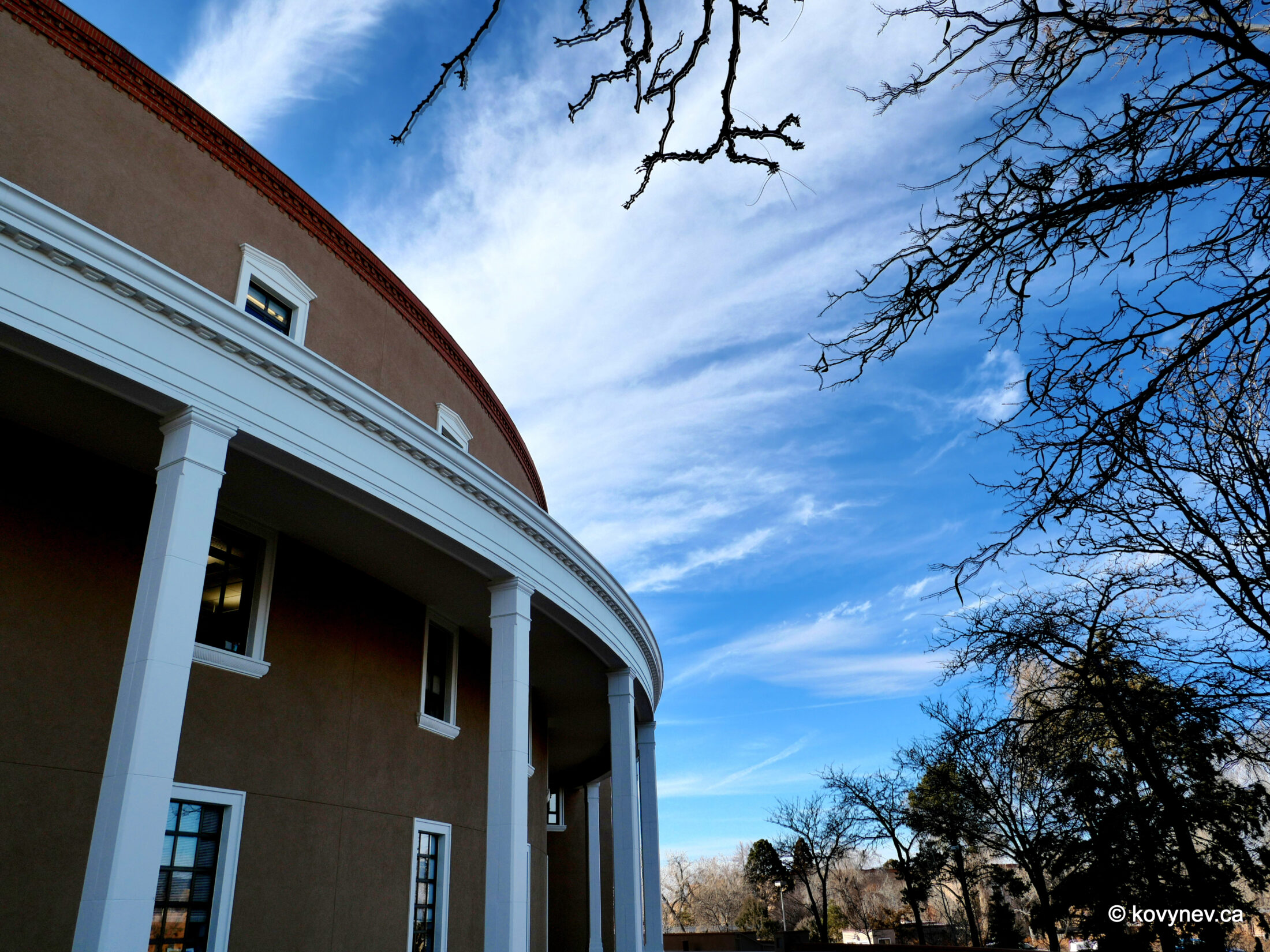
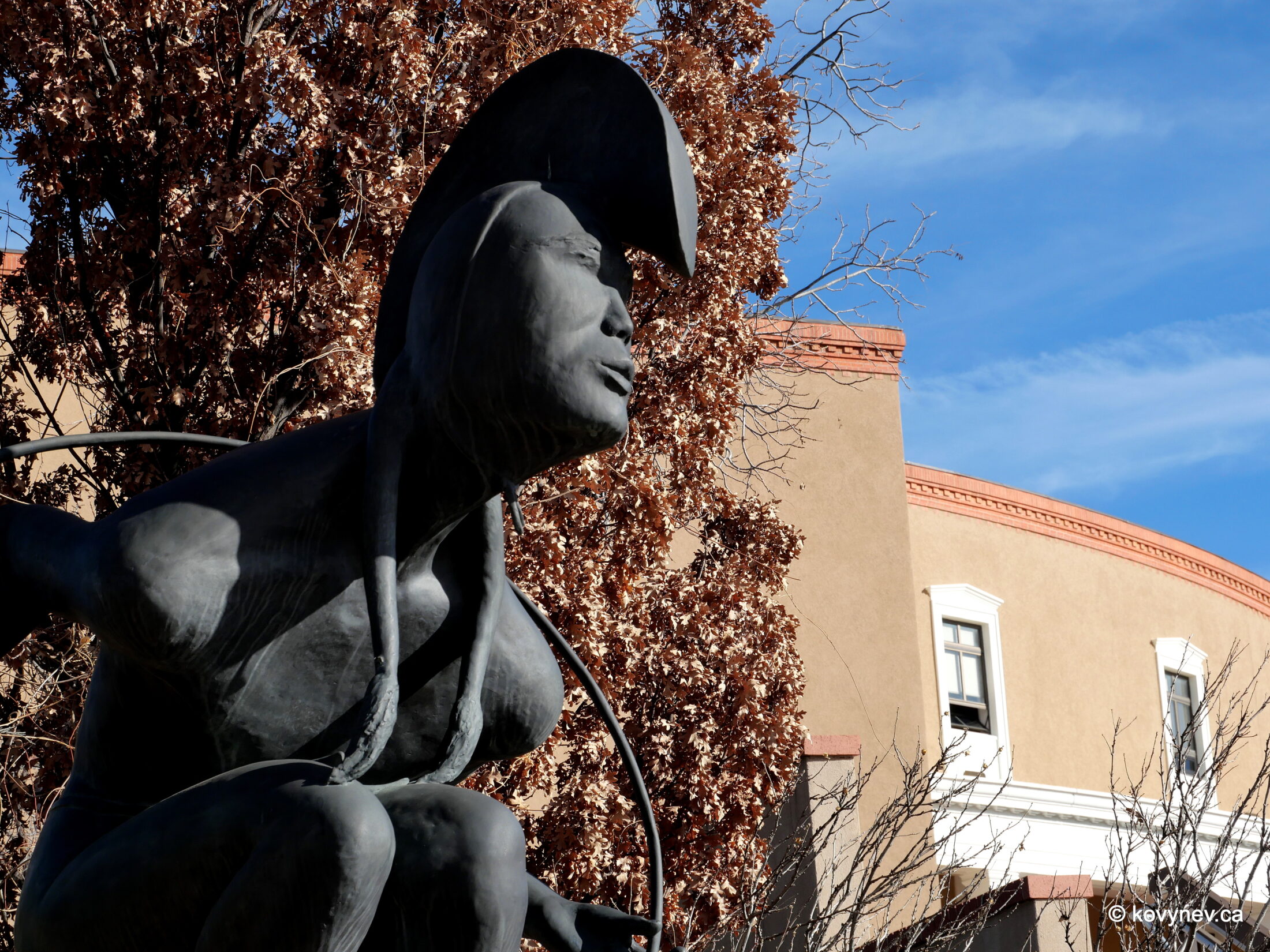
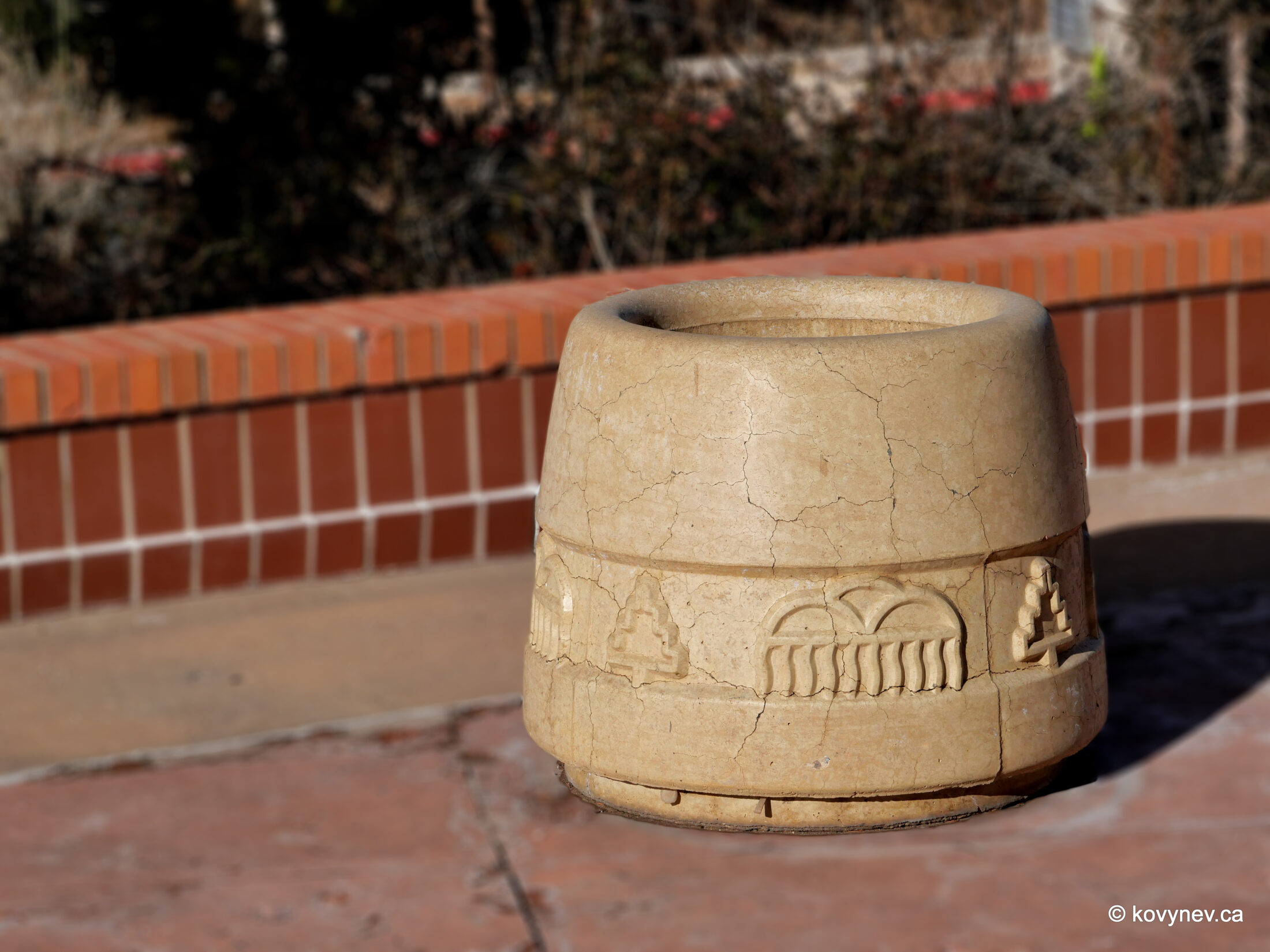
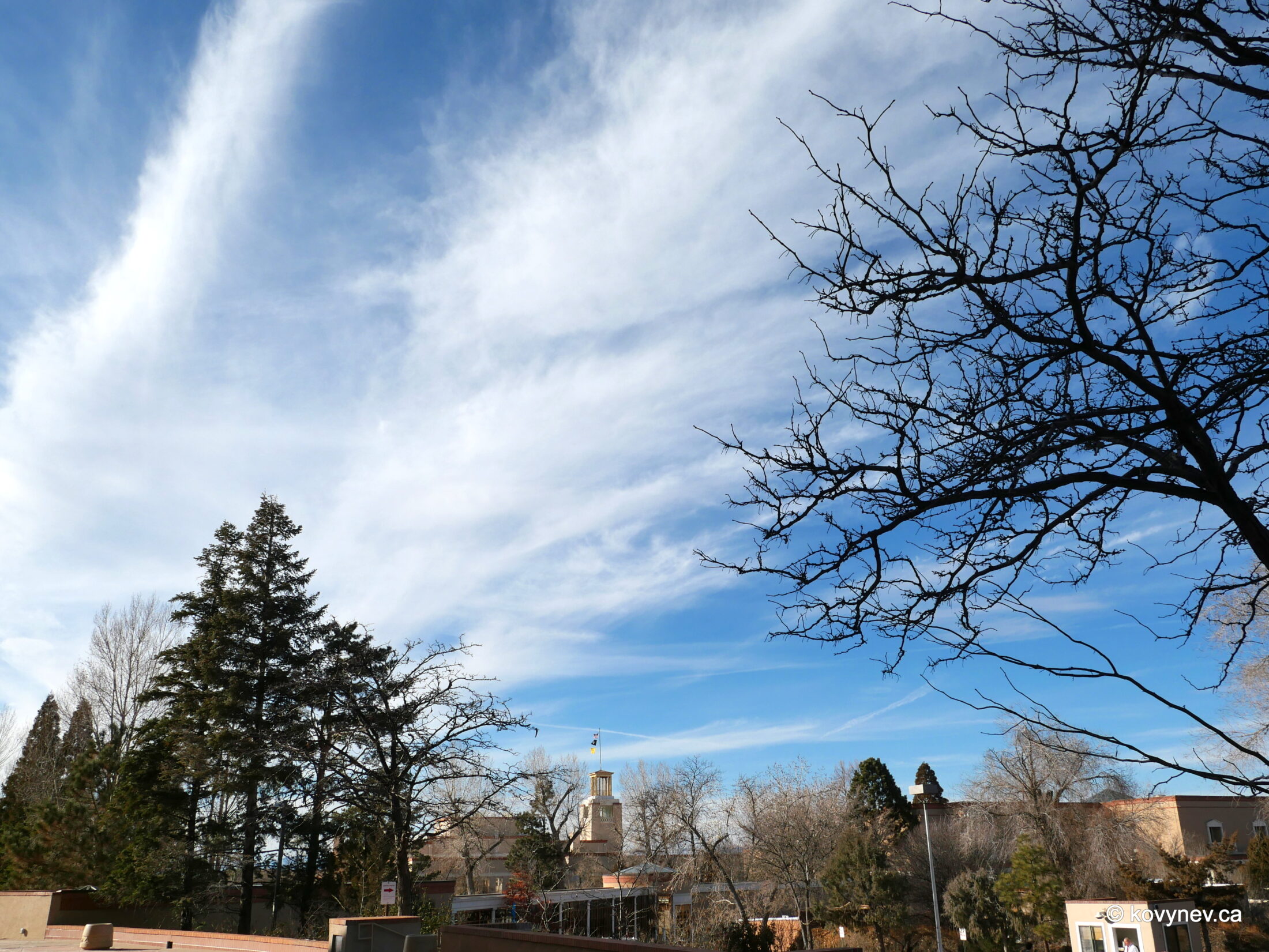
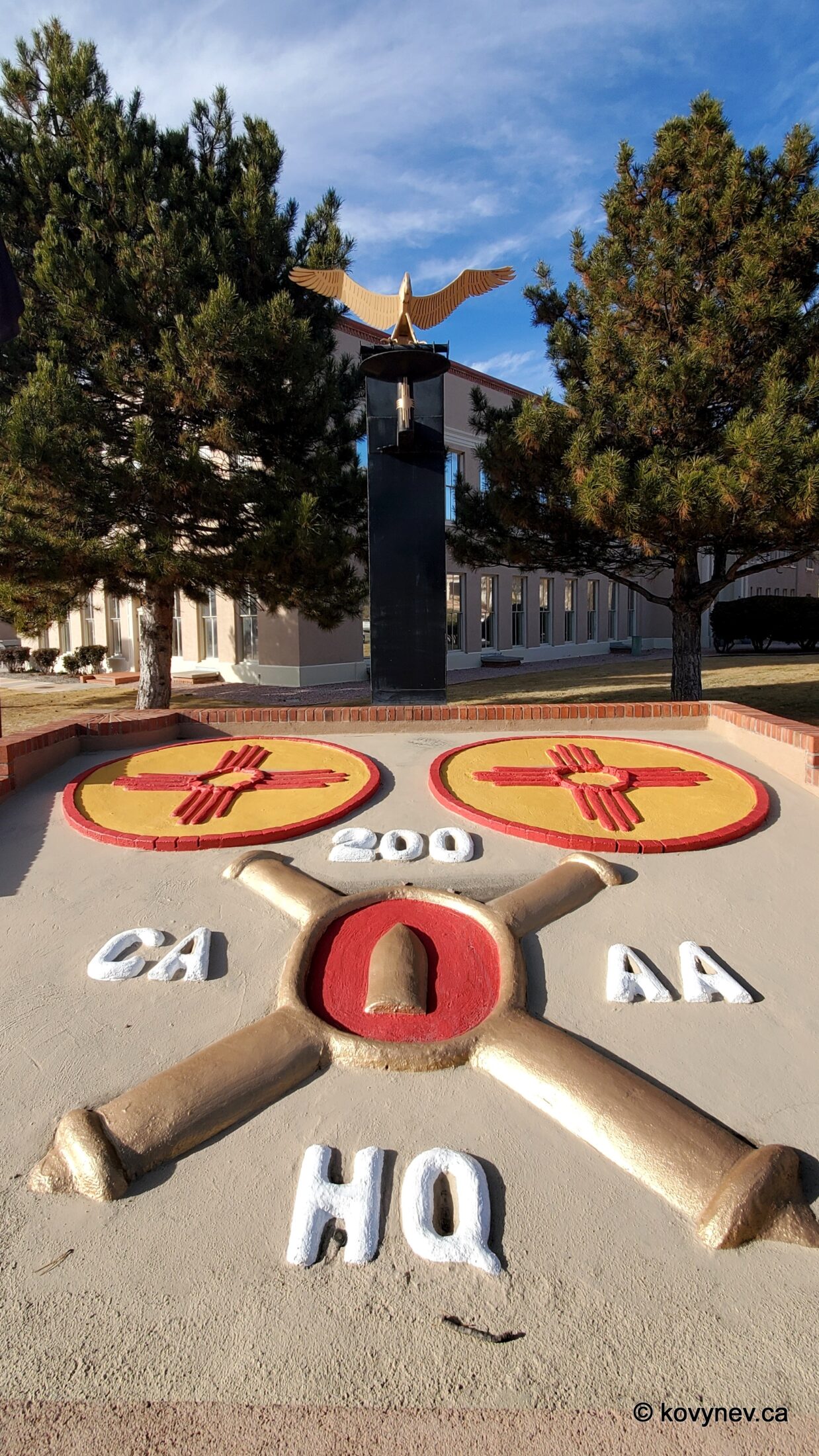
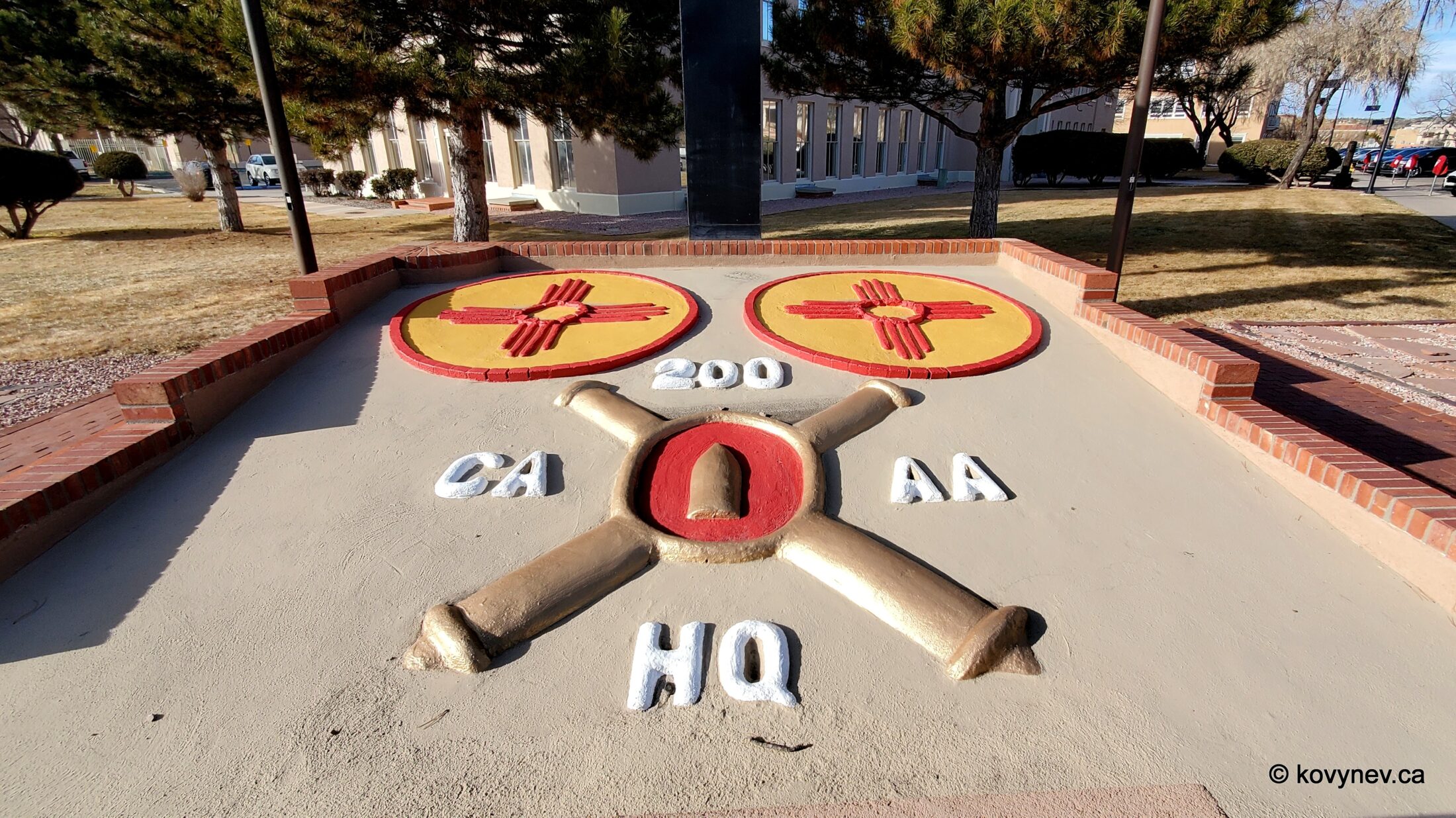
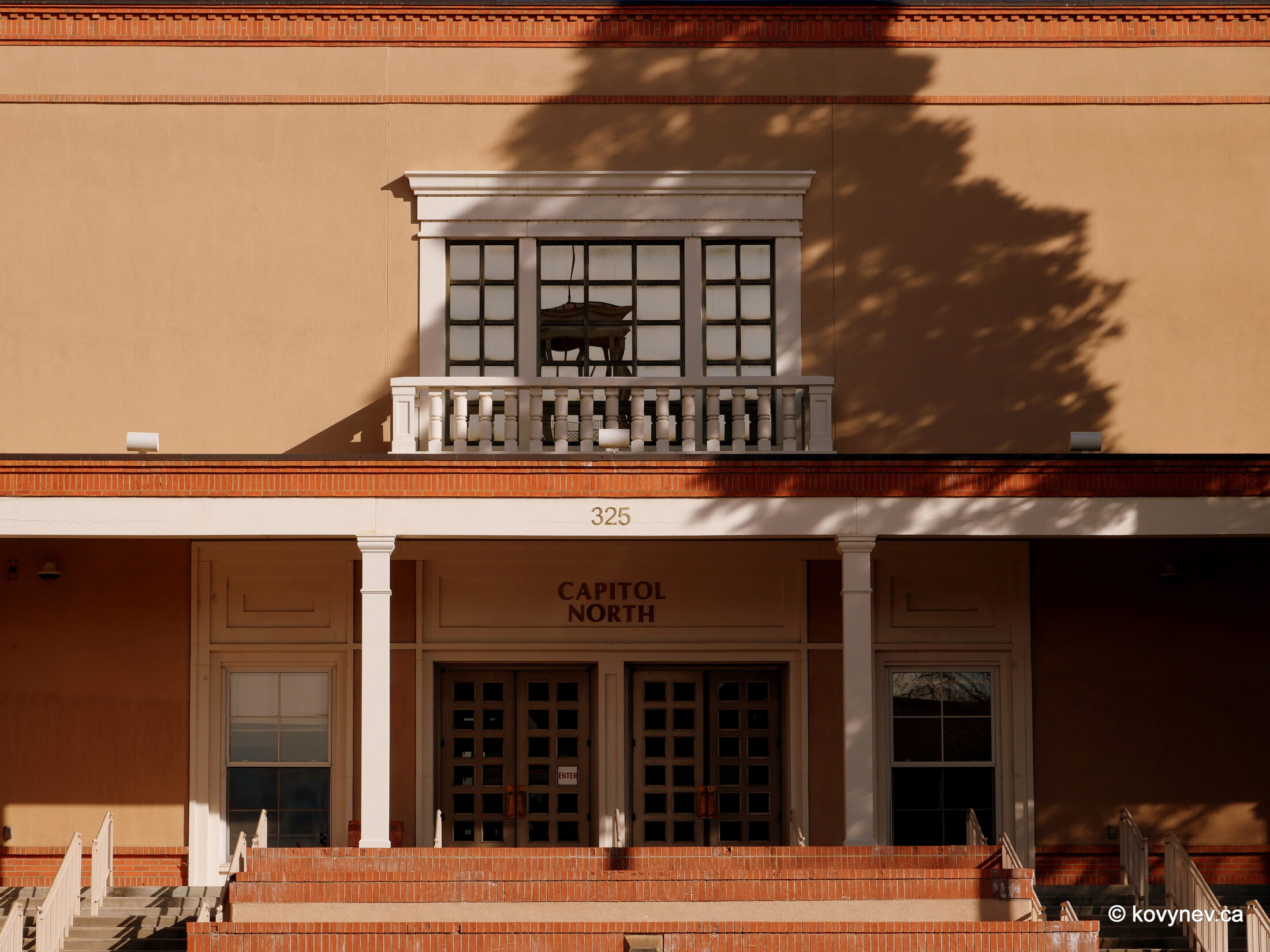
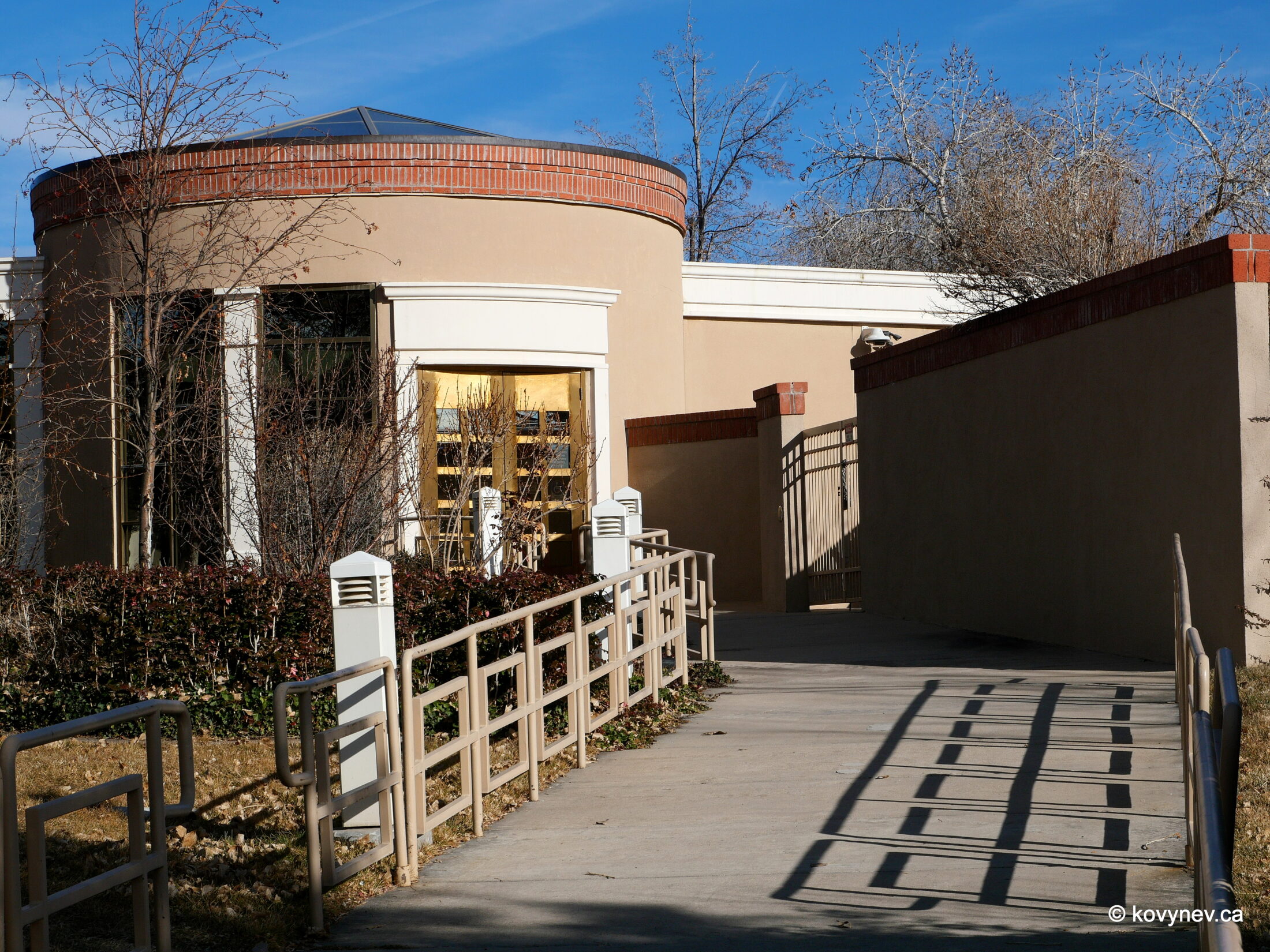
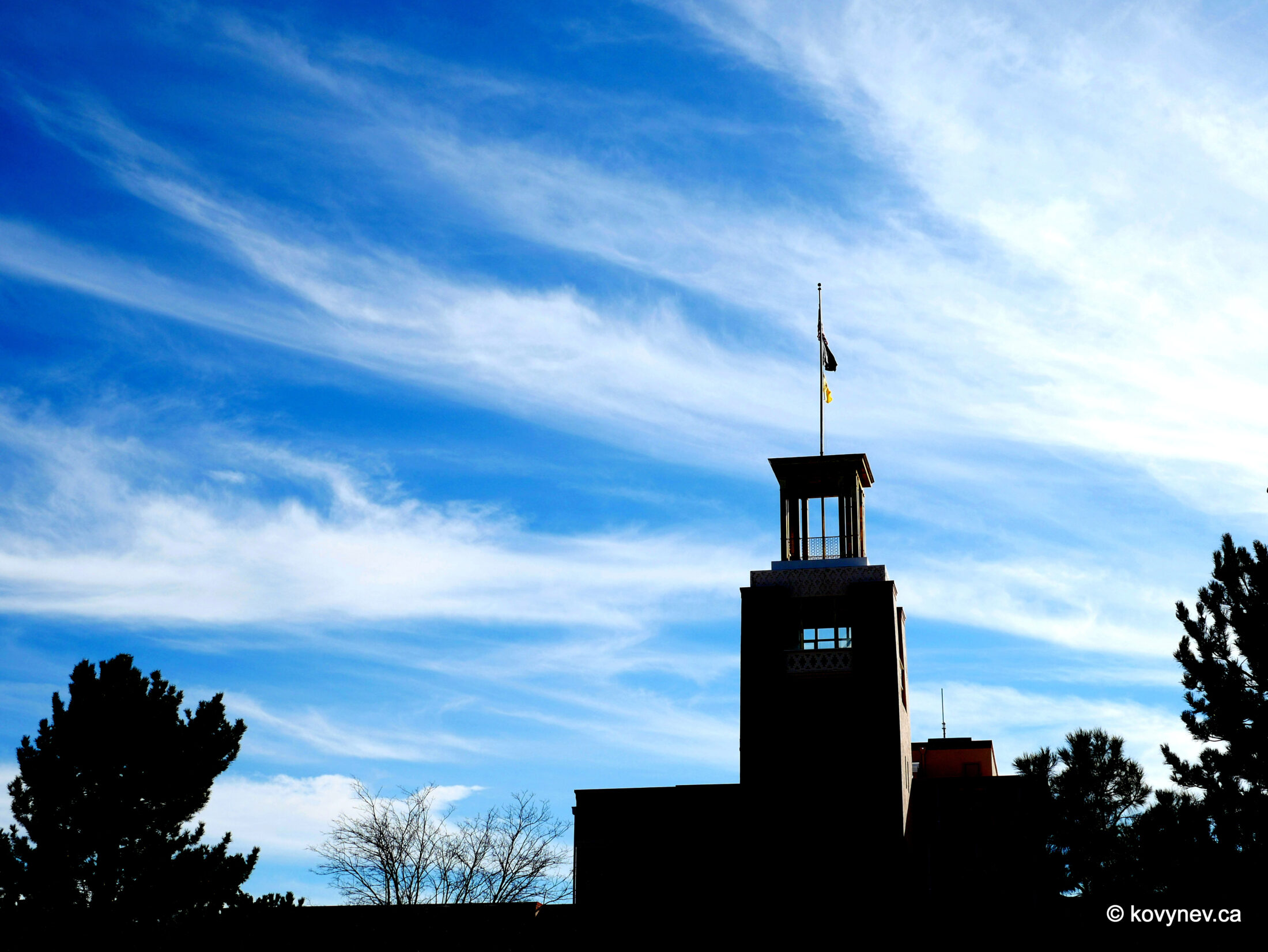
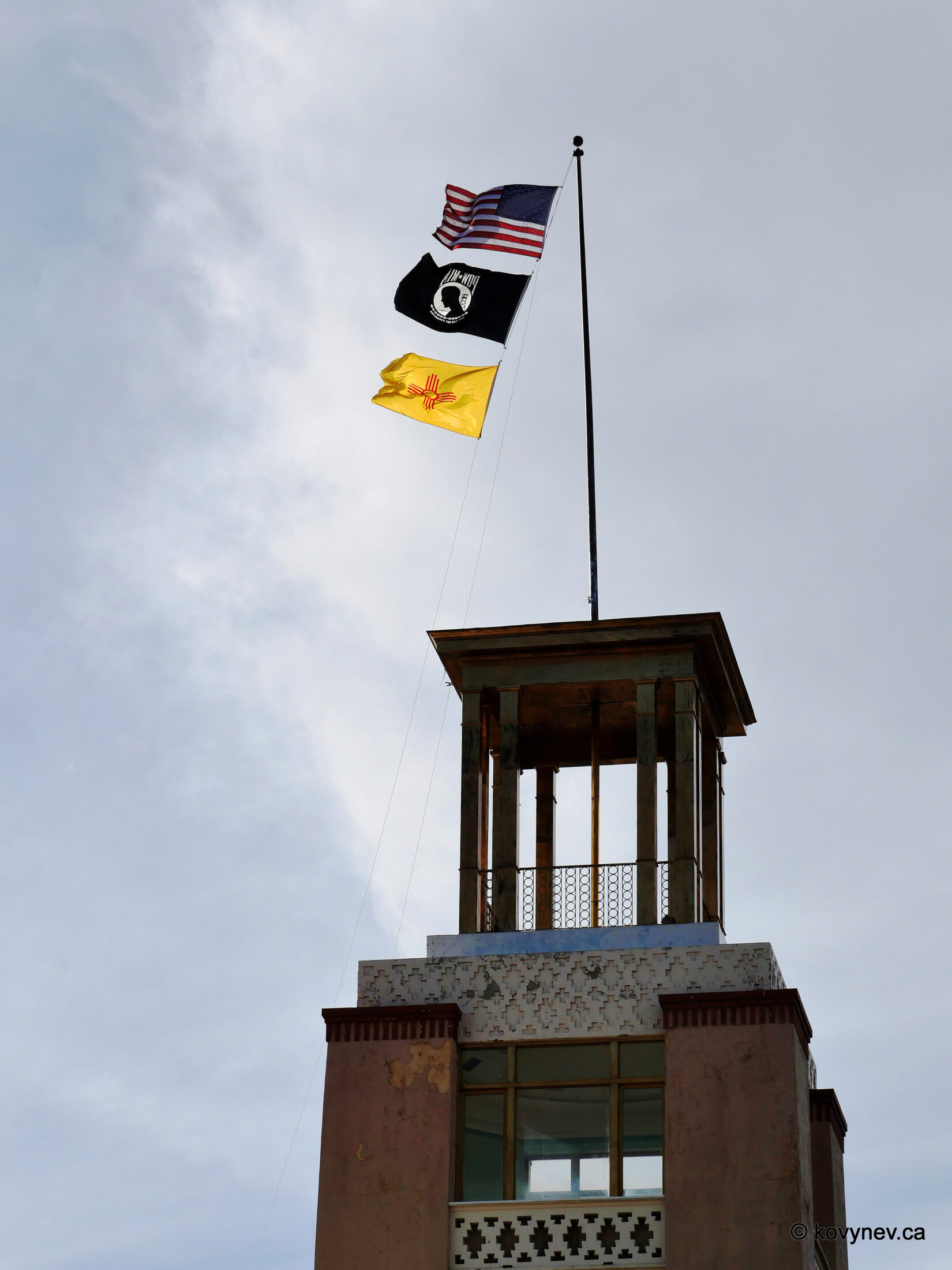
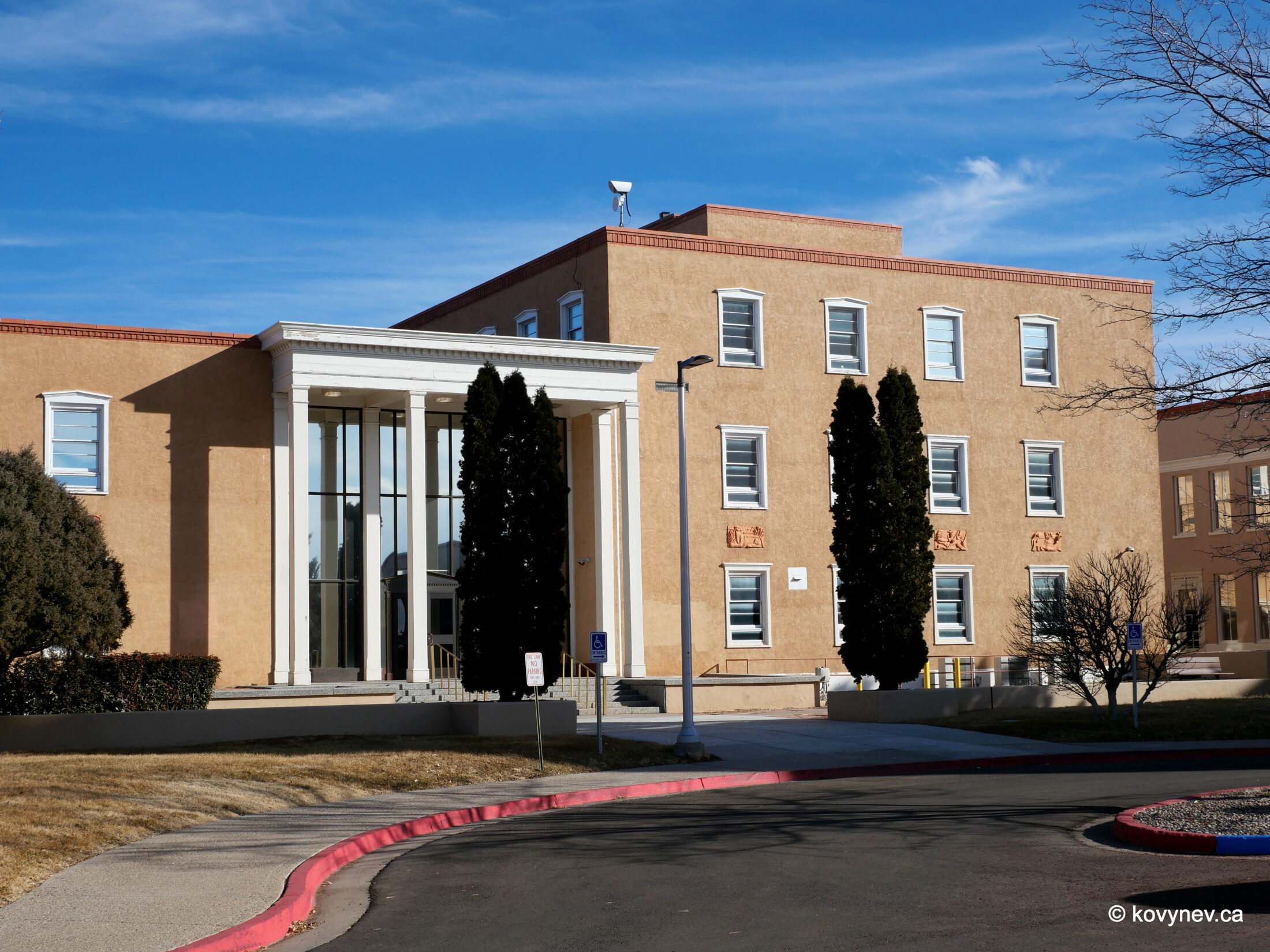
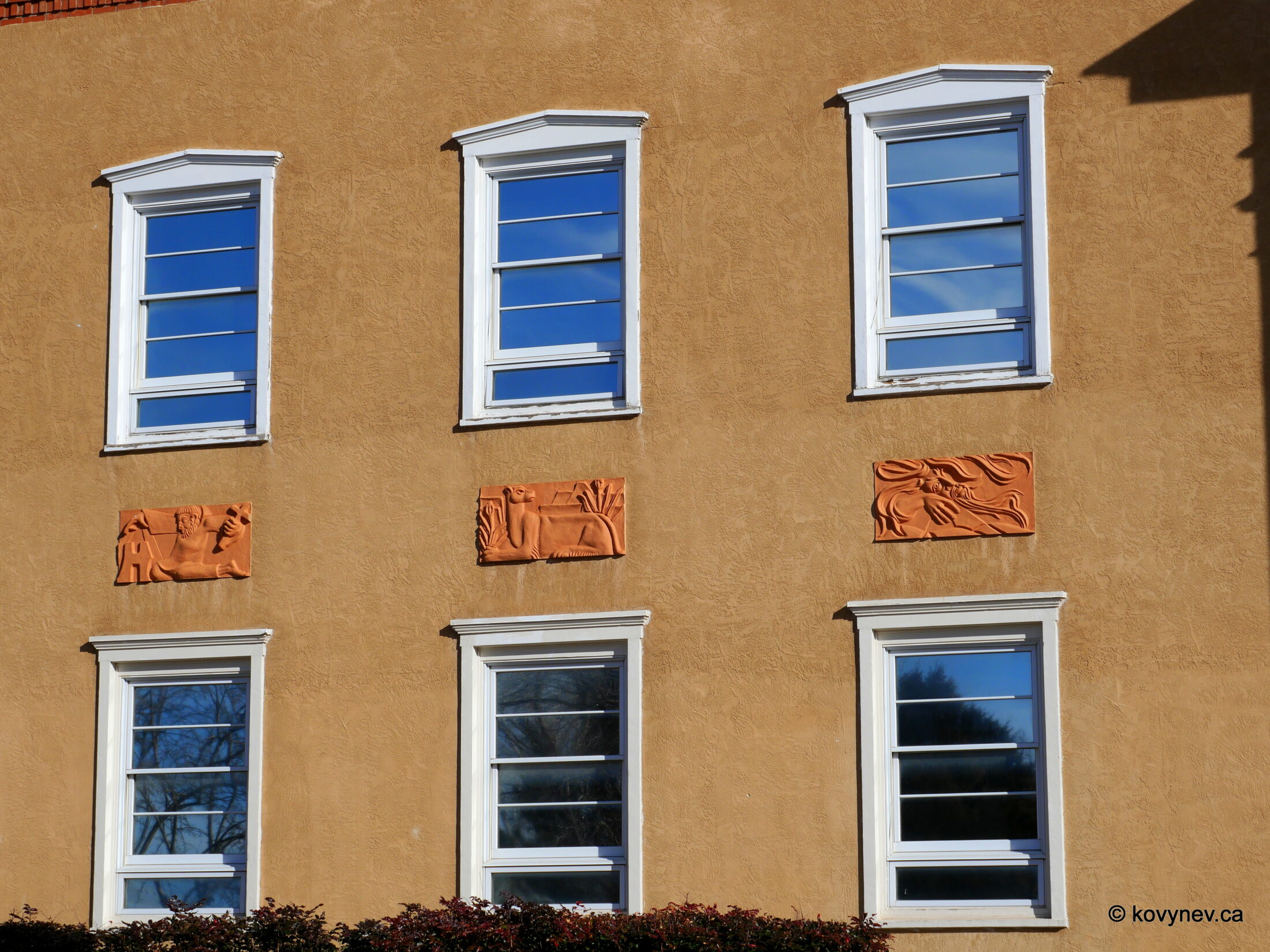
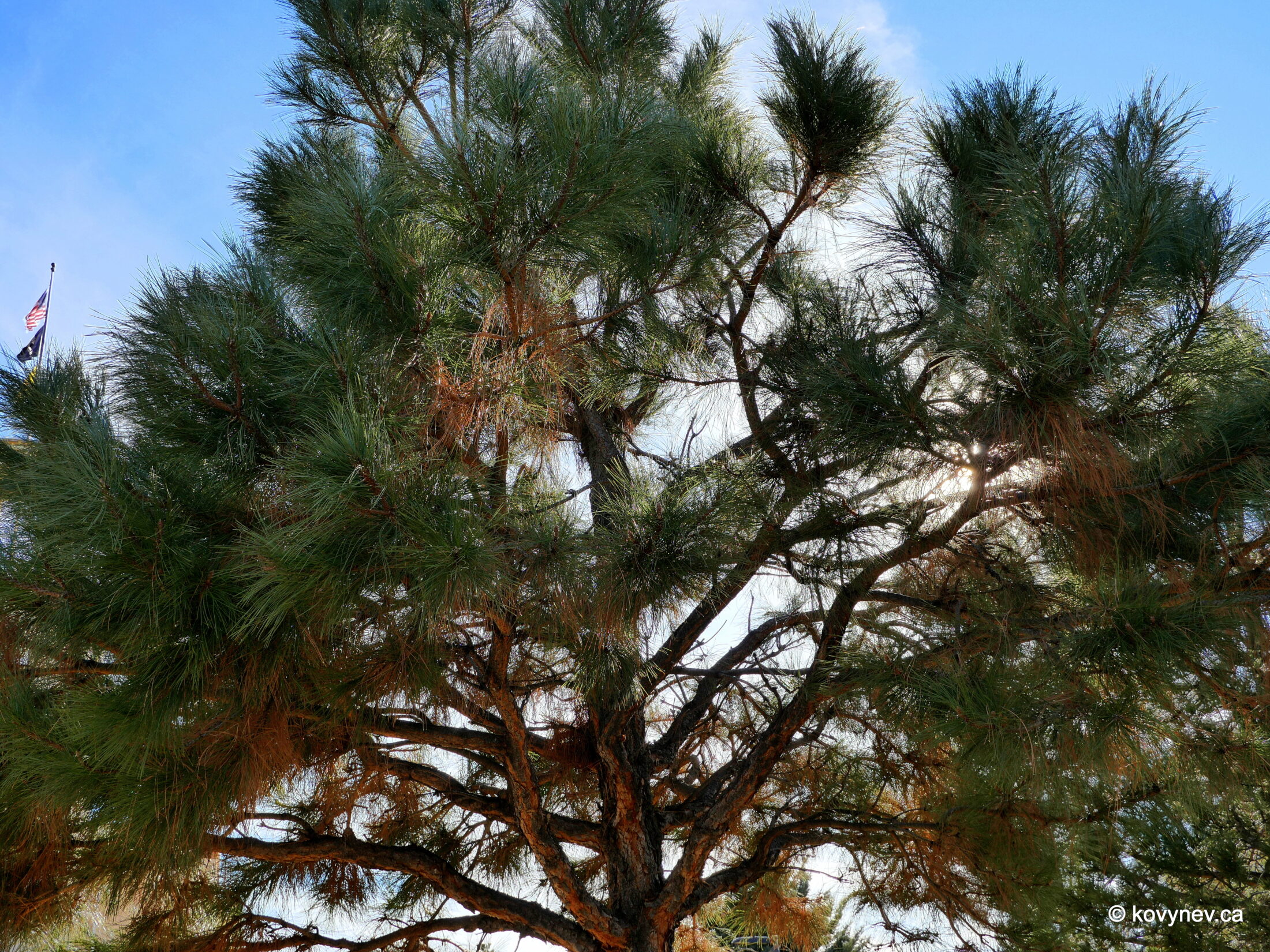
Here′s an opening pic for you, so that you′re not confused about what you will be looking at 😊. On TV, they call it "an establishing shot".The New Mexico State Capitol is completely round (it′s actually colloquially called the Roundhouse), with 4 entrances looking in 4 cardinal directions, and an open gallery going around the whole building.The building was constructed in 1966, and it cost 4.5 million dollars back then. Quite a sum. Probably, because of a lot of marble, covering the interiors.There is no dome above the building, which is normally a must-have for the US state capitols. Only 11 capitols don′t have a dome, out of 50 states. And no other state capitol is round. In this sense, this building is unique.The bronze sculpture of playing children in front of one of two public entrances to the building (the West entrance), is titled "The Children′s Plaza".The architectural style of the capitol is officially called "Territorial Revival". Territorial because this style, originated soon after the founding of Albuquerque in 1706, was formally "acknowledged" 100 years later, when New Mexico became a US Territory. ⇨⇨ And Revival because the interest in it revived again in 1930s-1940s, when most of the existing buildings of this style were built in Santa Fe and all over New Mexico.The most prominent element of the Roundhouse for me personally is this plaque above each of the 2 main entrances, depicting the Great Seal of the State of New Mexico. The seal features a large American bald eagle, and next to it - a smaller harpy eagle, sitting on the Nopal cactus plant and eating a snake (the Mexican national emblem). This represents the change of New Mexico′s sovereignty from Mexico to the US after the Mexican–American War of 1846-48.The motto on the seal (below the eagles) reads Crescit Eundo (Latin for "It grows as it goes"). Which is kinda funny, since originally New Mexico, as a Spanish colony, was WAY bigger than what it is now. Still on that plaque. Bear with me.The South entrance. If you look at the Capitol from above, the round shape of the building and the walkways stretching from the 4 entrances resemble the Zia Sun symbol, the official emblem of the State of New Mexico. This is it, on the New Mexico flag - a circle with 4 sets of 4 rays in each, going out in 4 directions. This symbol originally belonged to the indigenous Zia Pueblo people. It represents things that come in fours - directions, seasons, times of day, and stages of life. The US flag is flanking the East entrance together with the New Mexico flag.The statue in front of the entrance is called "Morning Prayer".Now, let′s just walk around the building, along its open gallery. These galleries with slim white columns, usually going along the whole length of the building, are called portales in the Territorial Revival style.There is a lot of public art in the Capitol grounds. Here are just a couple of examples.Not art, per se, but I kinda liked the design of these trash bins set around the Capitol.That′s it for the State Capitol. I tried to go inside and tour the building too, but once I saw the airport-style security checkpoint, I kinda lost interest. So, you will have to do it yourself, if you are ever in the area.However, this is not all for this particular gallery. The State Capitol is the focal point of the area where the State government buildings are located. We will walk around it now. We will start at the New Mexico Eternal Flame, a memorial dedicated to the soldiers of the 200th Coast Artillery regiment, who fought against the Japanese in the Philippines during the WWII. The members of the regiment were eventually captured and then forced to walk 100 km as the infamous Bataan Death March, when Japanese transferred them to the POW camp, where total of 20,000 Filipinos and 1,500 Americans died of disease and starvation. On this spot in Santa Fe, there were the headquarters of the 200th Coast Artillery regiment.The eagle watching over the eternal flame.Next to the memorial there is the Office of the Secretary of State, one of the annexes to the Capitol building.Another good example of the Territorial Revival style.The tall tower some distance away, which we already saw, marks another government complex, Bataan Memorial Building. This is the 3rd Capitol building I mentioned before. The legislature was housed here in 1900-1966.It absolutely didn′t look the way it looks now. It looked much more like a state capitol than the Roundhouse. It had a dome and a classic portico - all the works. In this building on January 6, 1912, President William Taft signed the Senate Joint Resolution 57, giving the Territory of New Mexico as the 47th State.Once the Capitol moved to the Roundhouse across the street, this building was completely reconstructed. The dome and portico were removed. Probably, because you cannot have a building next to the Capitol, which looks way more like a capitol then the Capitol itself.After the dome was removed, there were no place to put a flagpole on anymore. So this tower had to be added. A 5-storey tower was built specifically for the purpose of supporting the flagpole. No kidding.In 1968, the former capitol was renamed the Bataan Memorial Building to honor over 800 New Mexicans who died during the Battle of Bataan and subsequent Bataan Death March, which I mentioned earlier. The black flag on the picture is the POW/MIA flag (Prisoners-of-War and Missing in Asia), commemorating all Americans, who were killed or went missing-in-action during conflicts in Asia.The building next to the Bataan Memorial Building is another fine example of the Territorial Revival style. All necessary features are present: a flat roof with brick-edged parapets, the slim white columns, ... ⇨ ⇨ ... smooth stuccoed and ochre-painted walls, formal sash windows with decorative elements, often little pediments resembling classical Greek porticos. The Greco-Roman influence is the defining characteristic of the Territorial Revival style. So much so, that sometimes it′s called Greek Revival.Just a few more pics in the vicinity of the Bataan Memorial Building. And that′s it for now. I am leaving you with this beautiful pine tree (most probably, Ponderosa Pine), one of the most common tree types in the mountains of New Mexico.Press ESC to exit