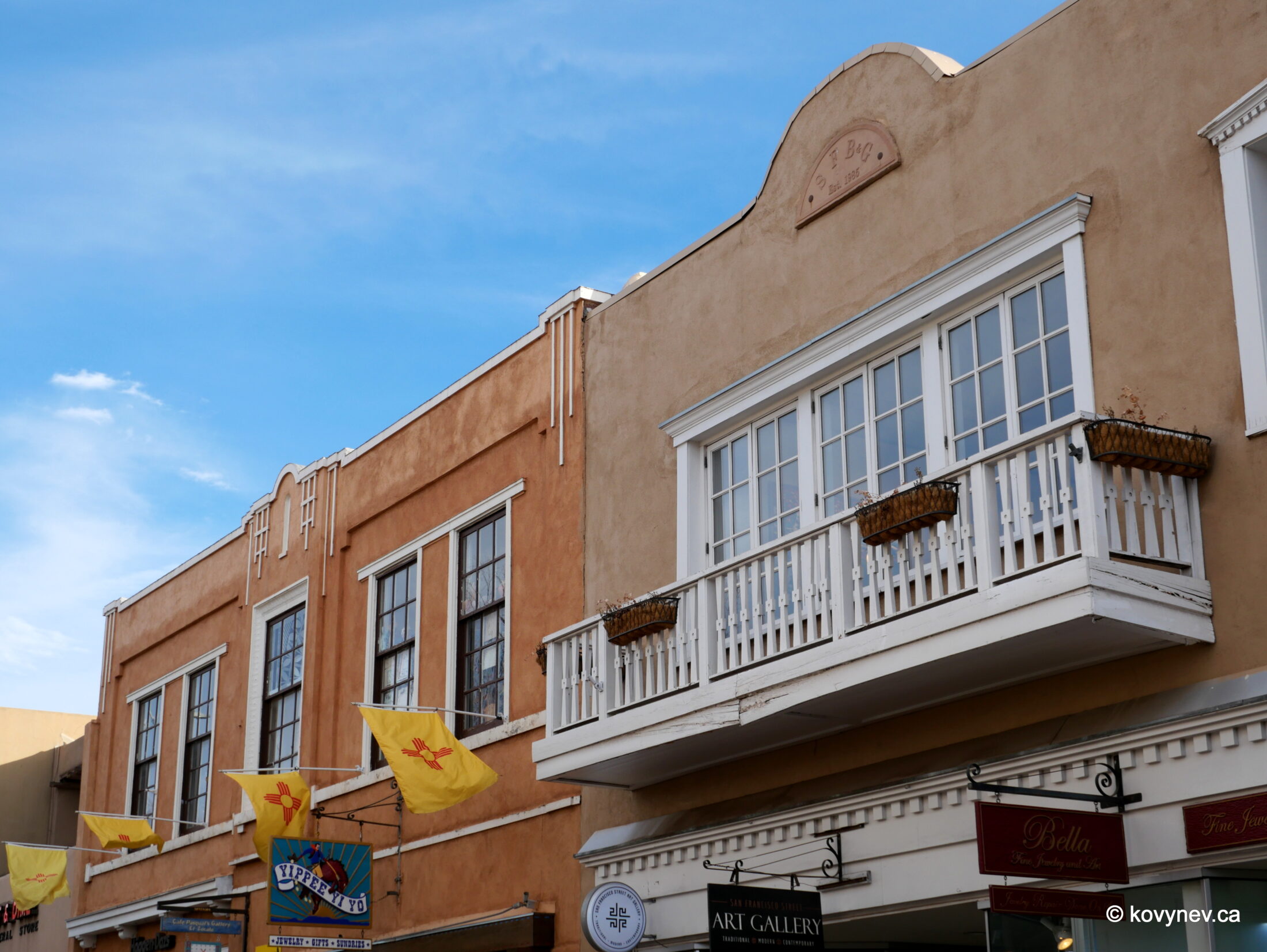
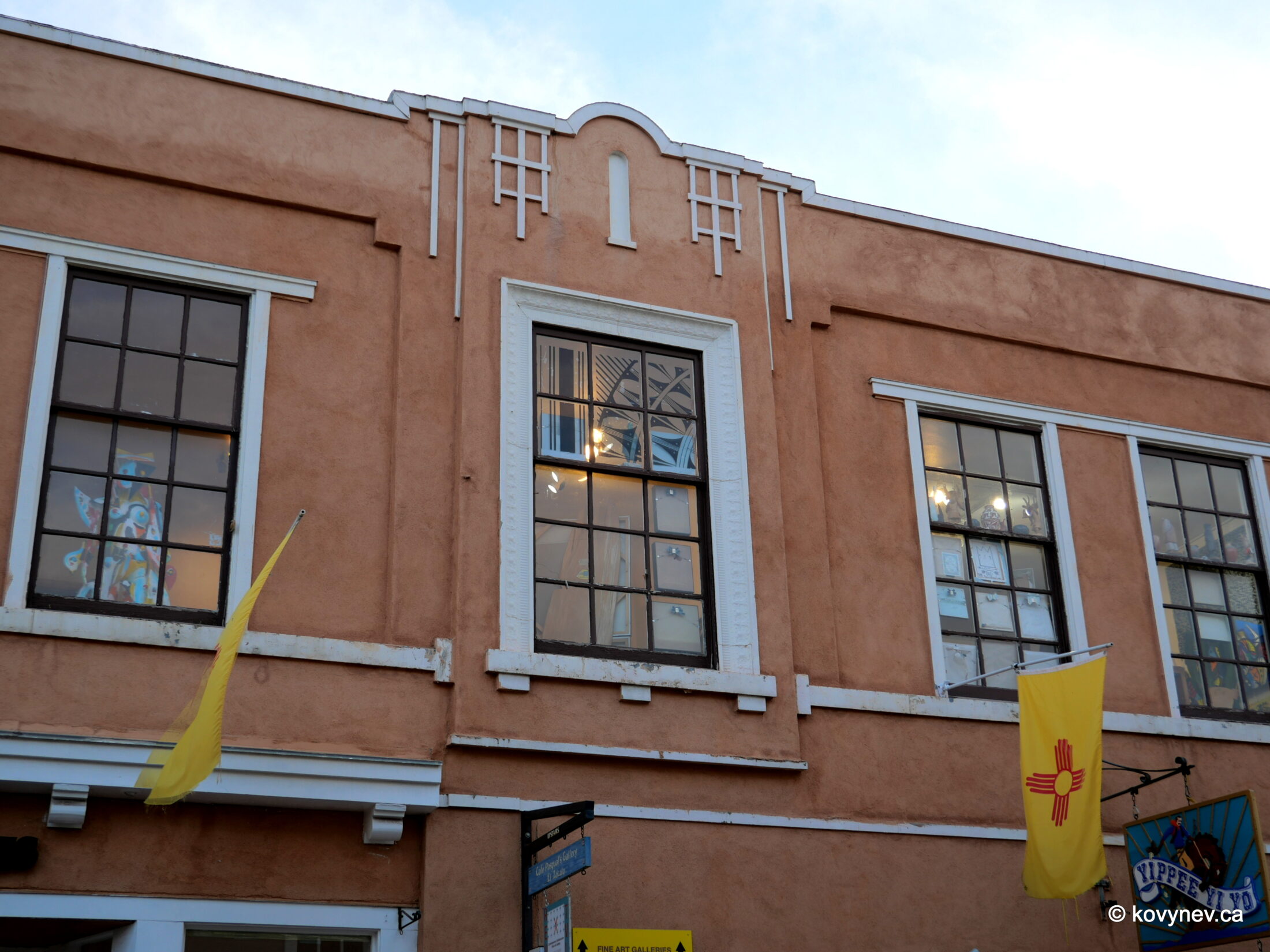
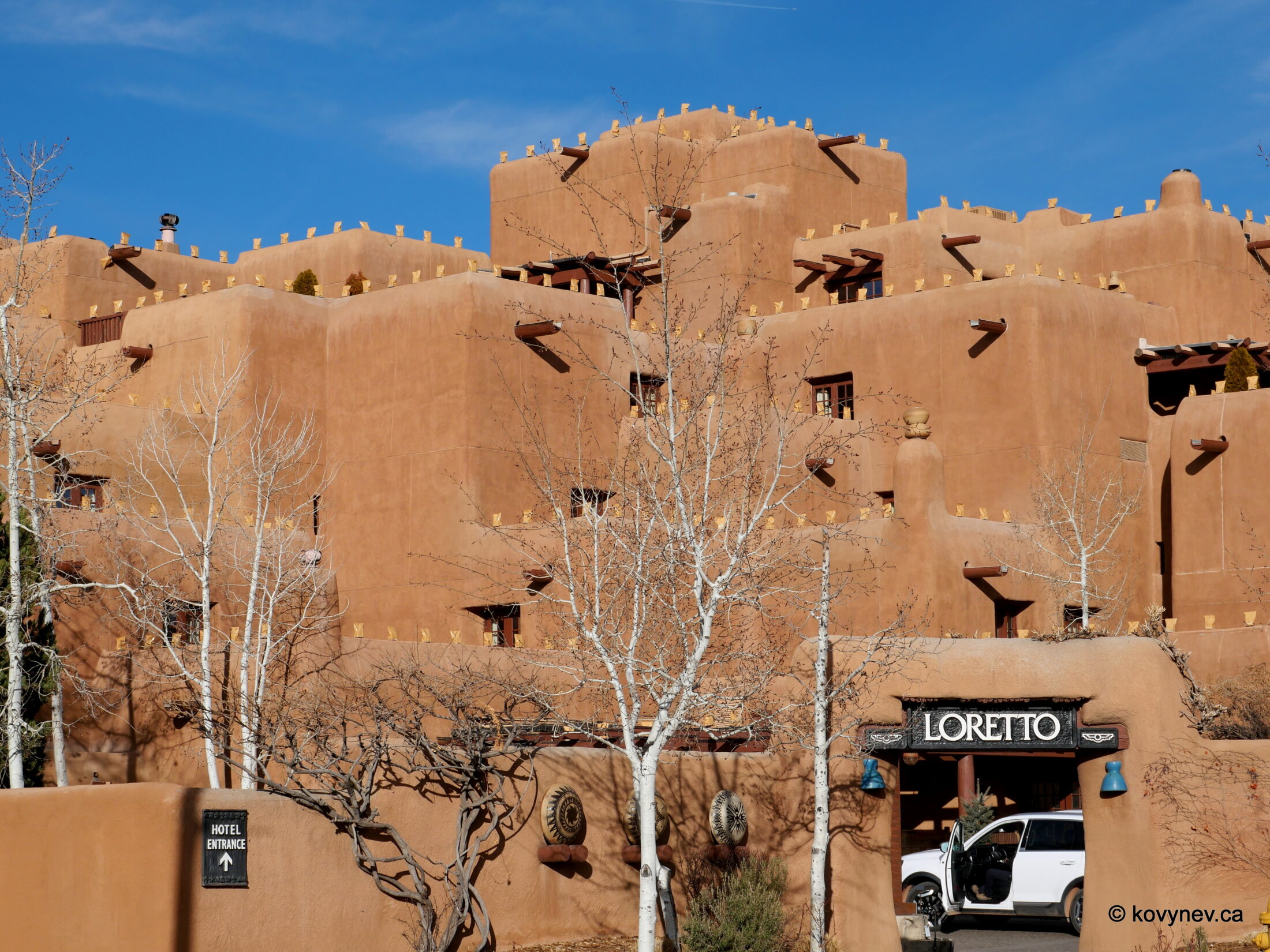
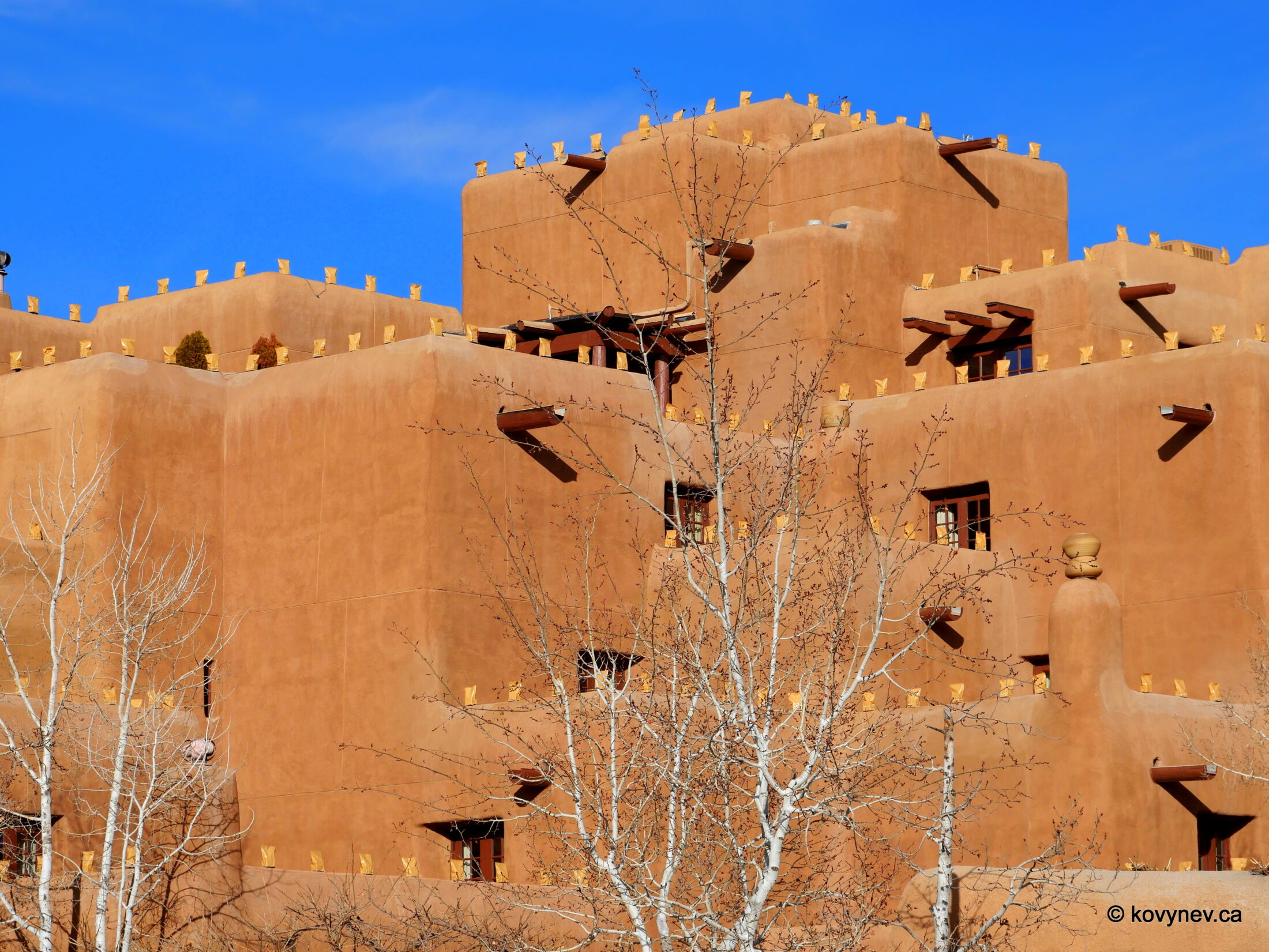
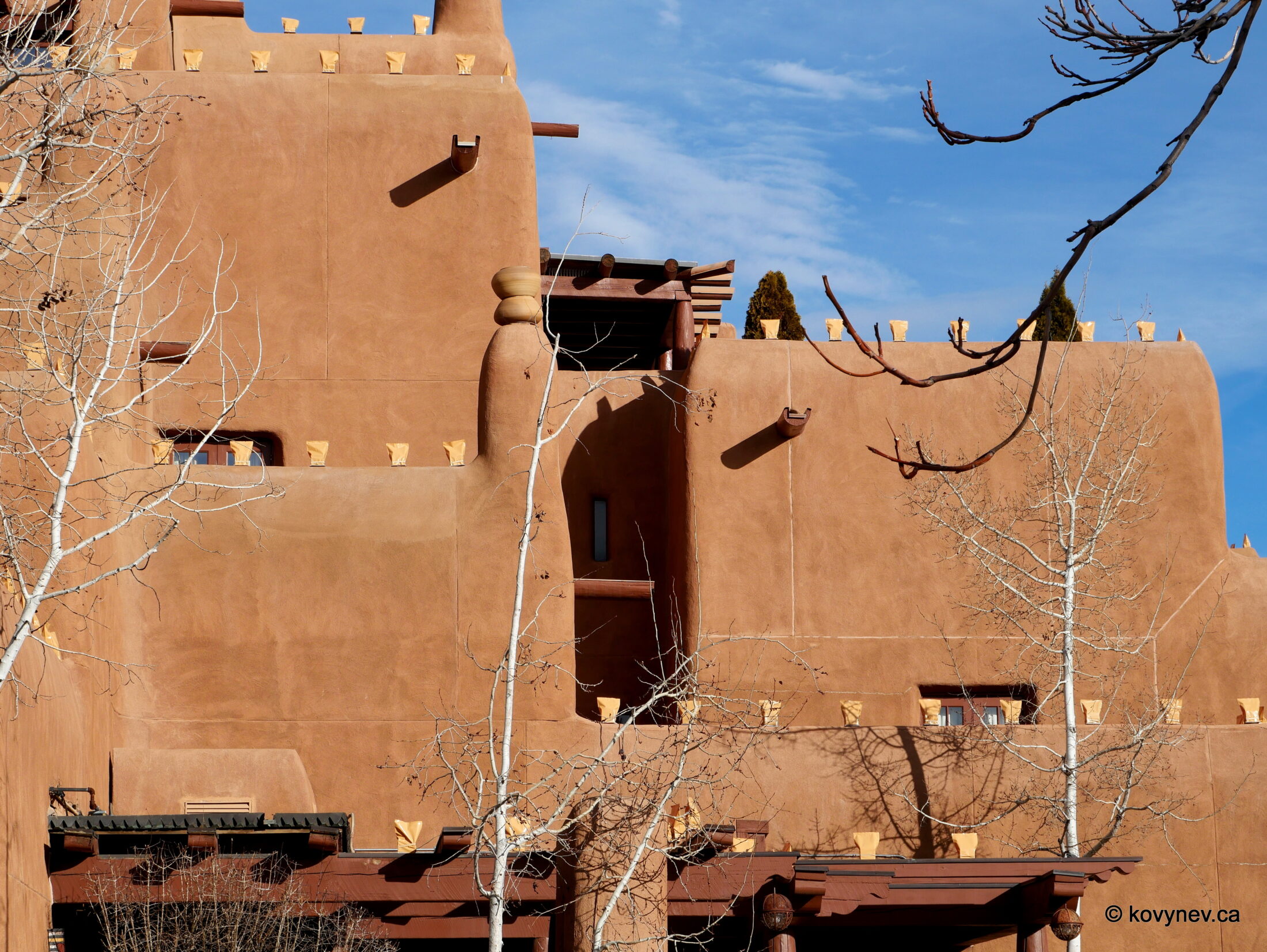
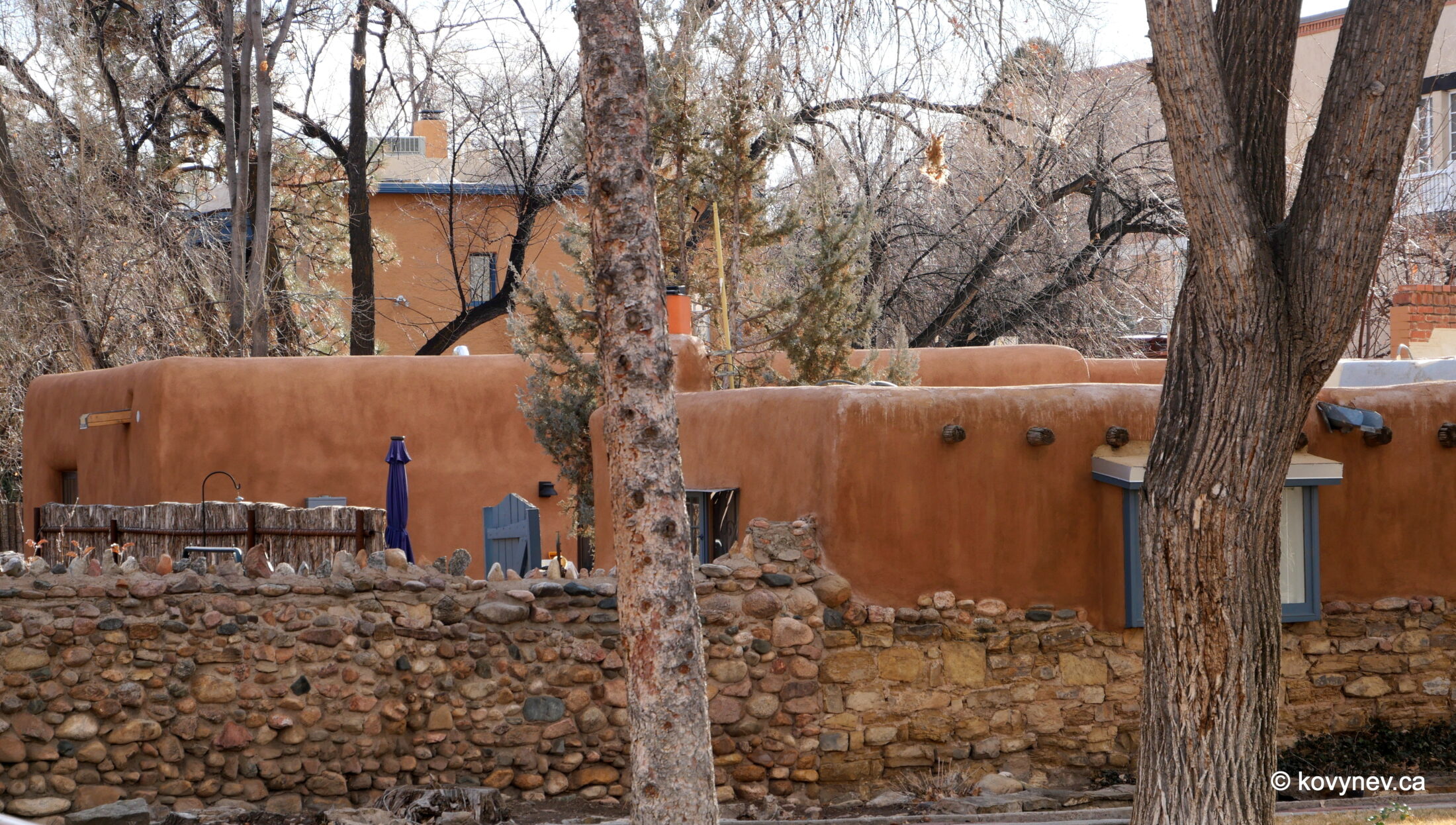
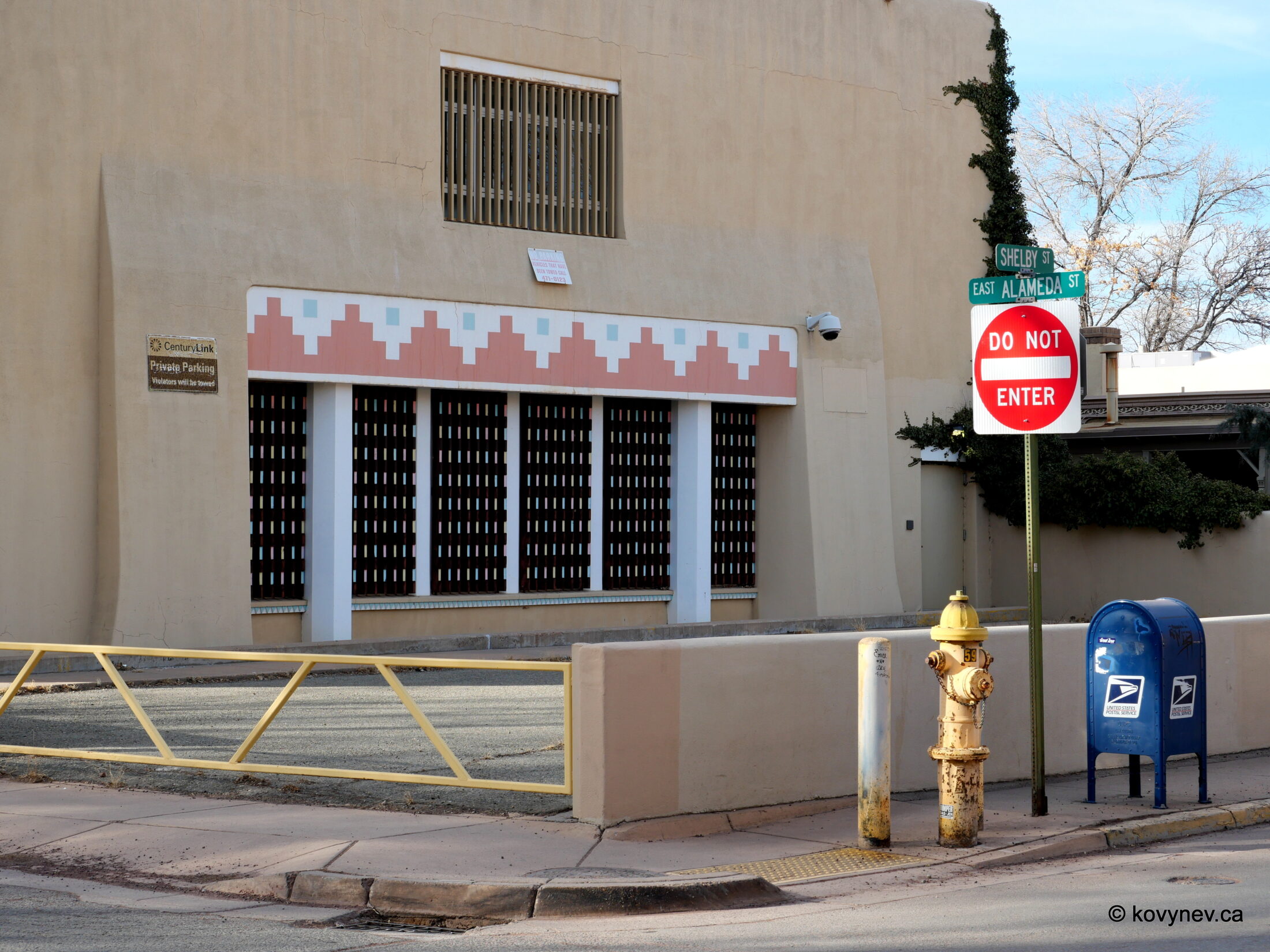
Let’s continue with a walk around Santa Fe old town. It’s worth it. It’s quite charming, being almost completely built in that Pueblo Revival style, which isn’t commonly known as “Santa Fe style” for nothing.
NIKONCOOLPIX S9300 22mm
/ 5.7
/ 10/1000s
/ ISO 125
Created: 125
Uploaded: 125
Likes: 125
Views: 125
Comments: 125
-1
-1
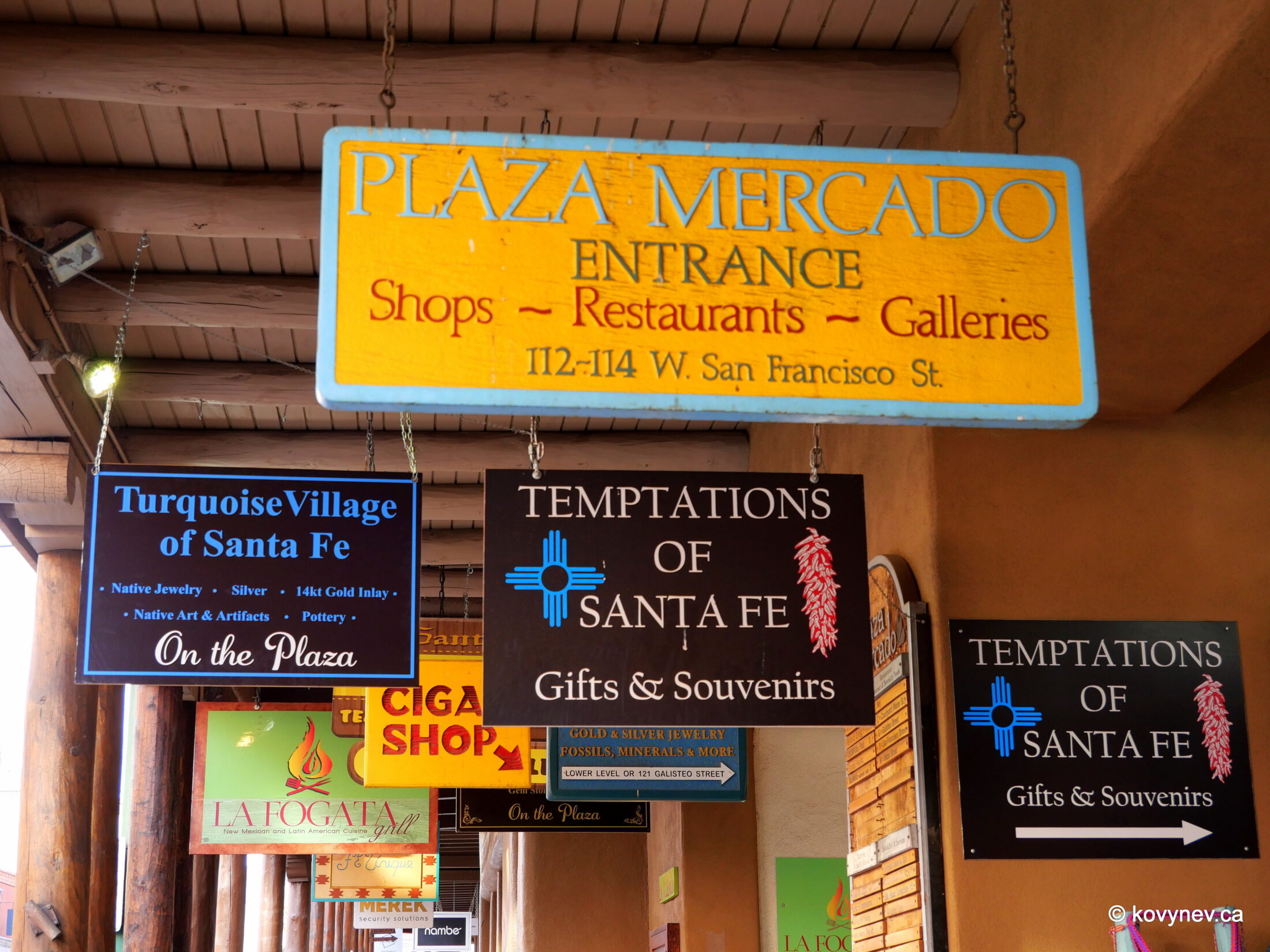
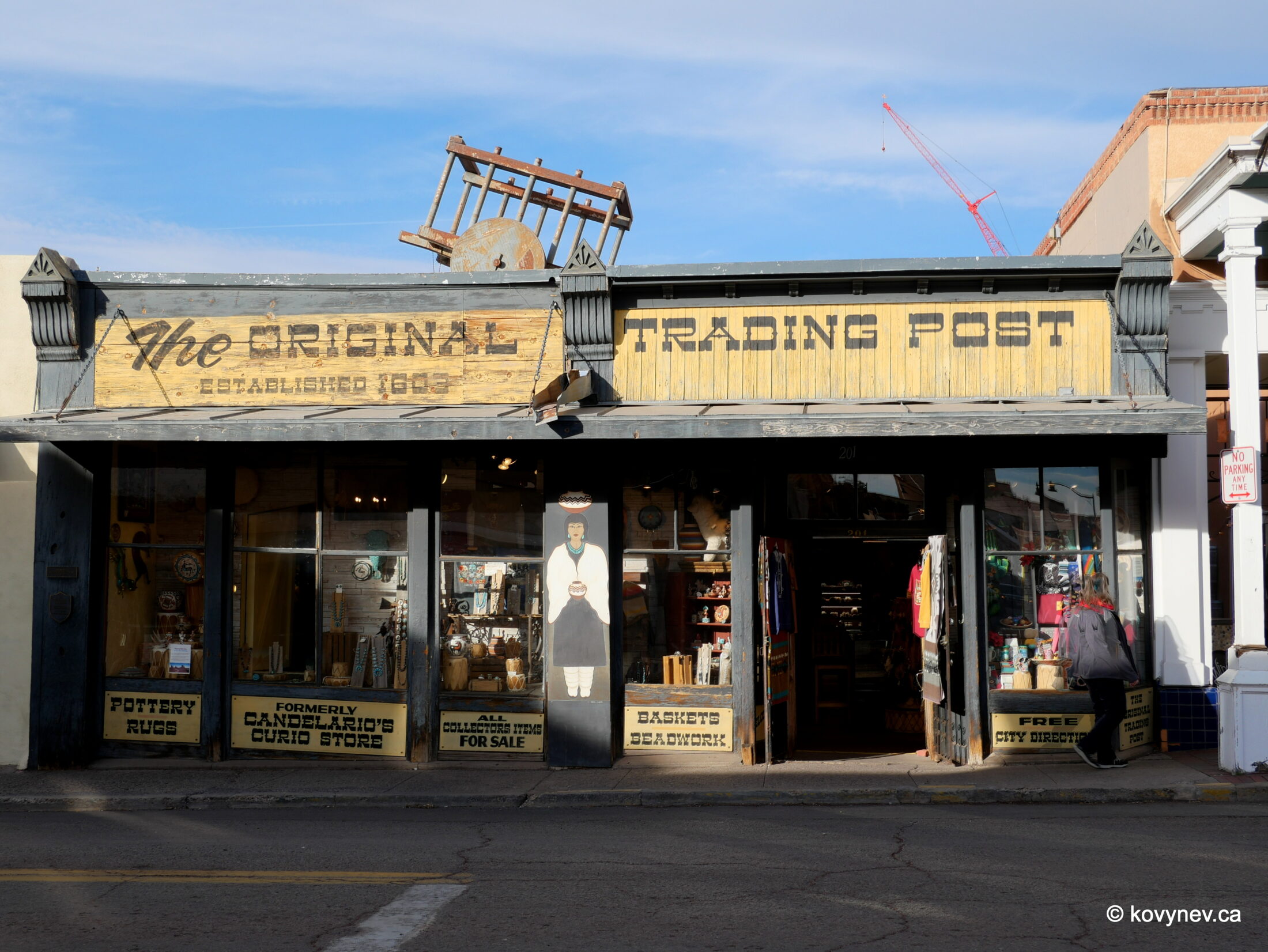
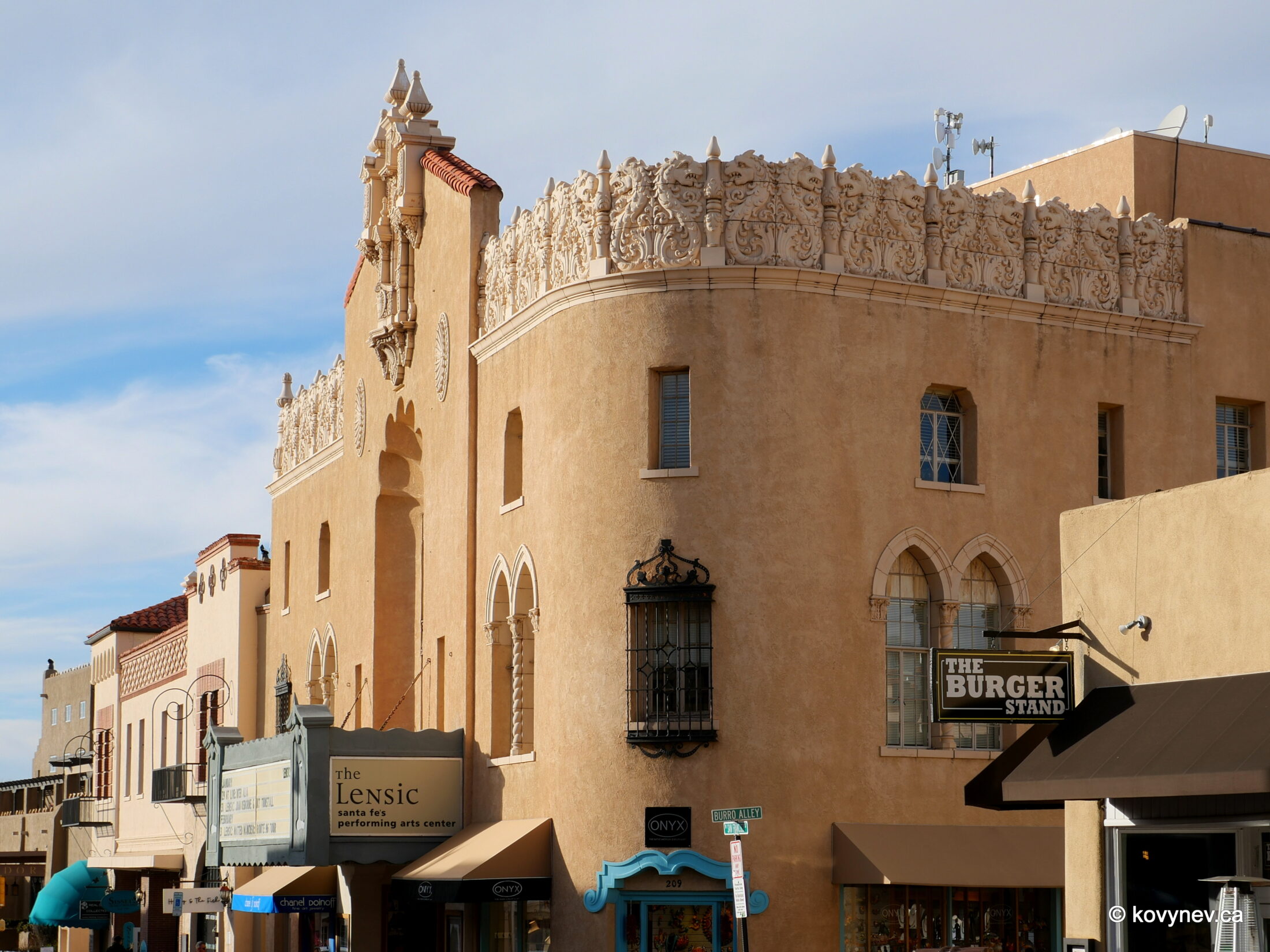
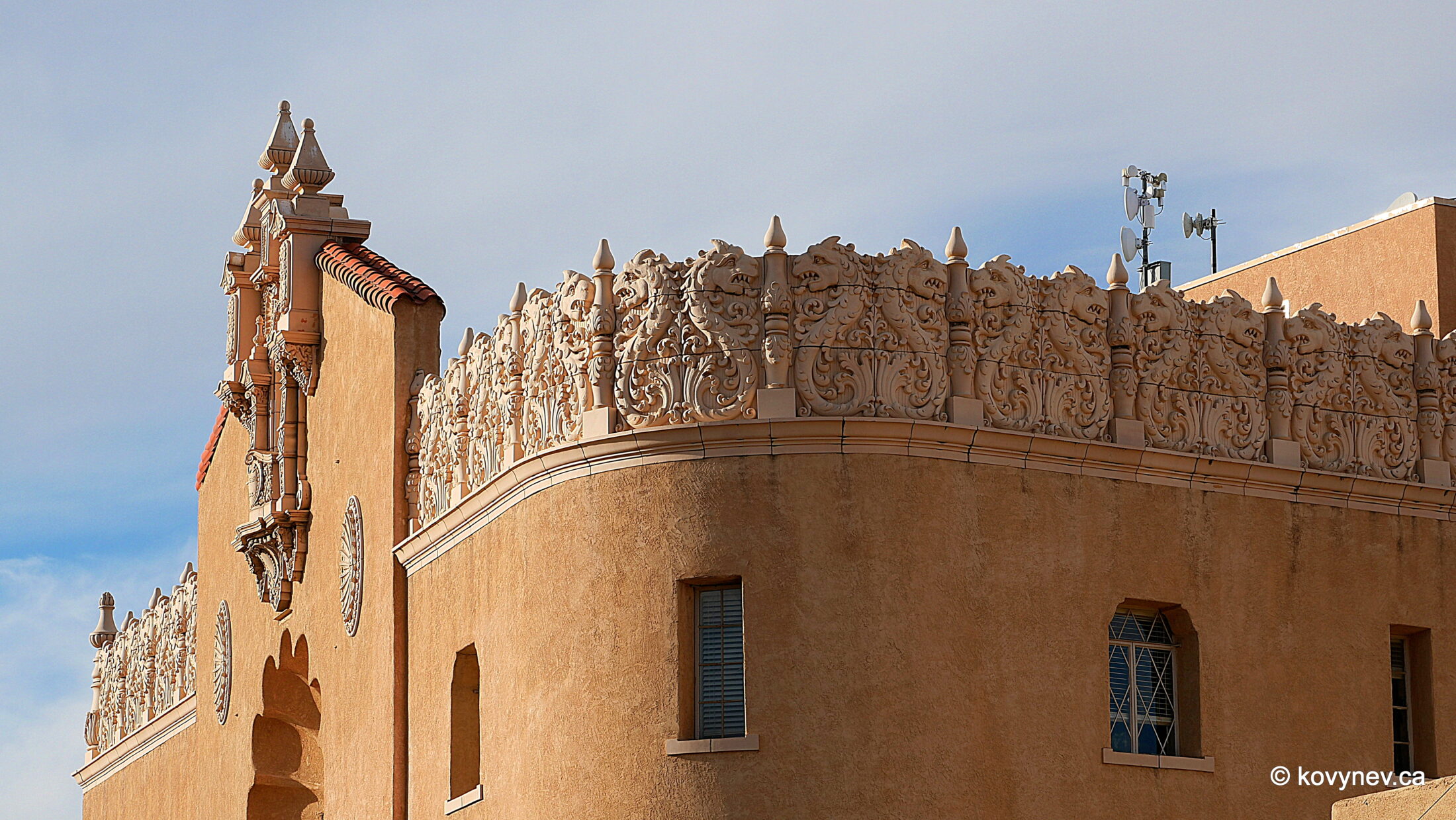
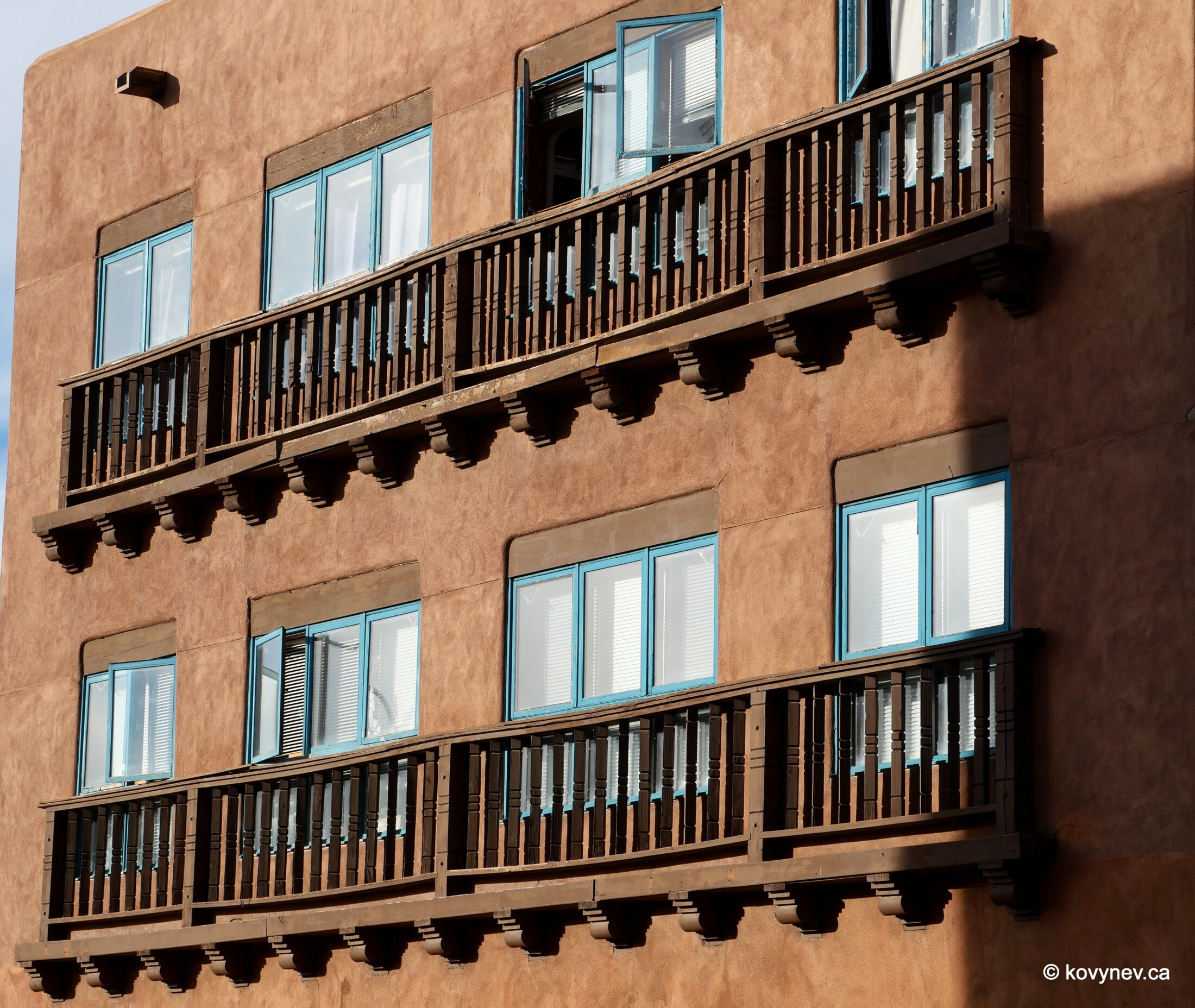
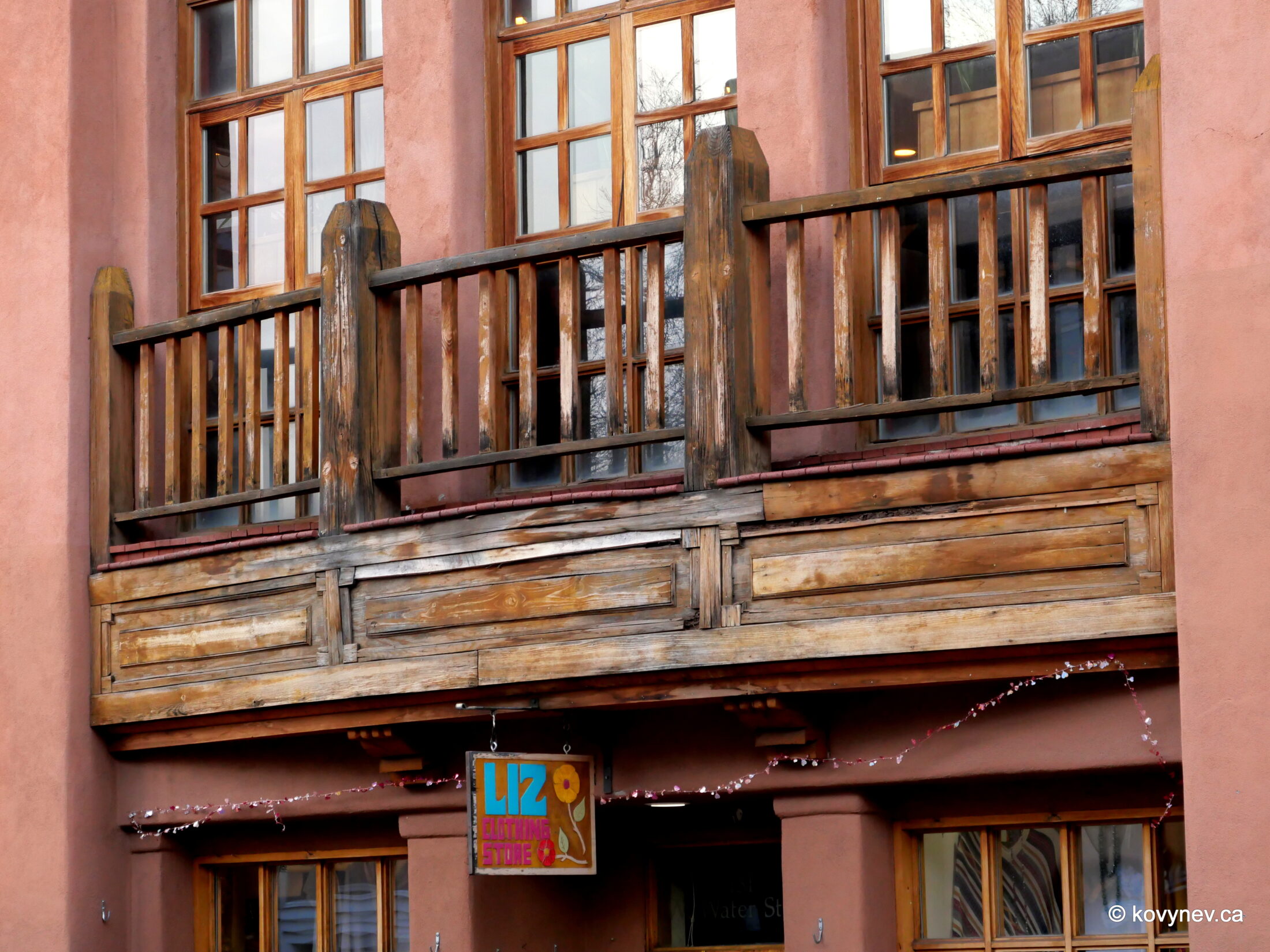
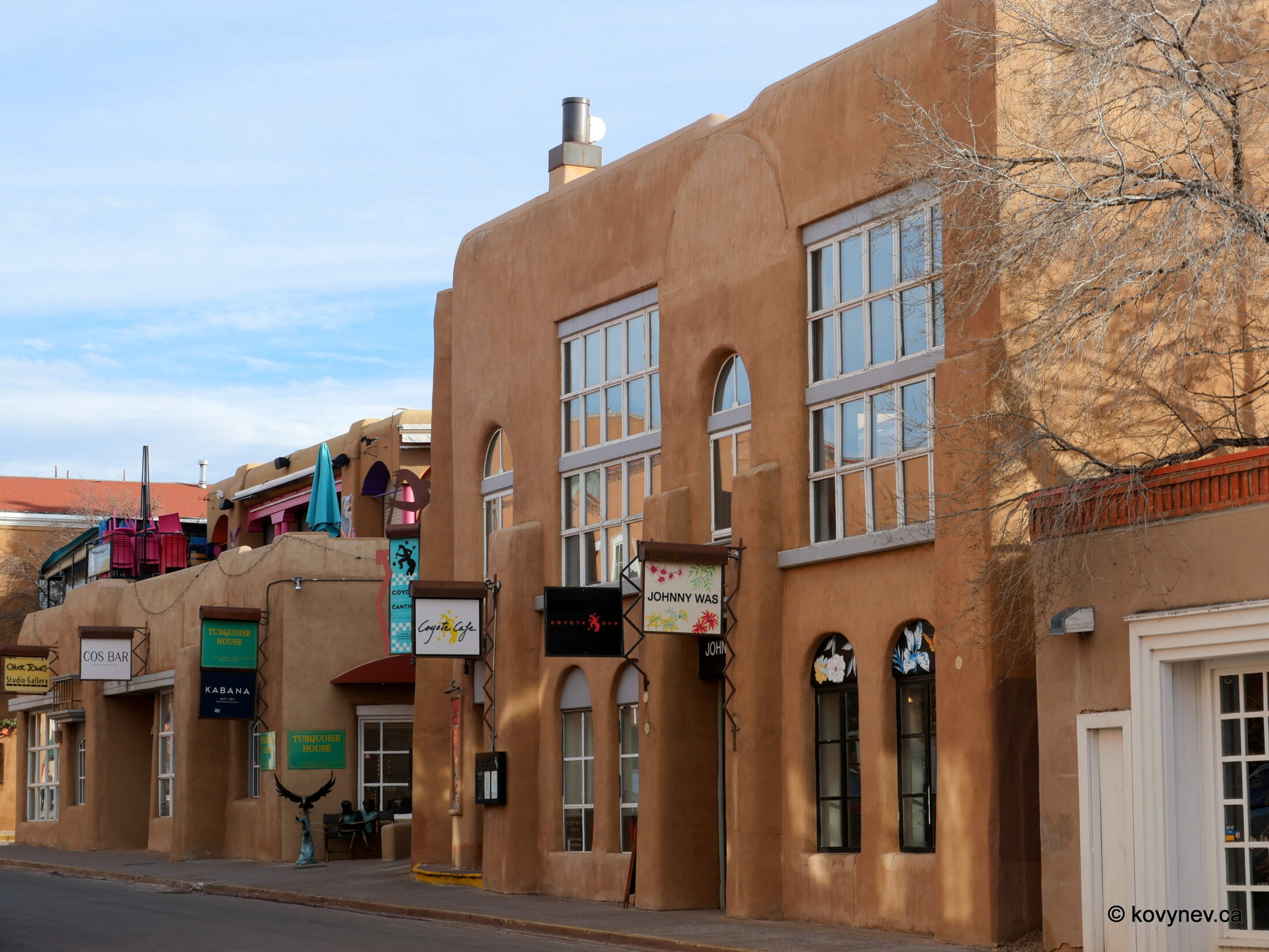
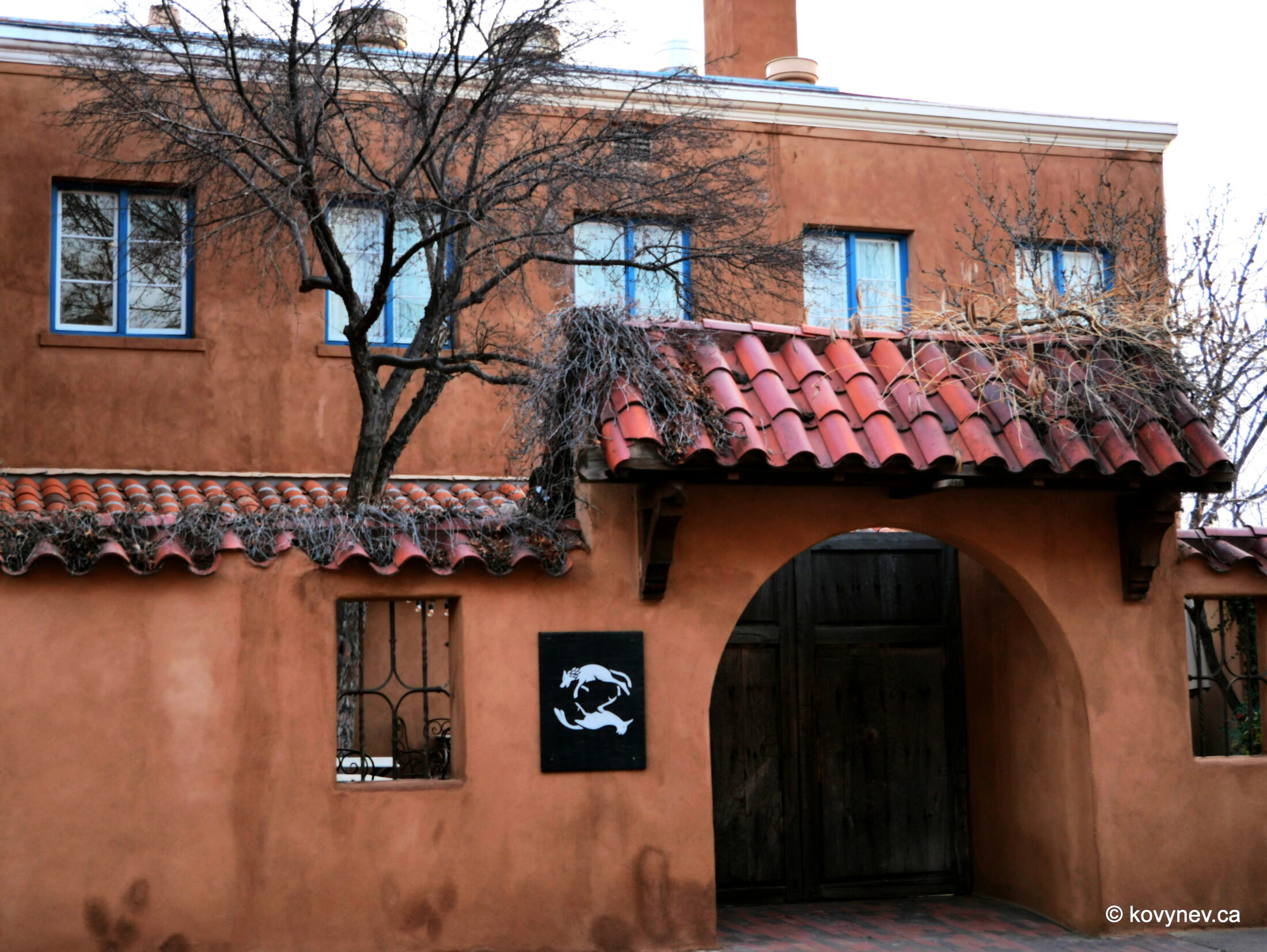
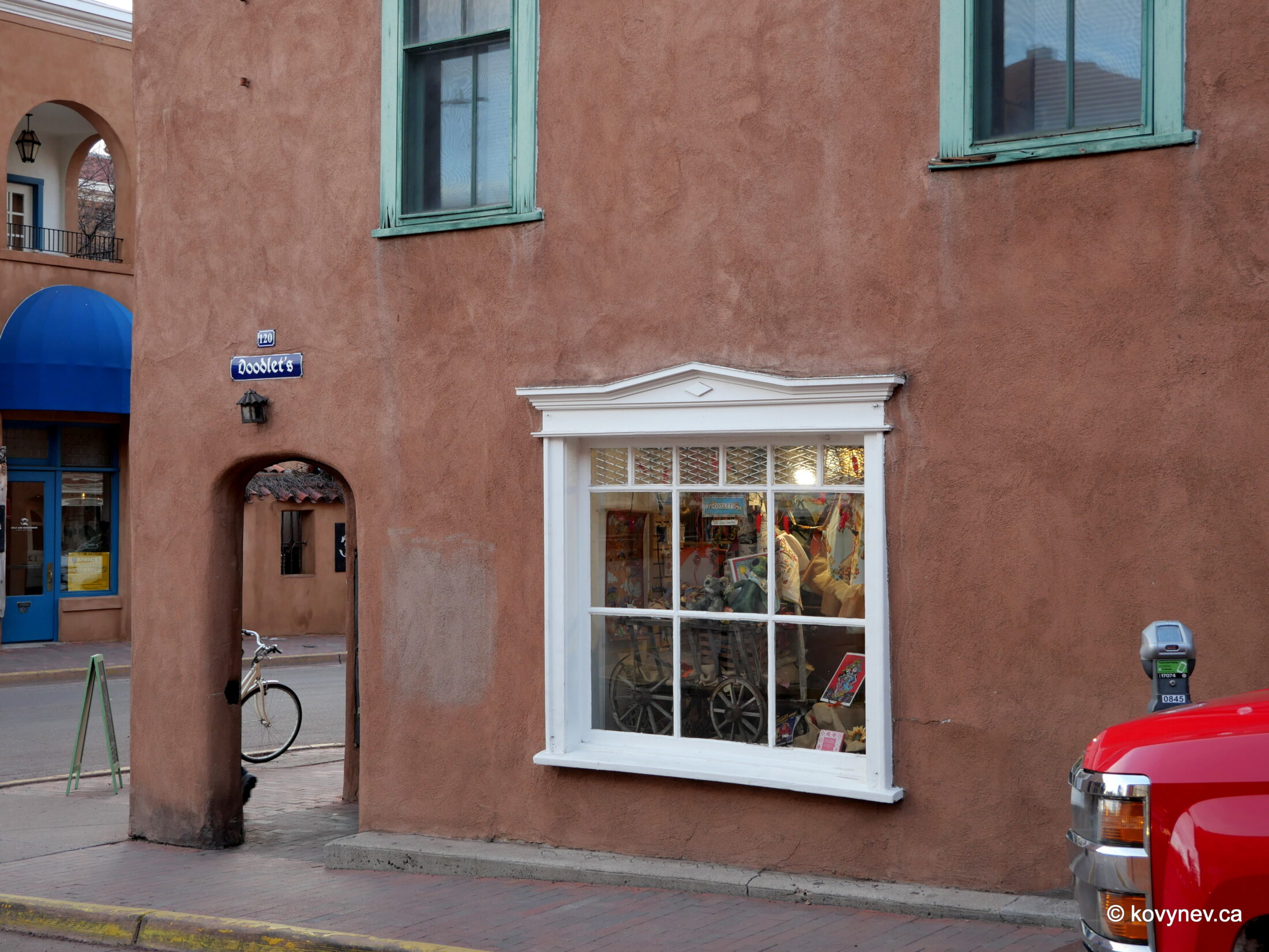
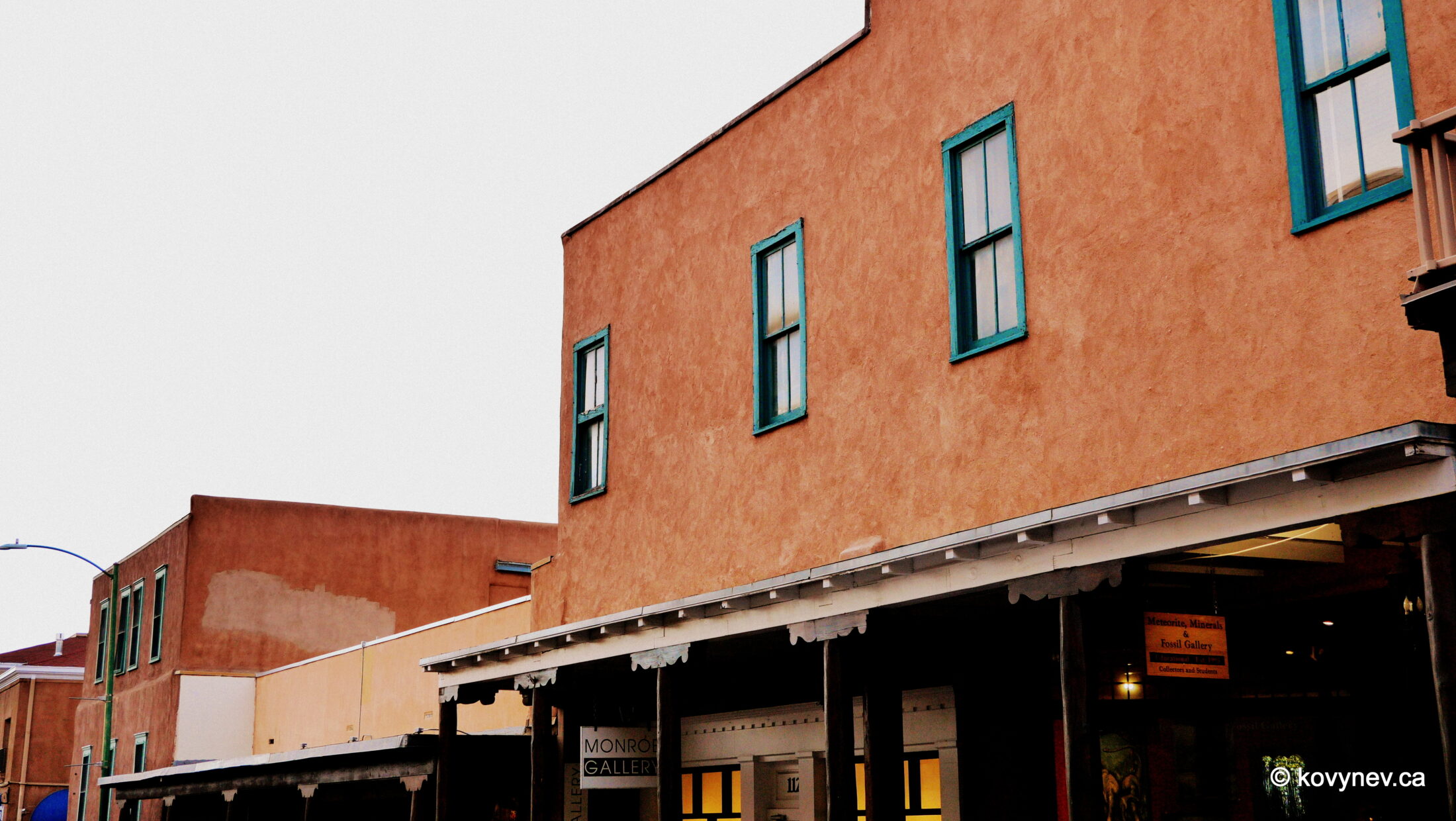
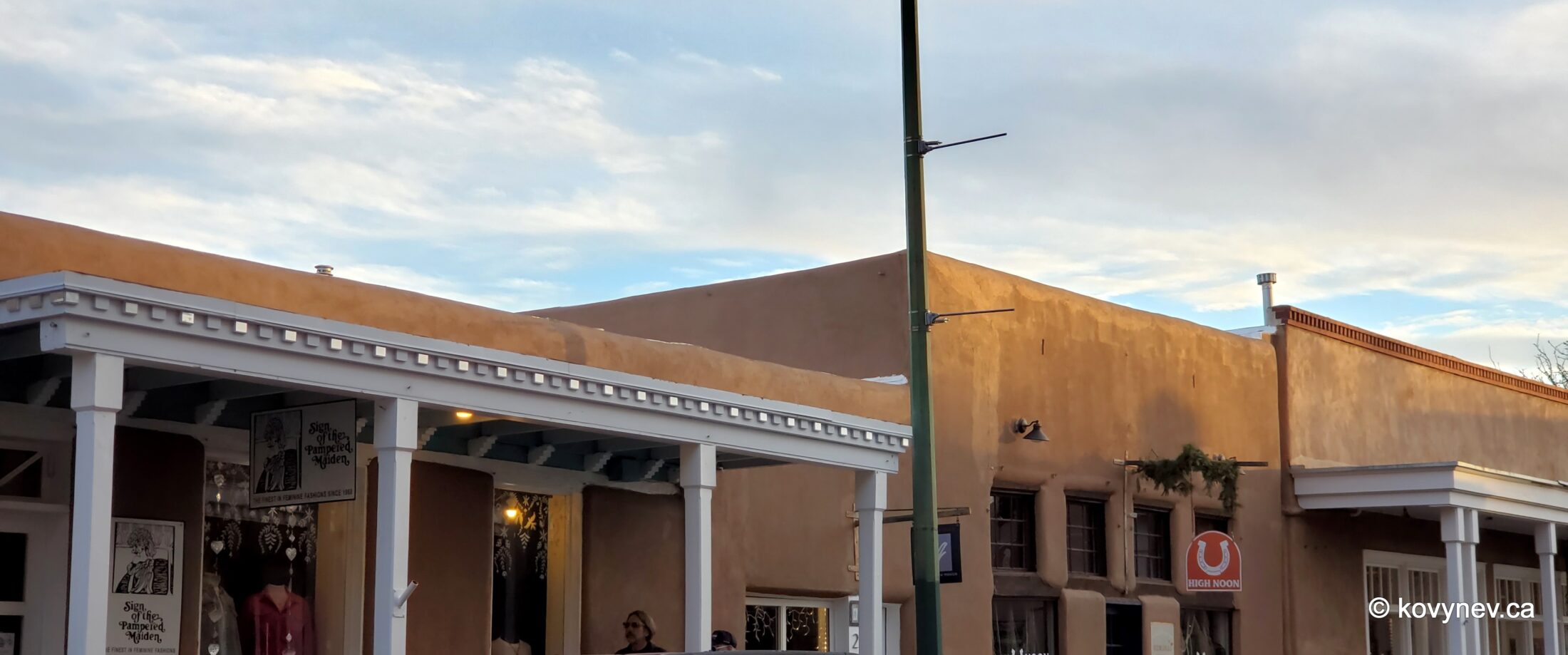
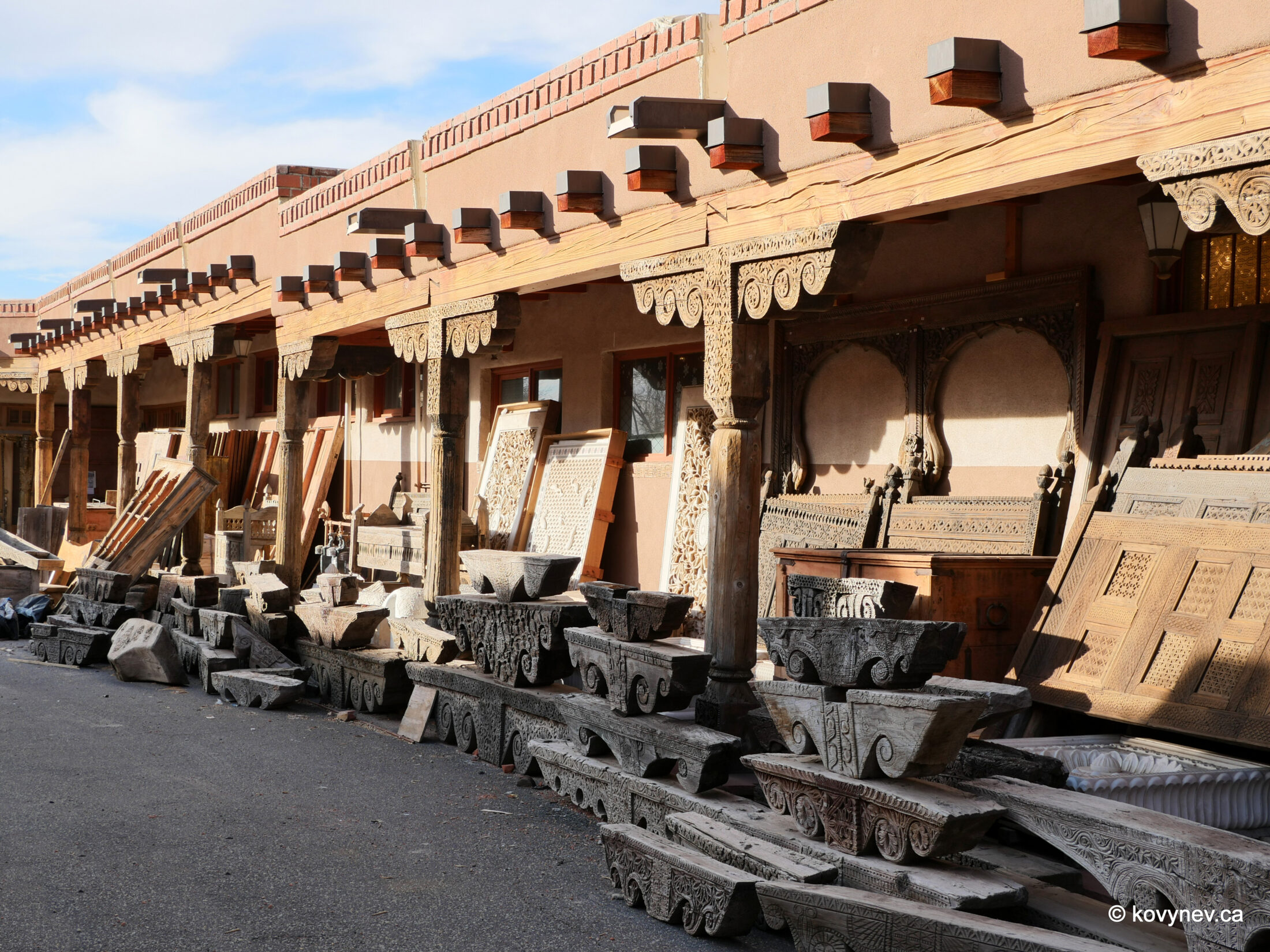
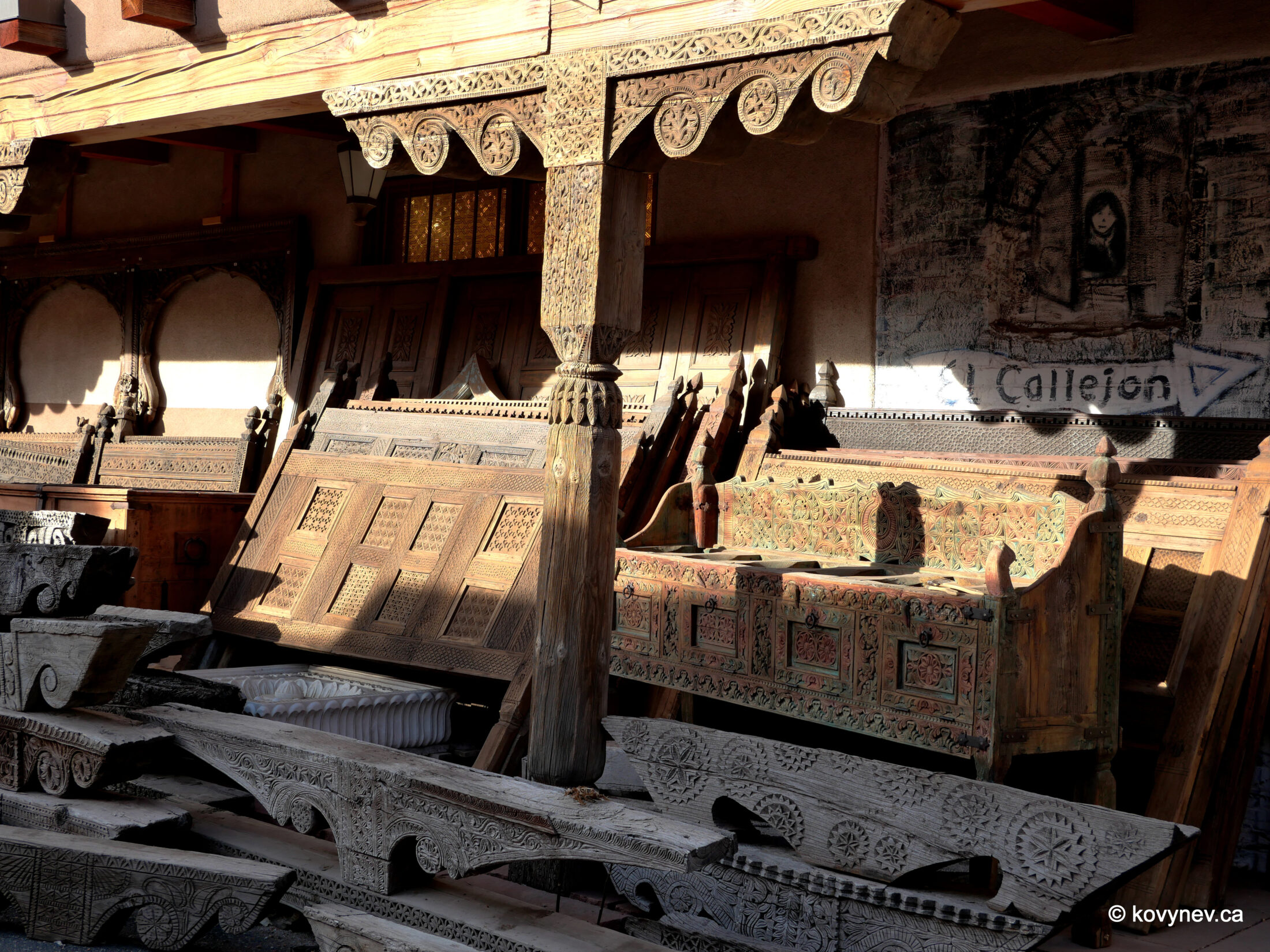
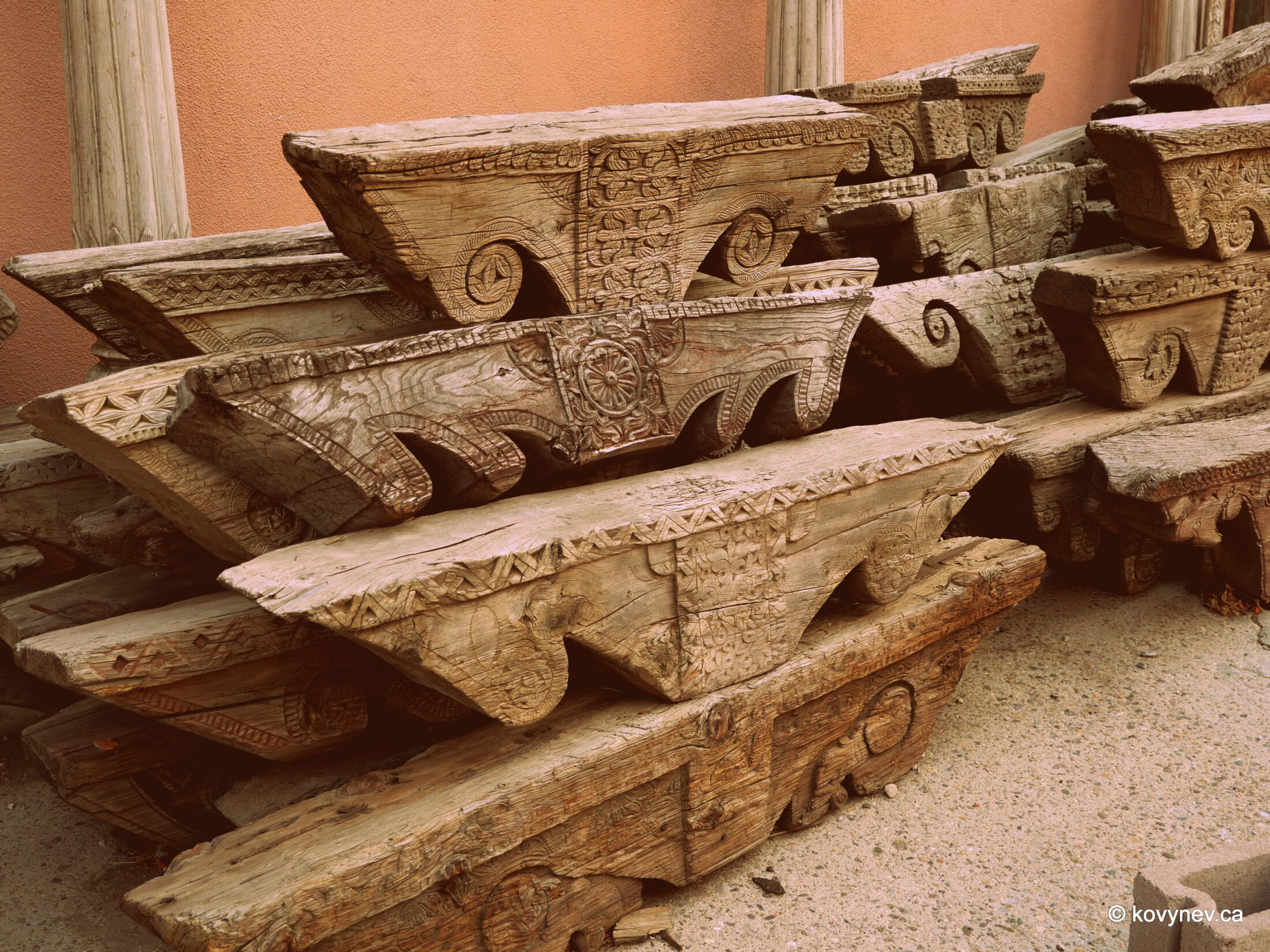
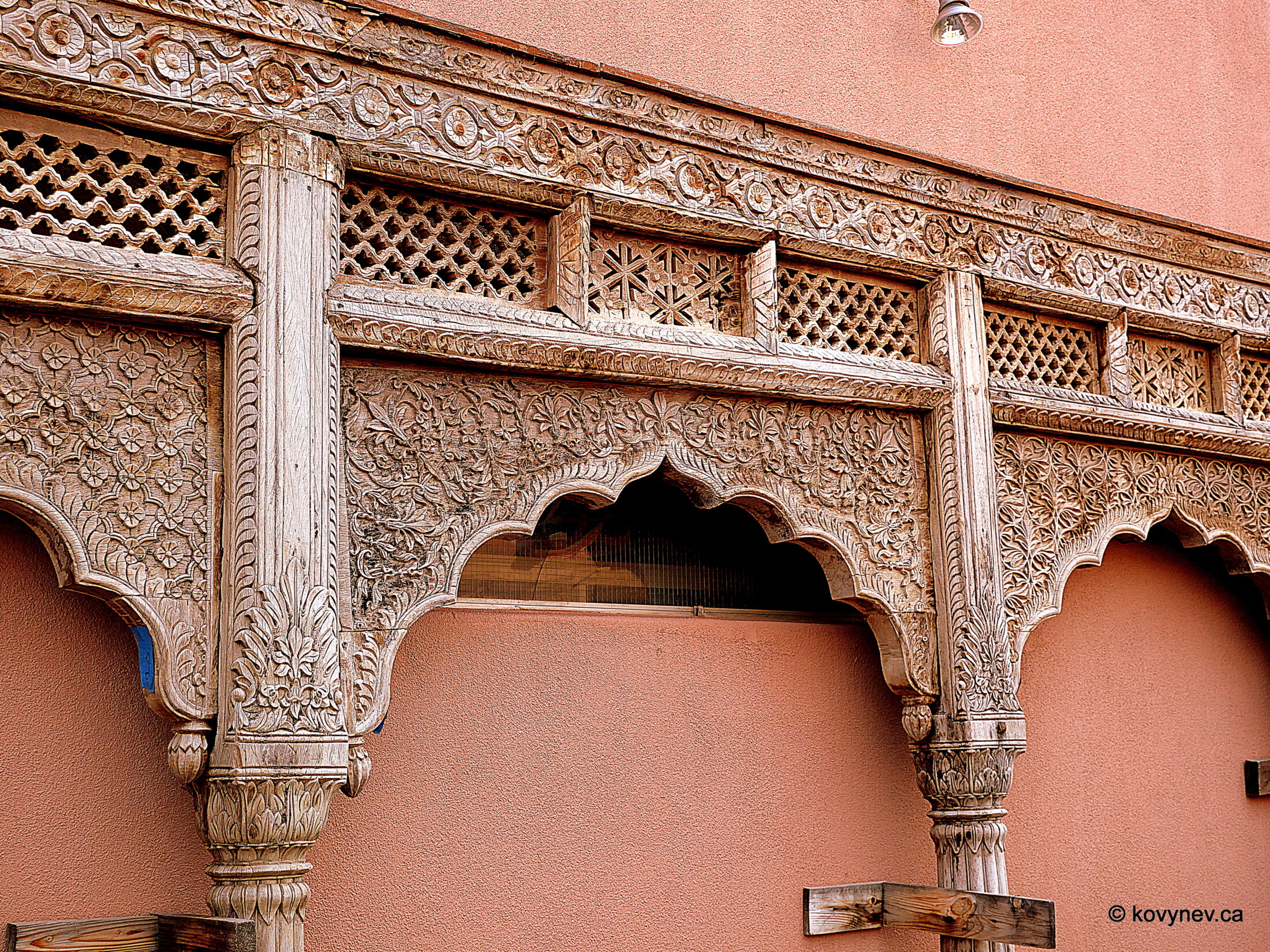
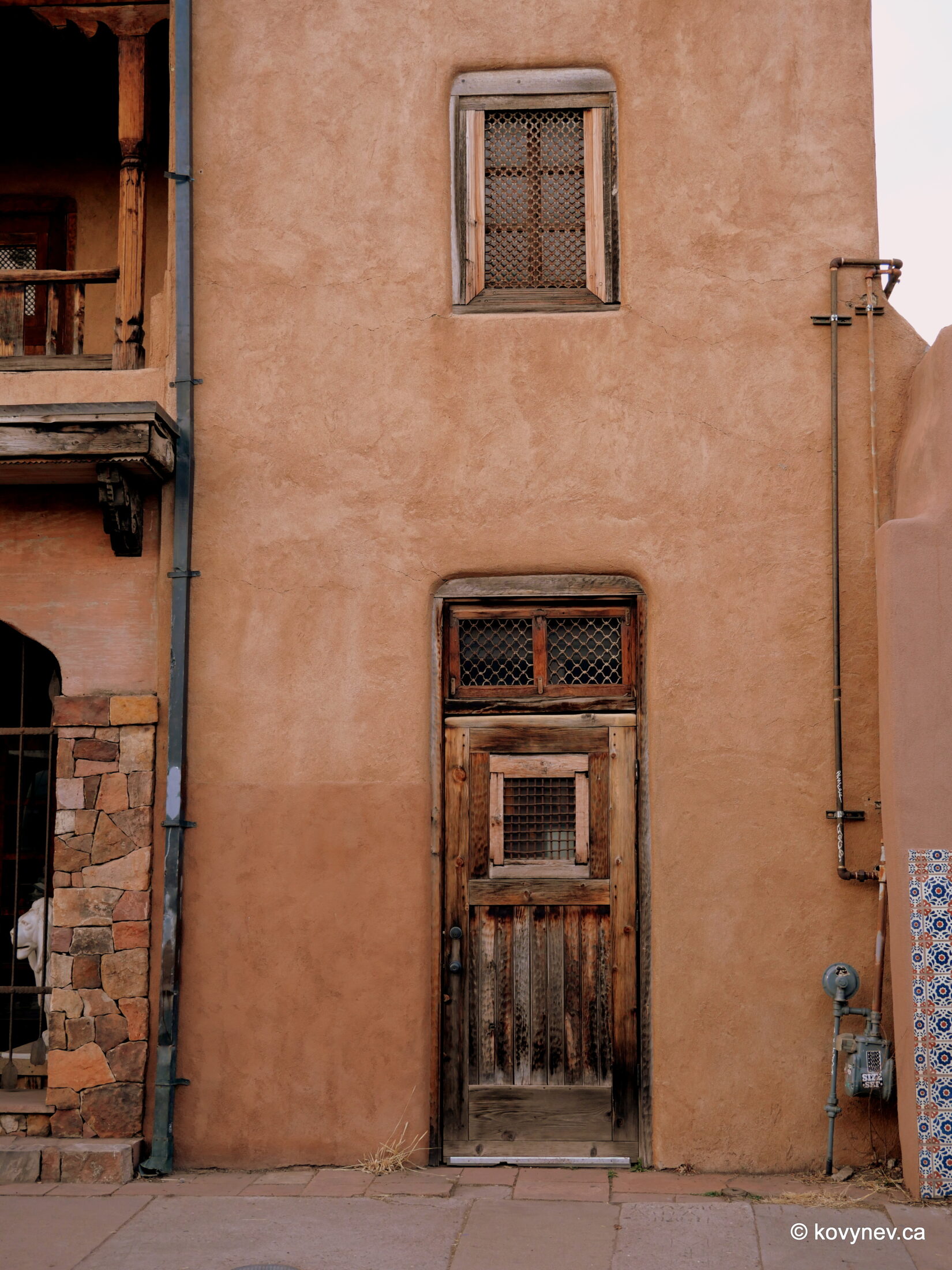
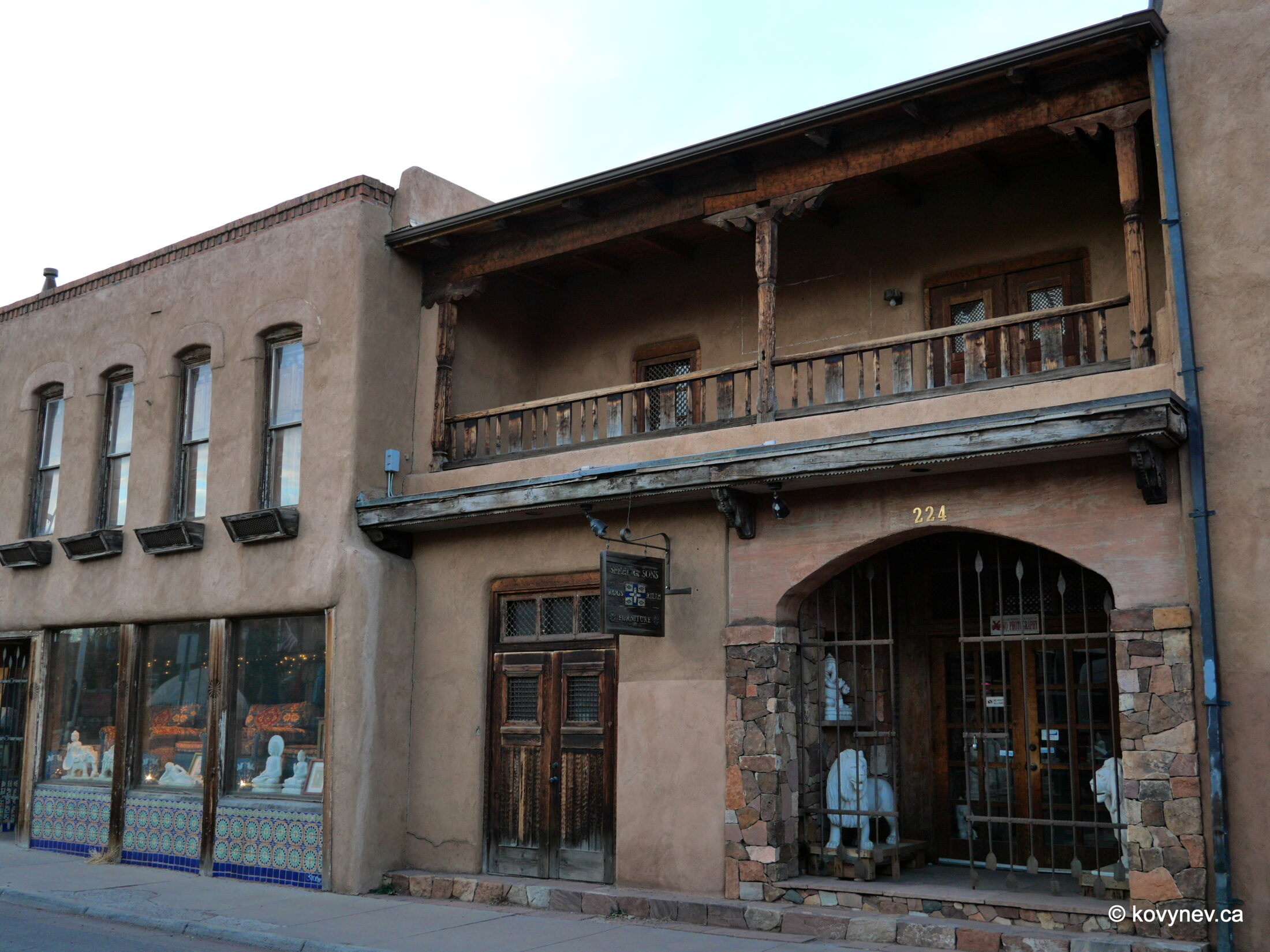
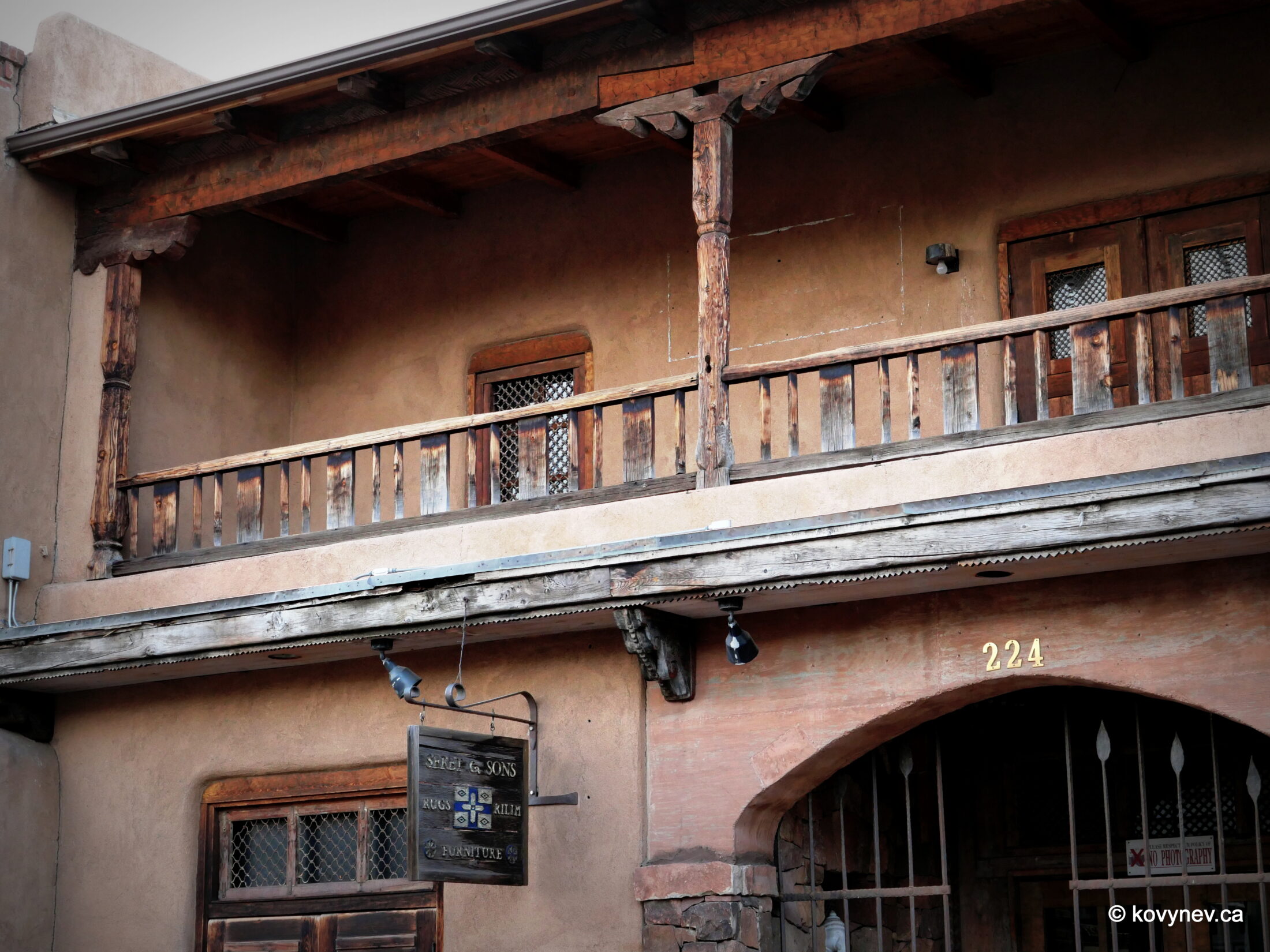
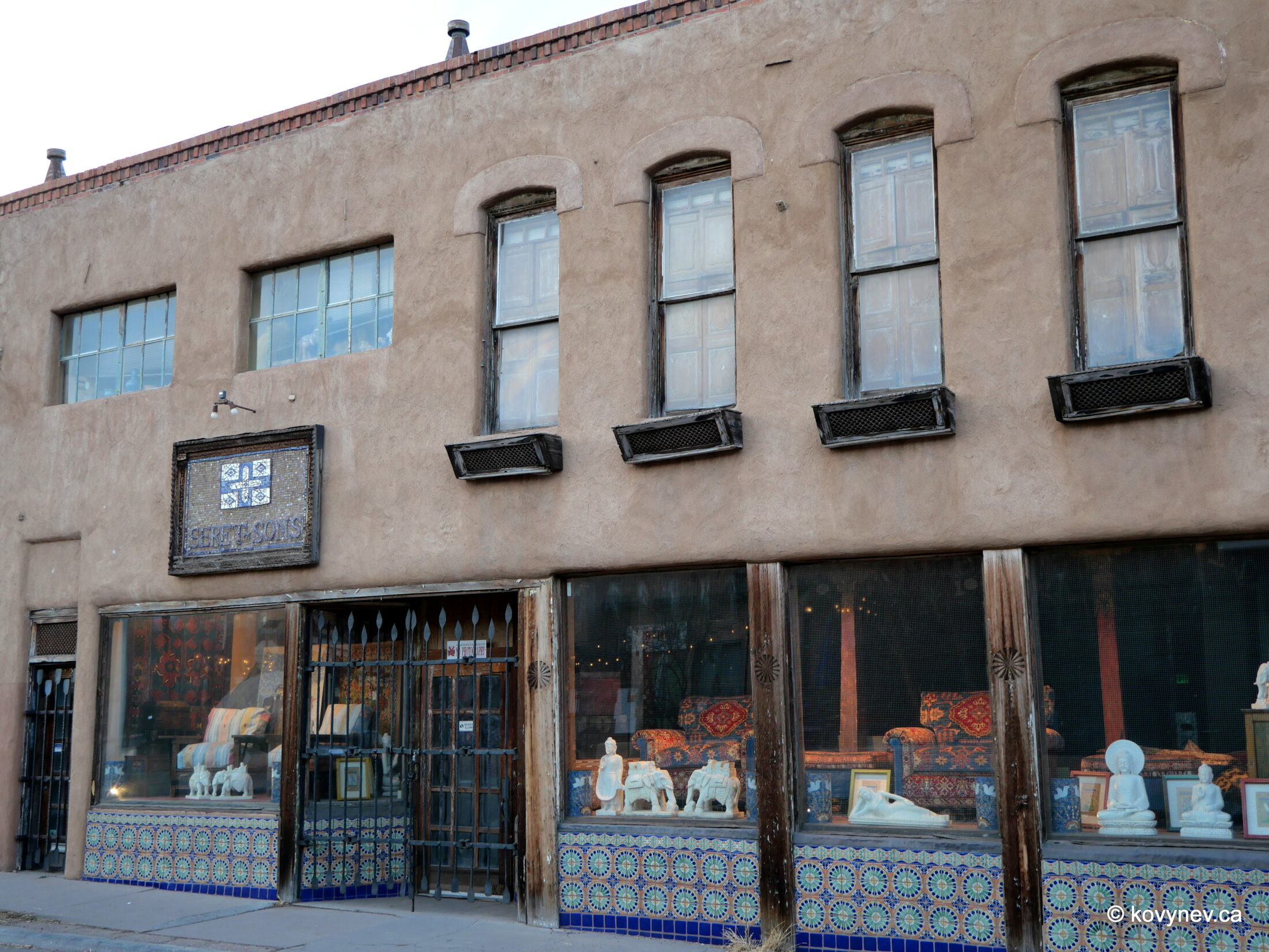
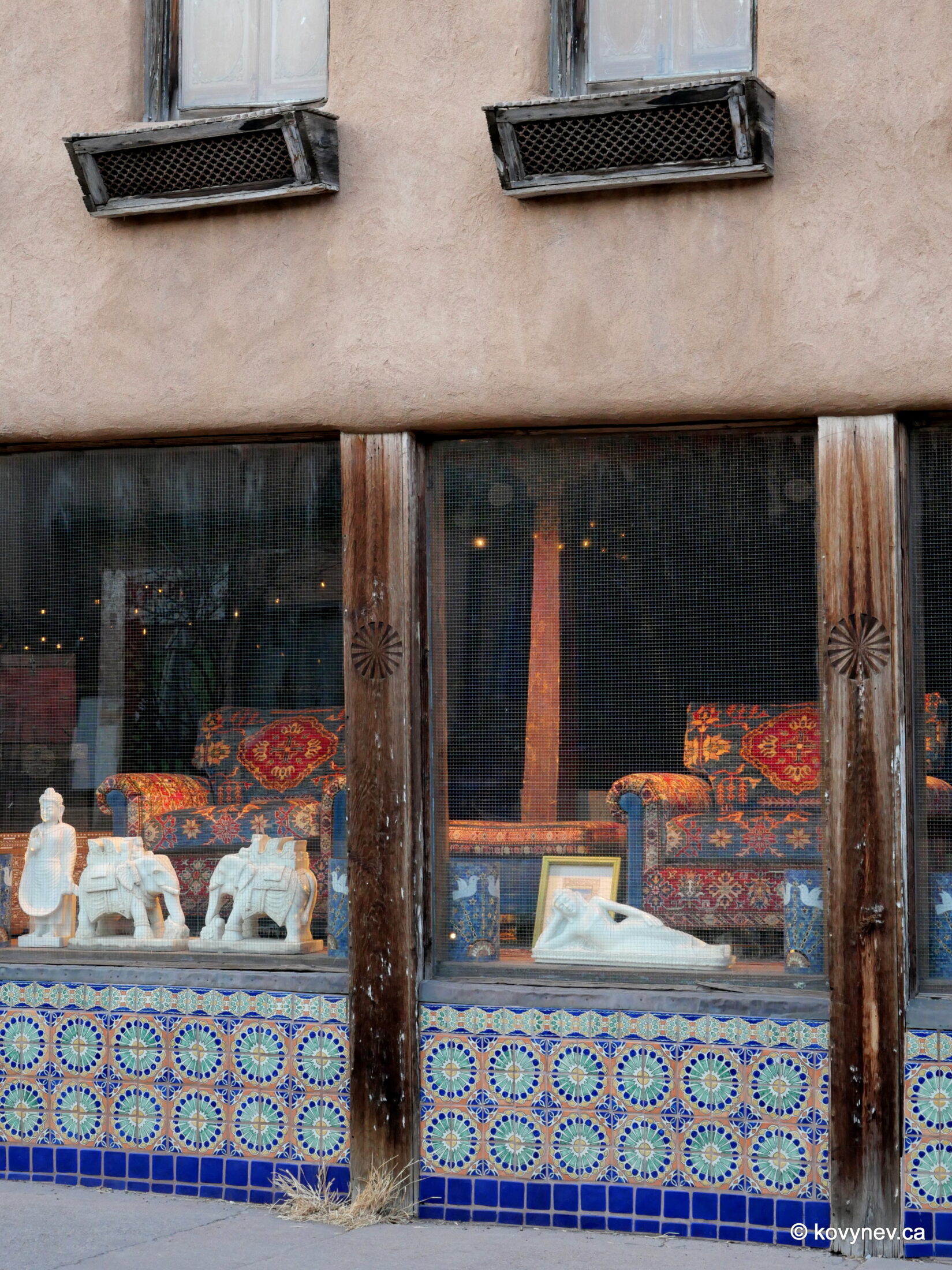
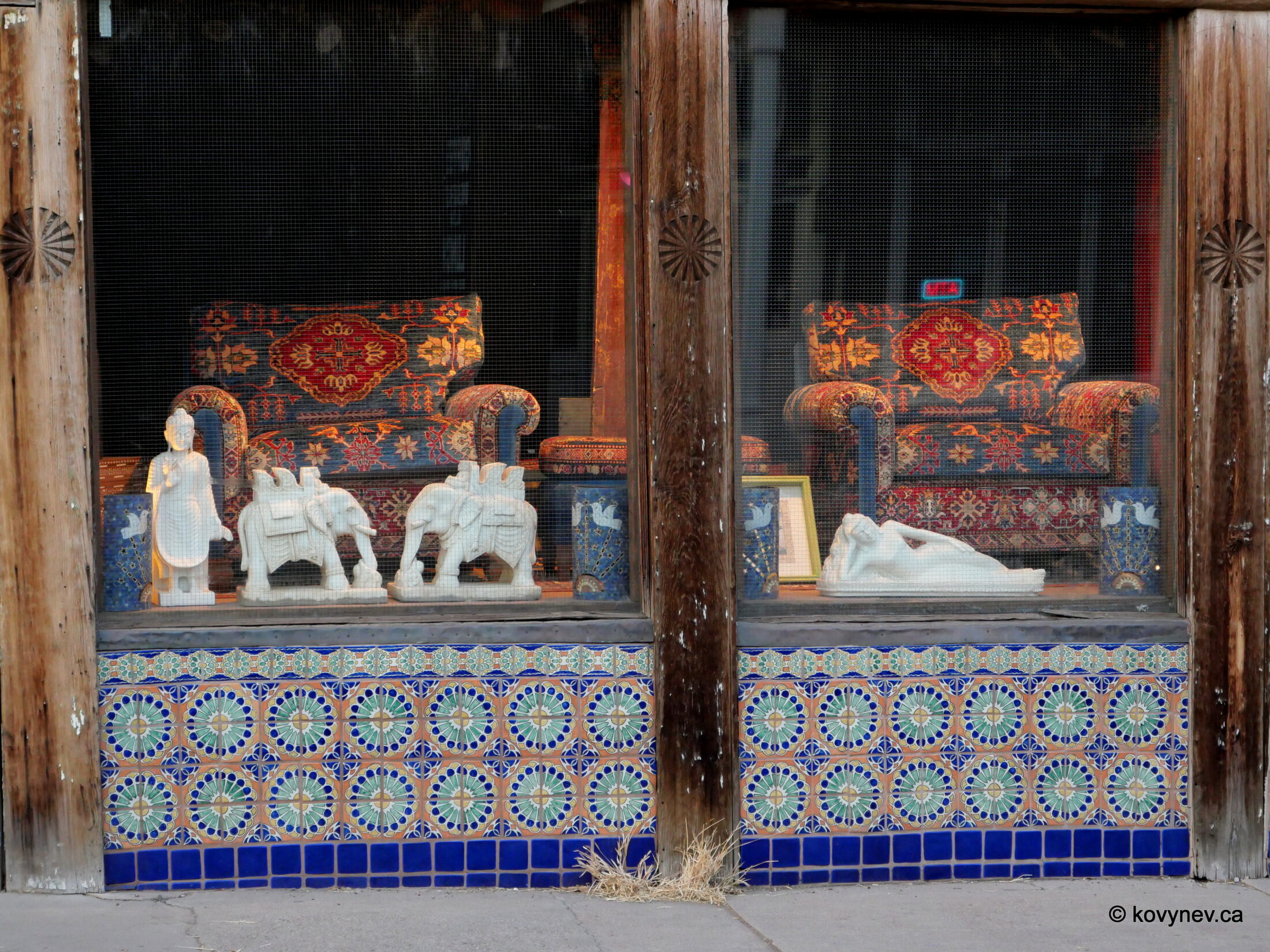
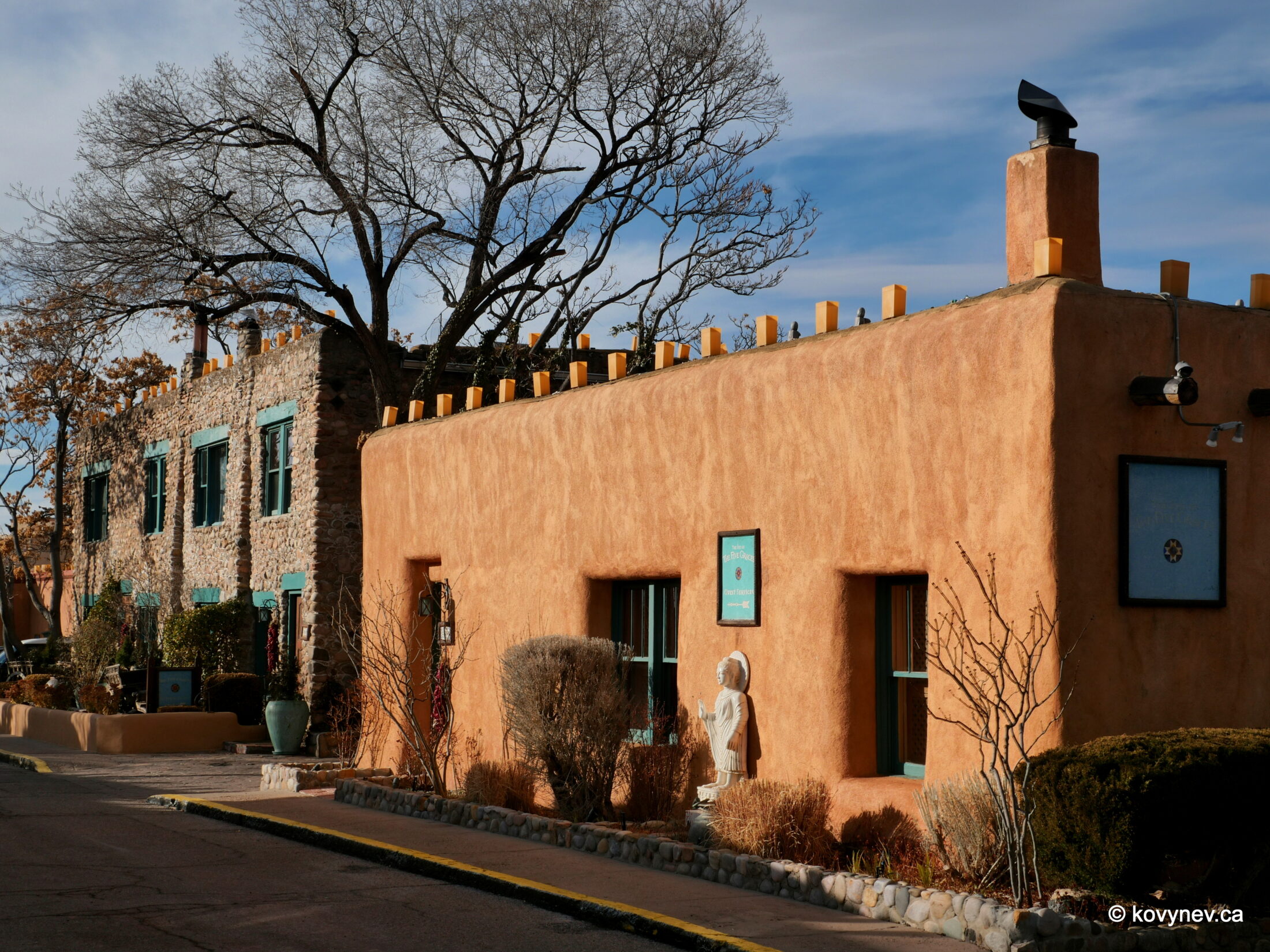
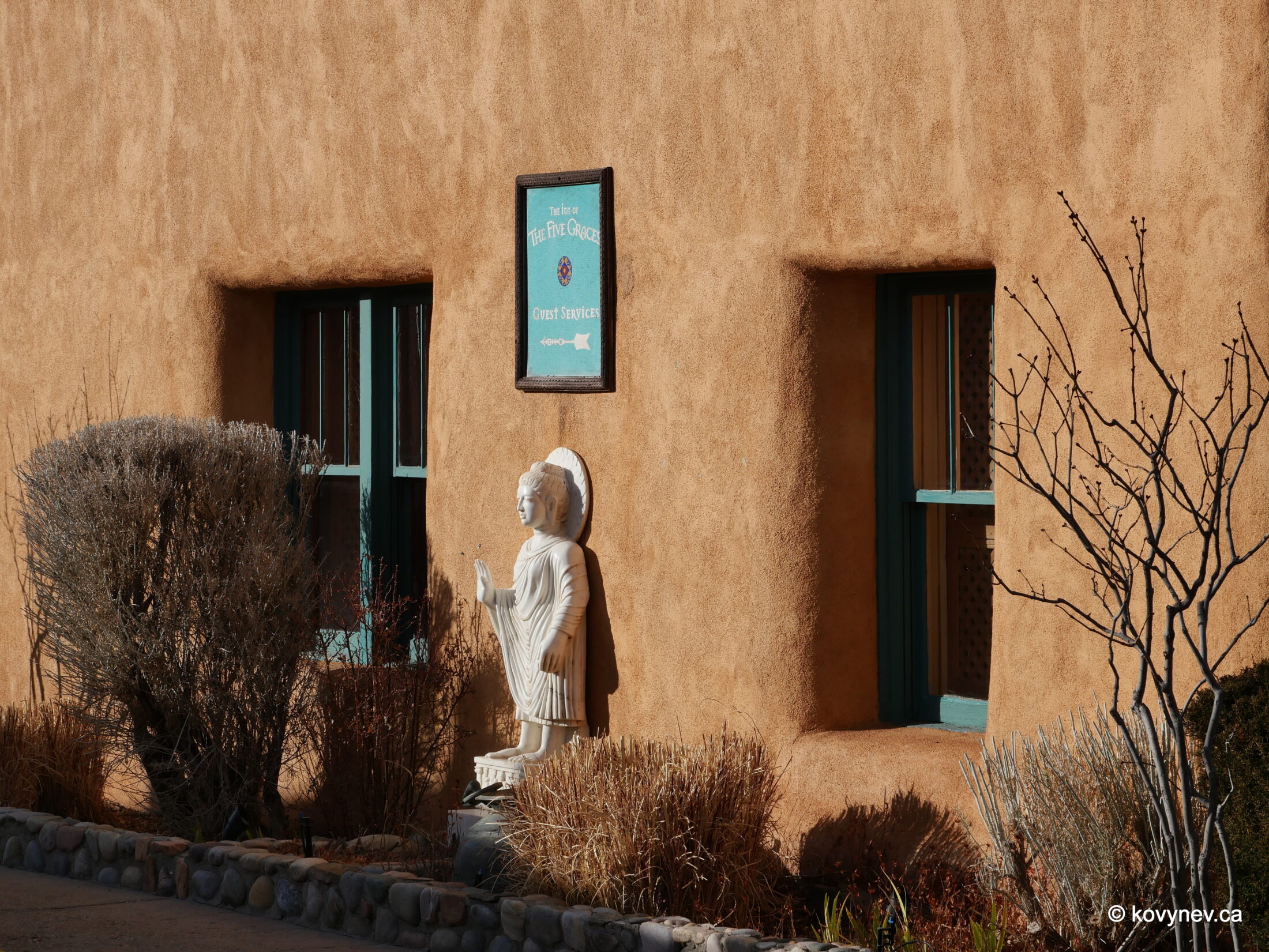
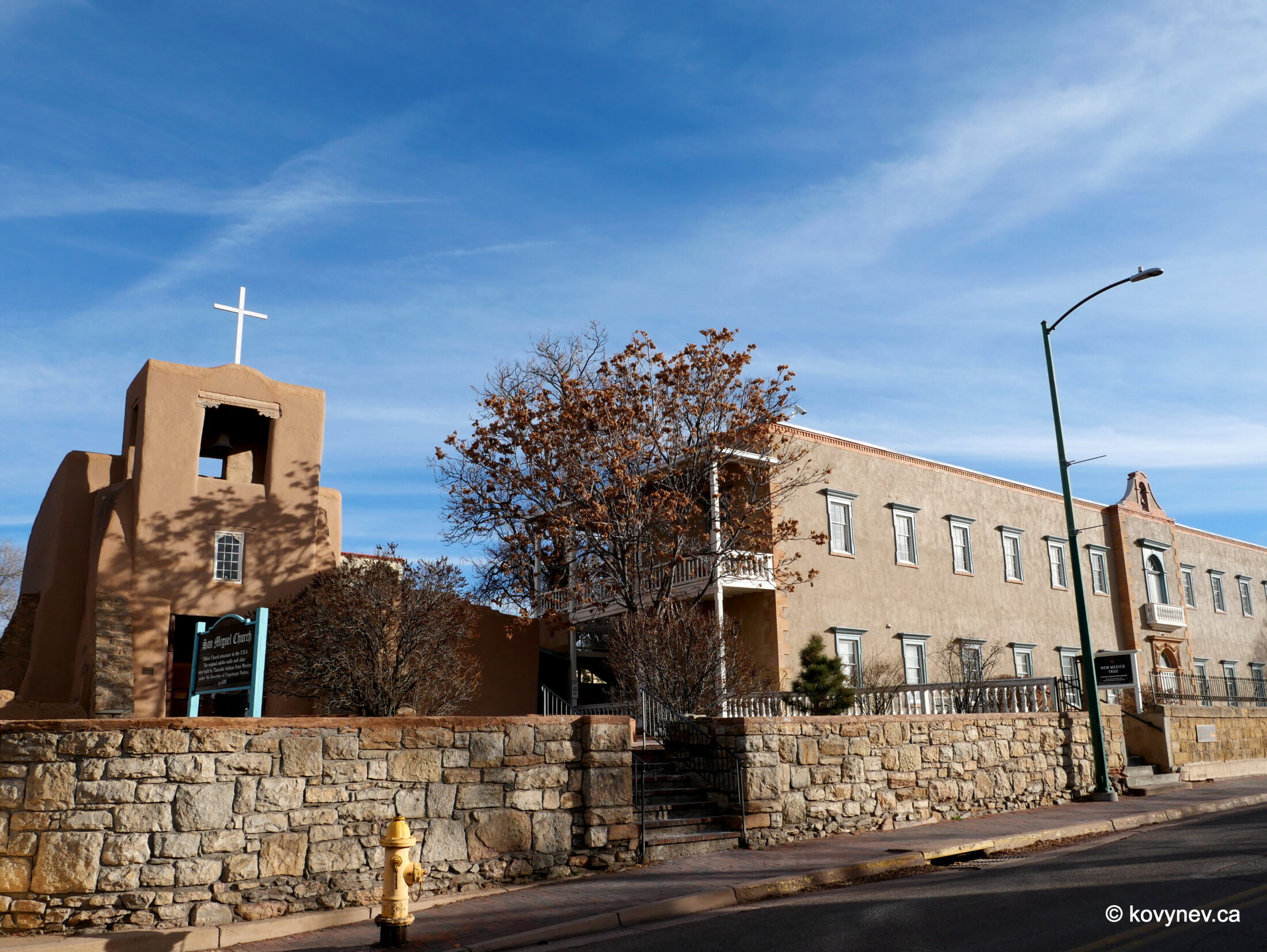
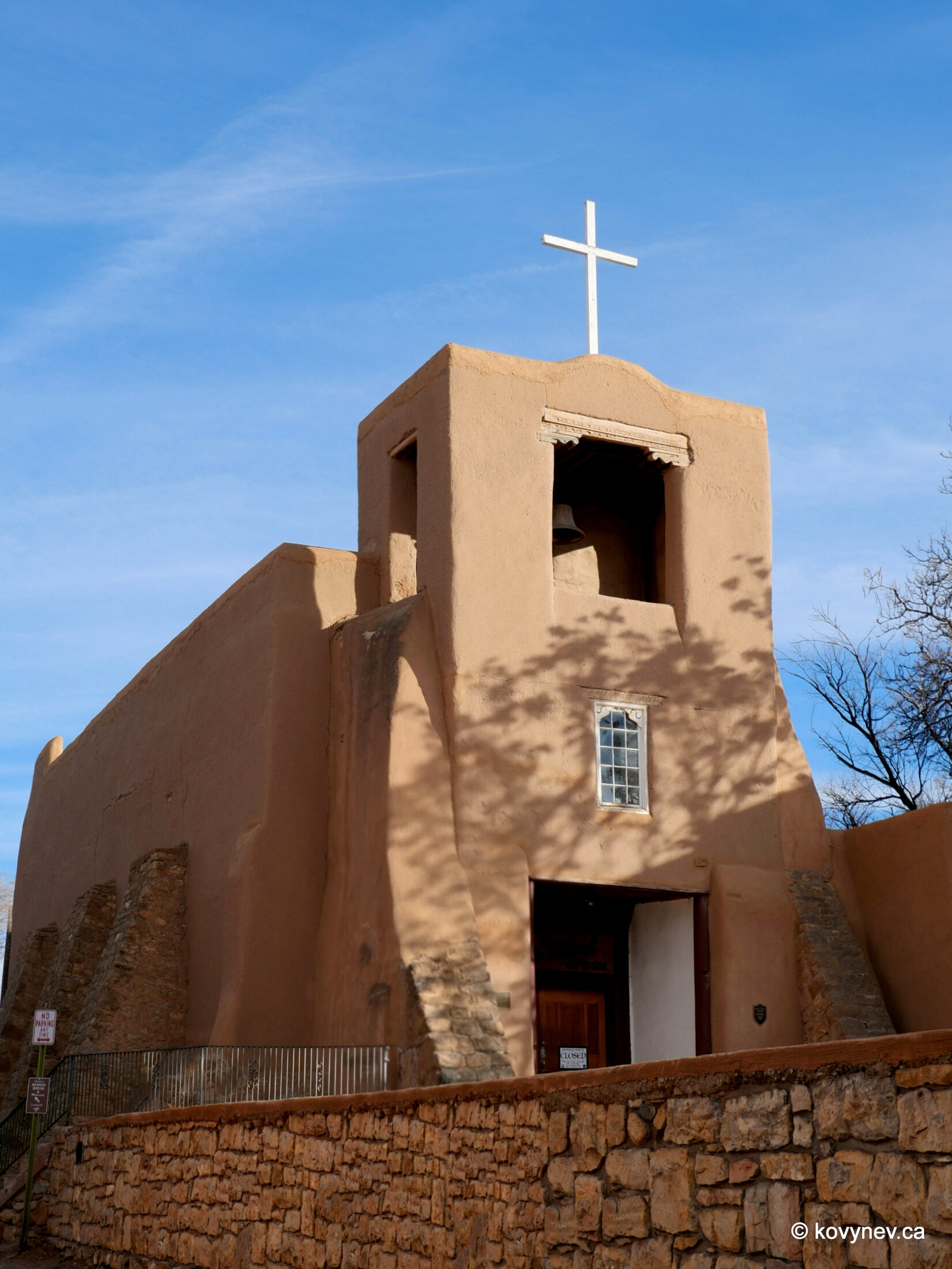
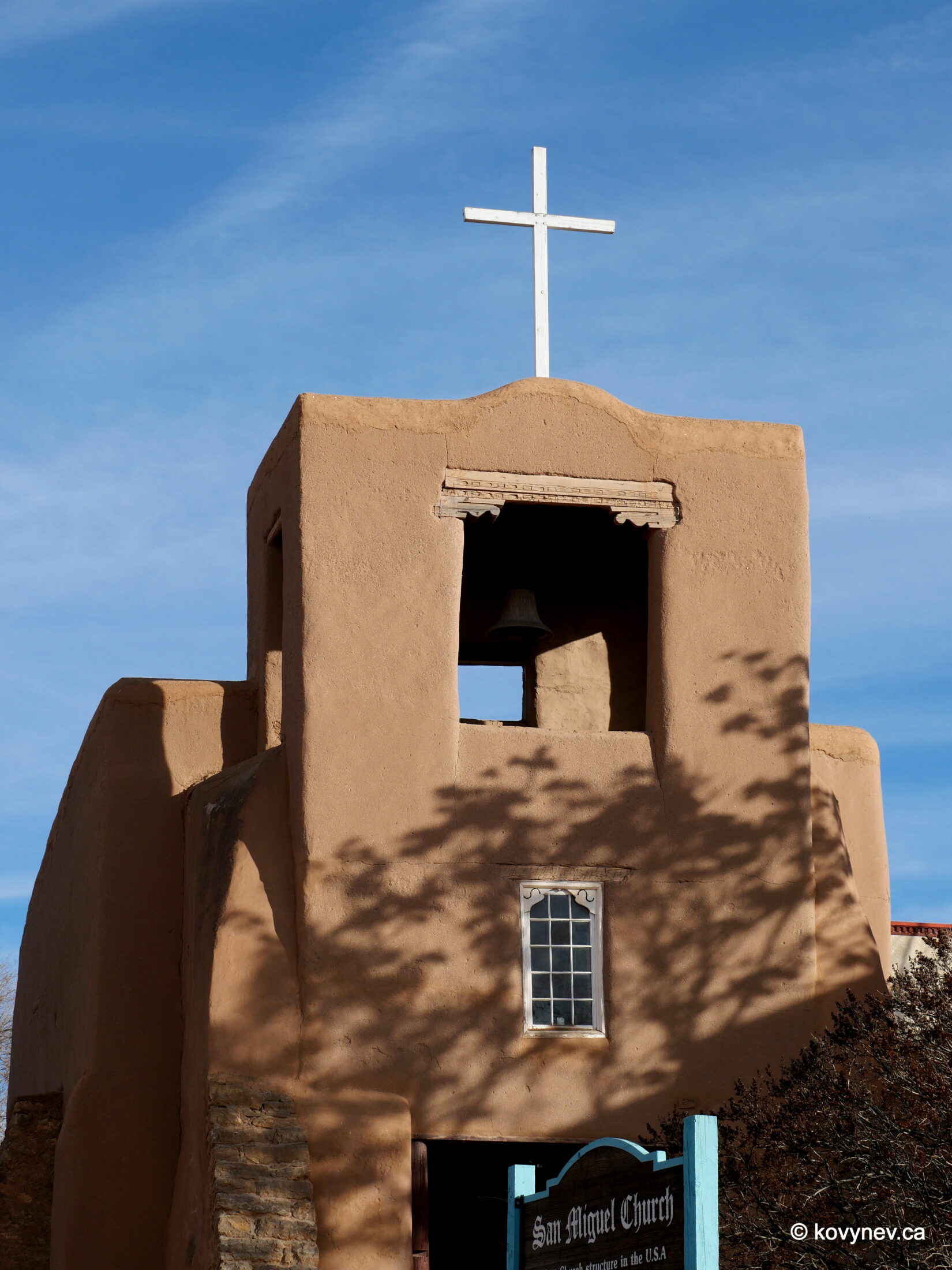
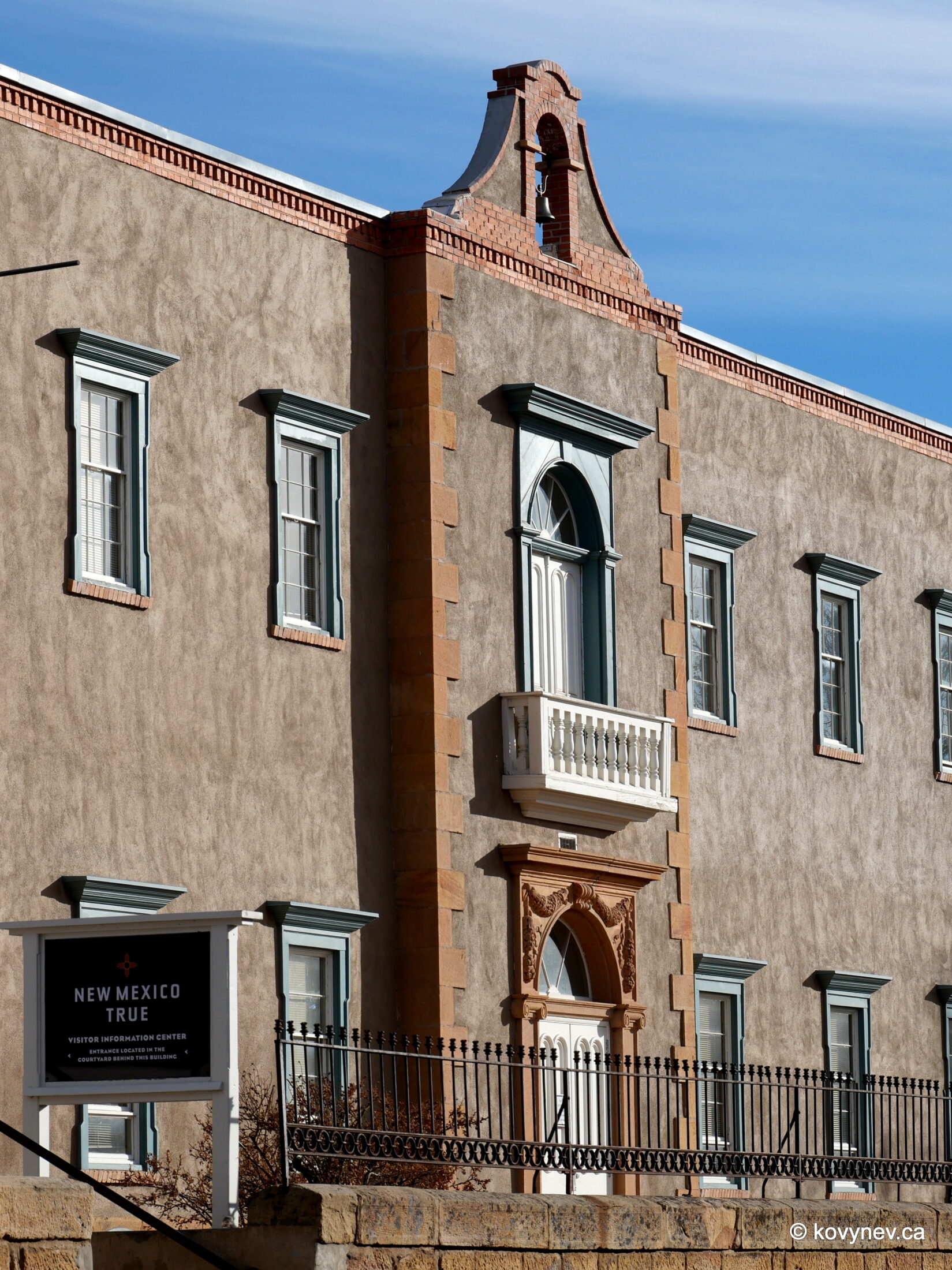
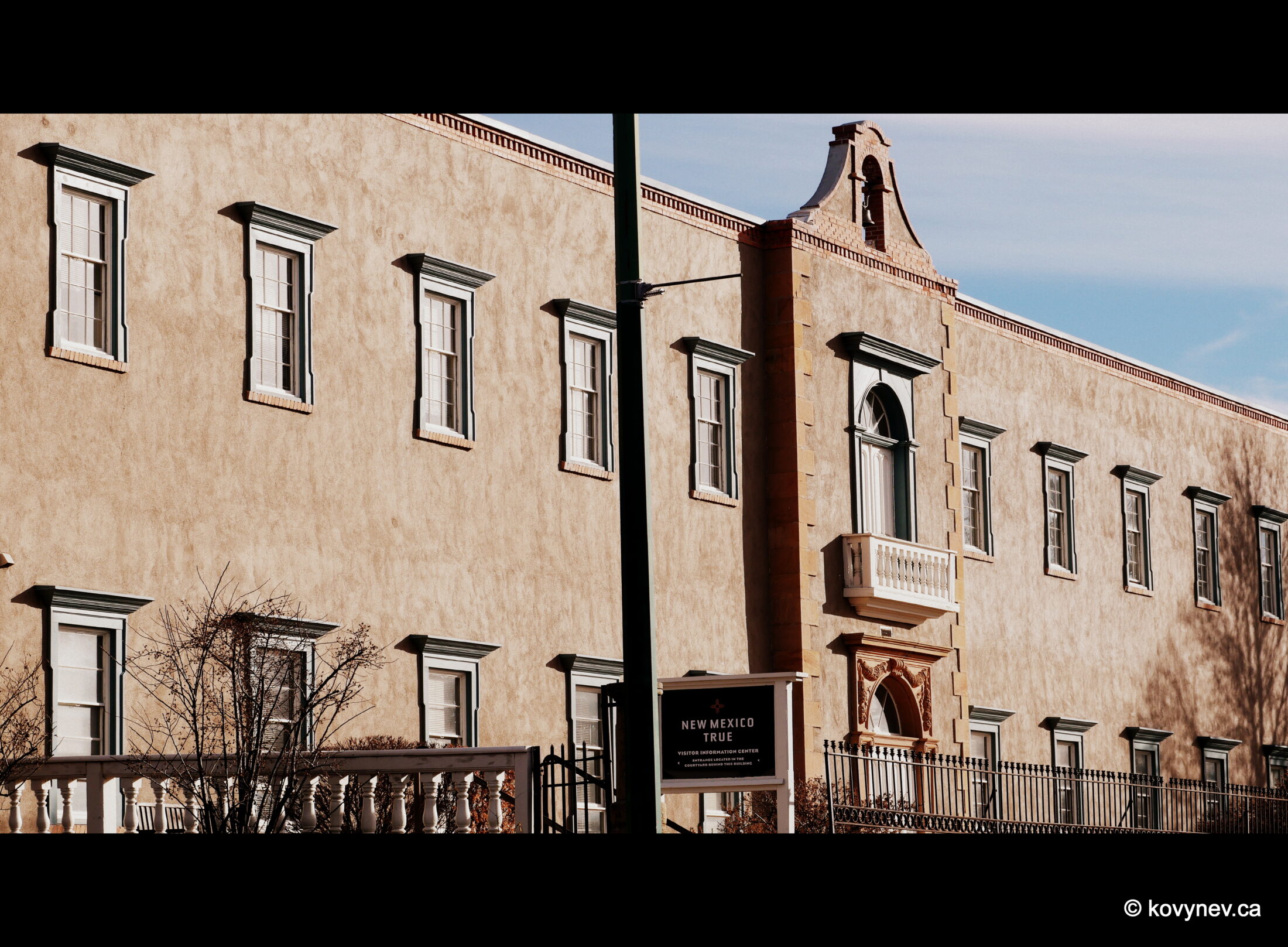
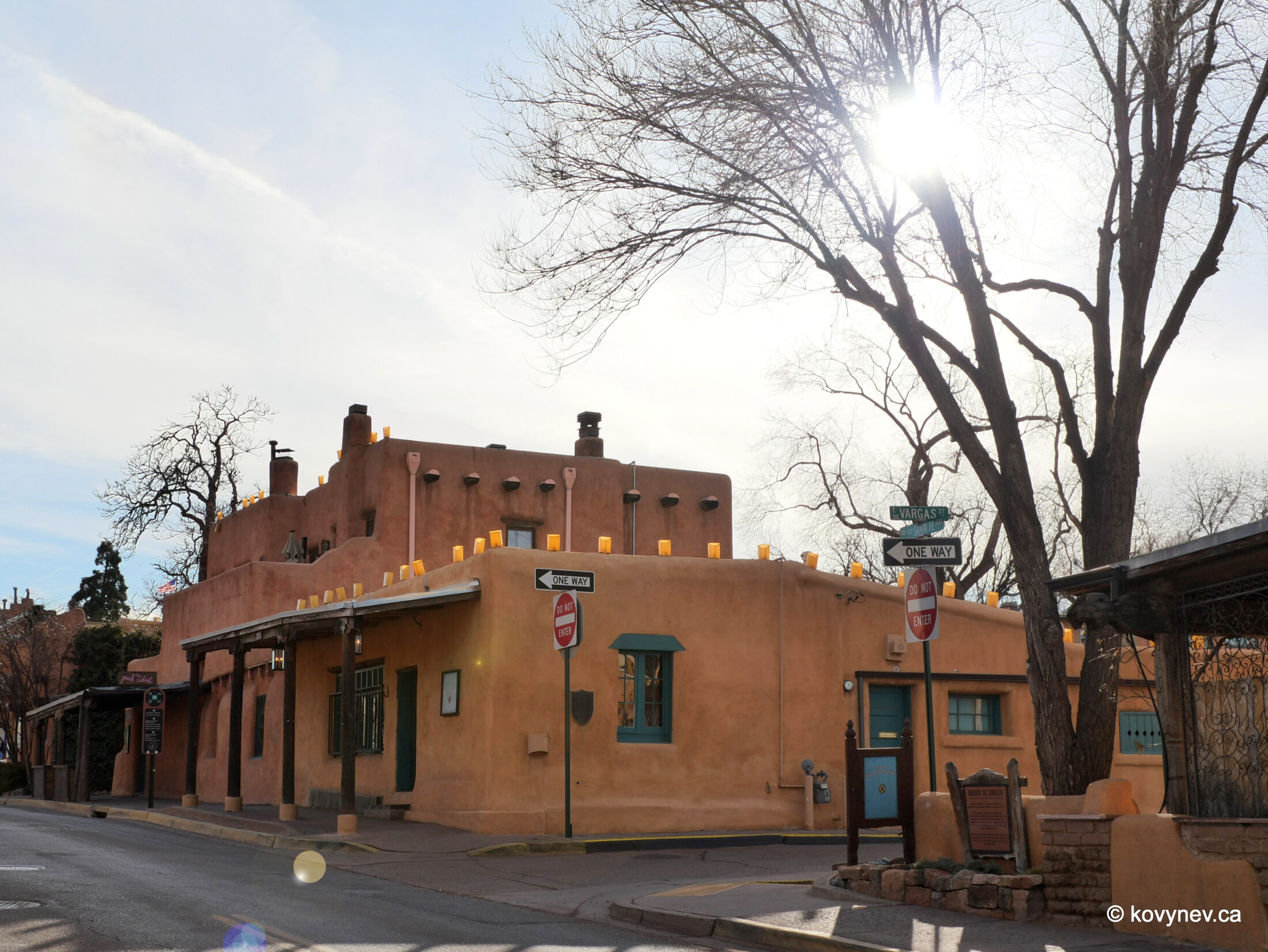
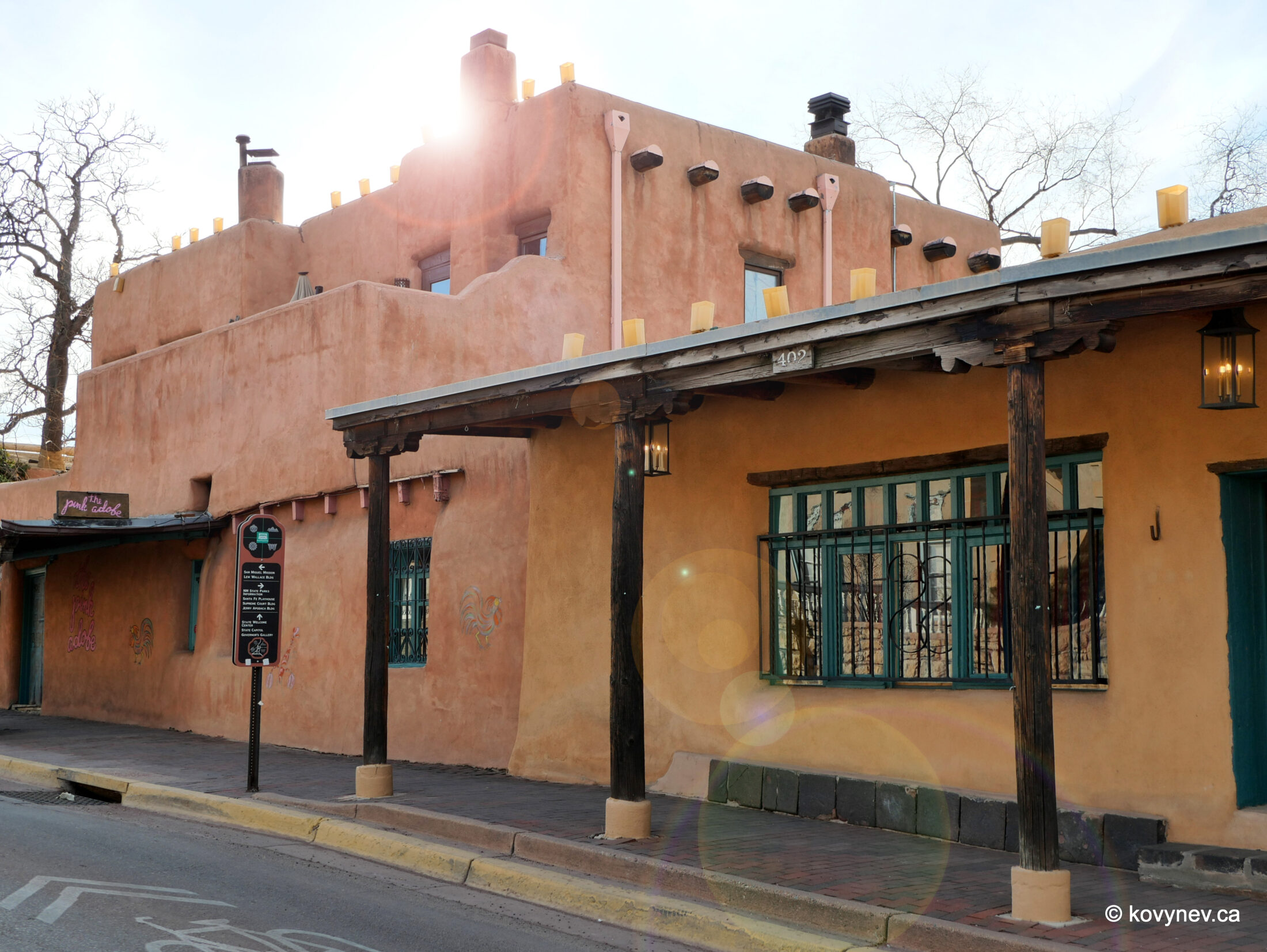
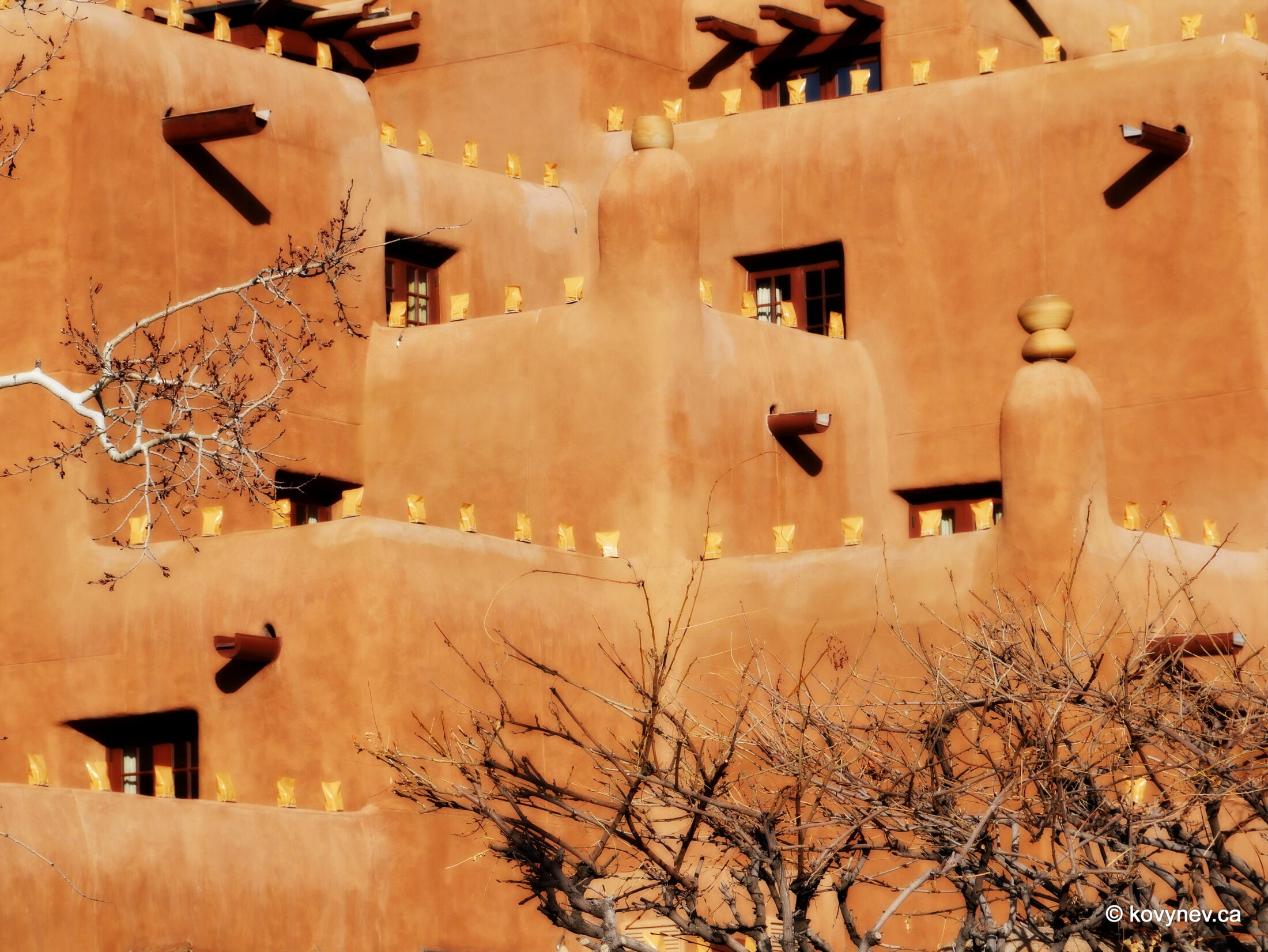
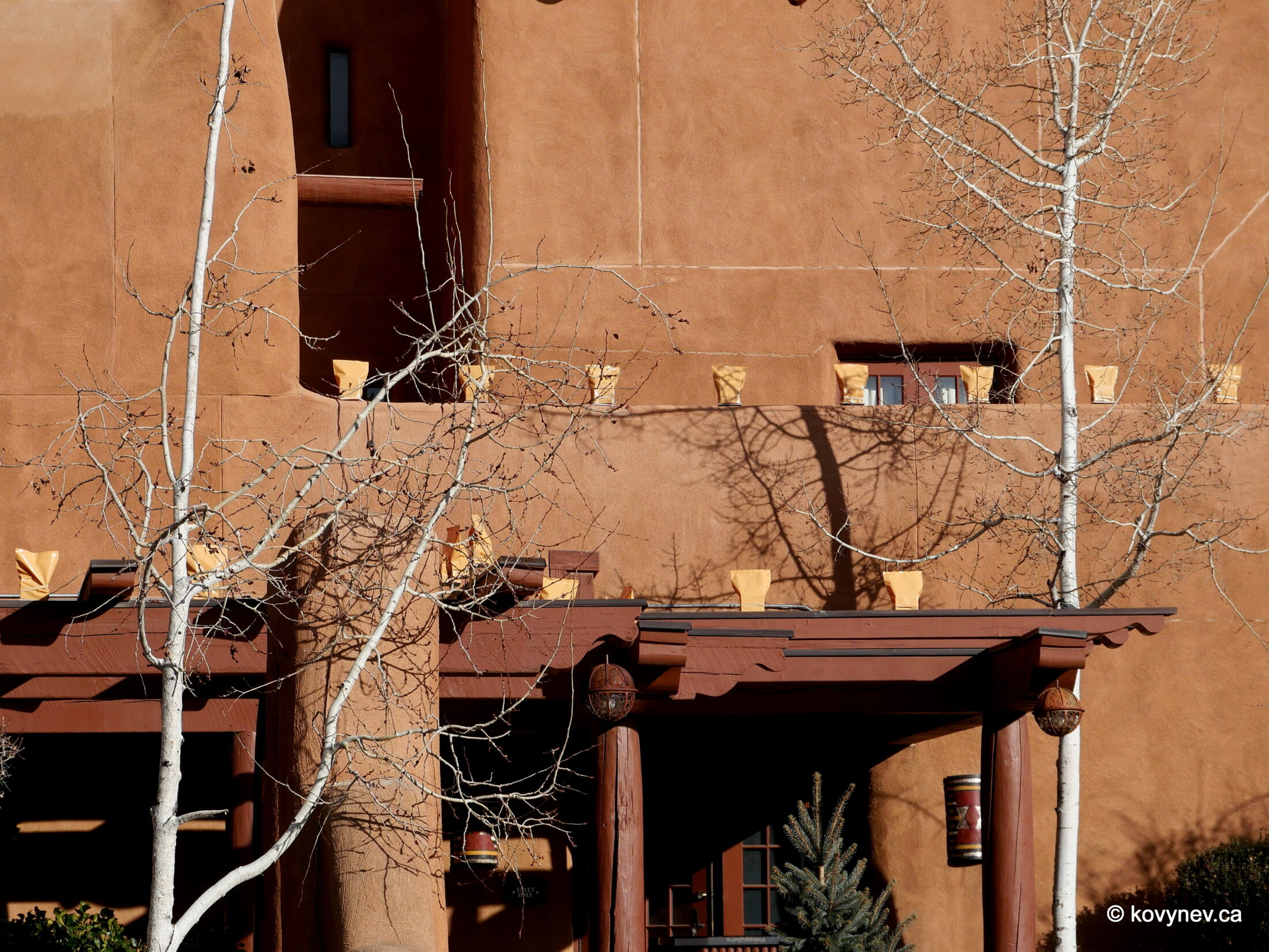
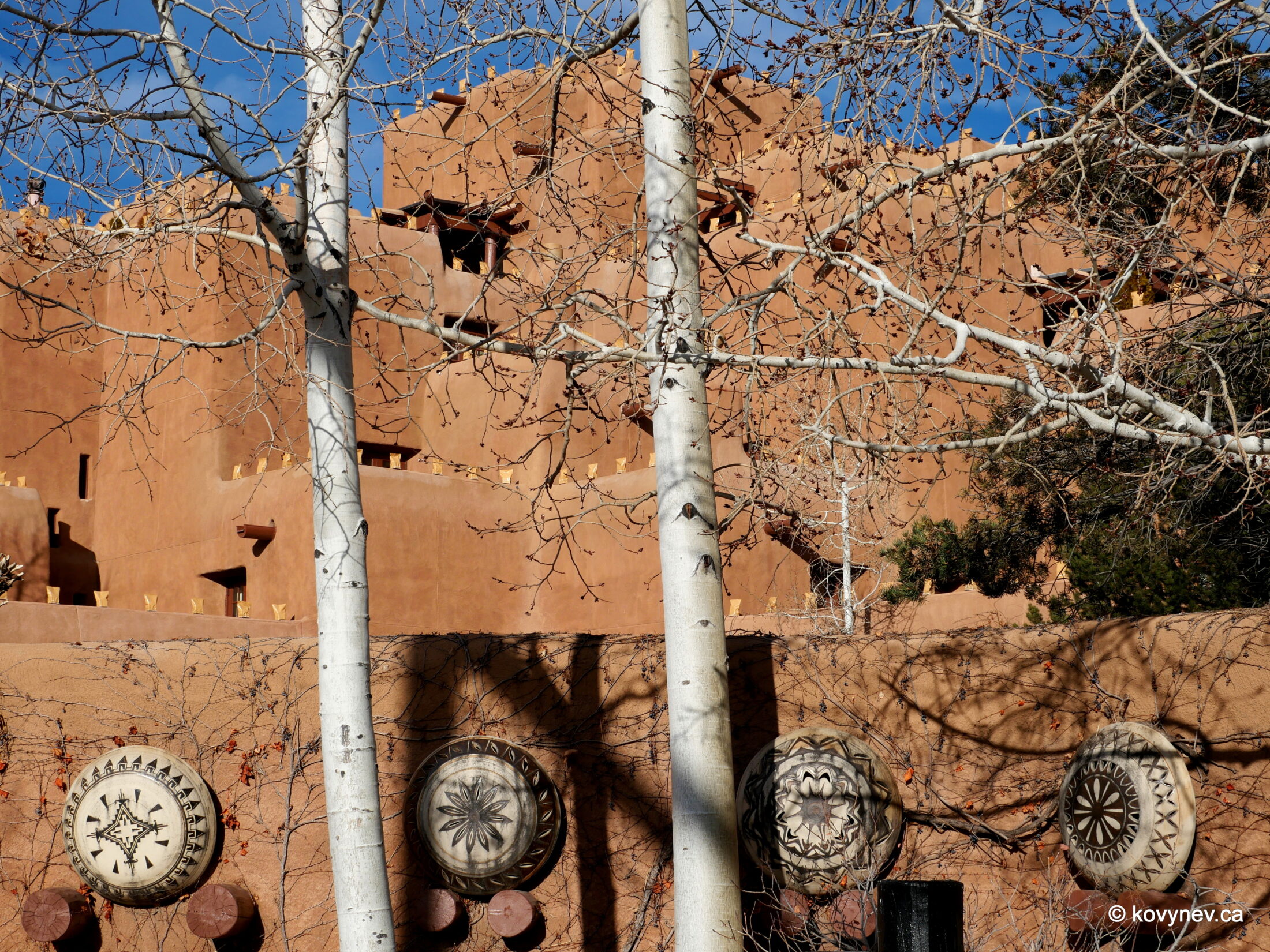
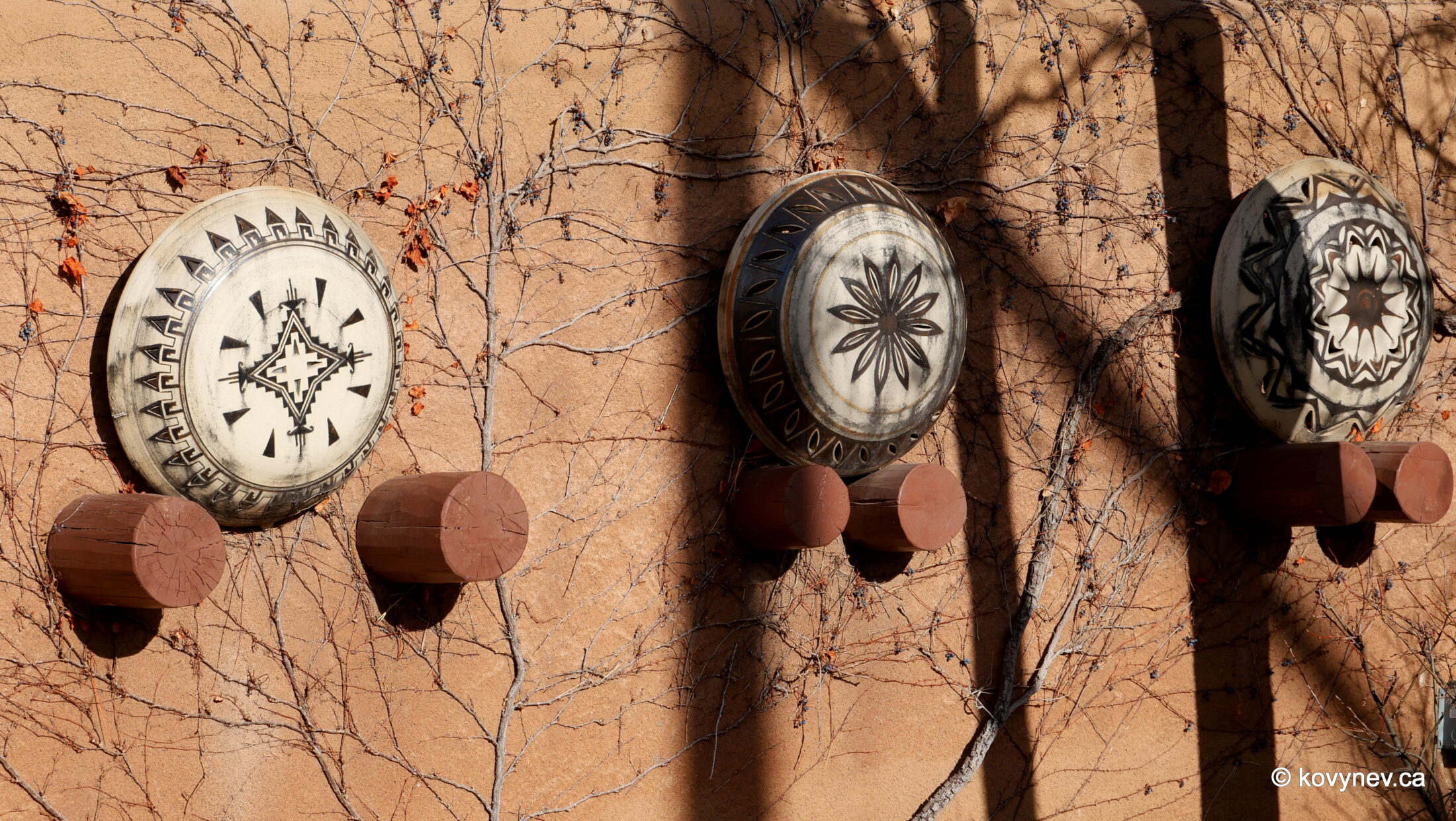
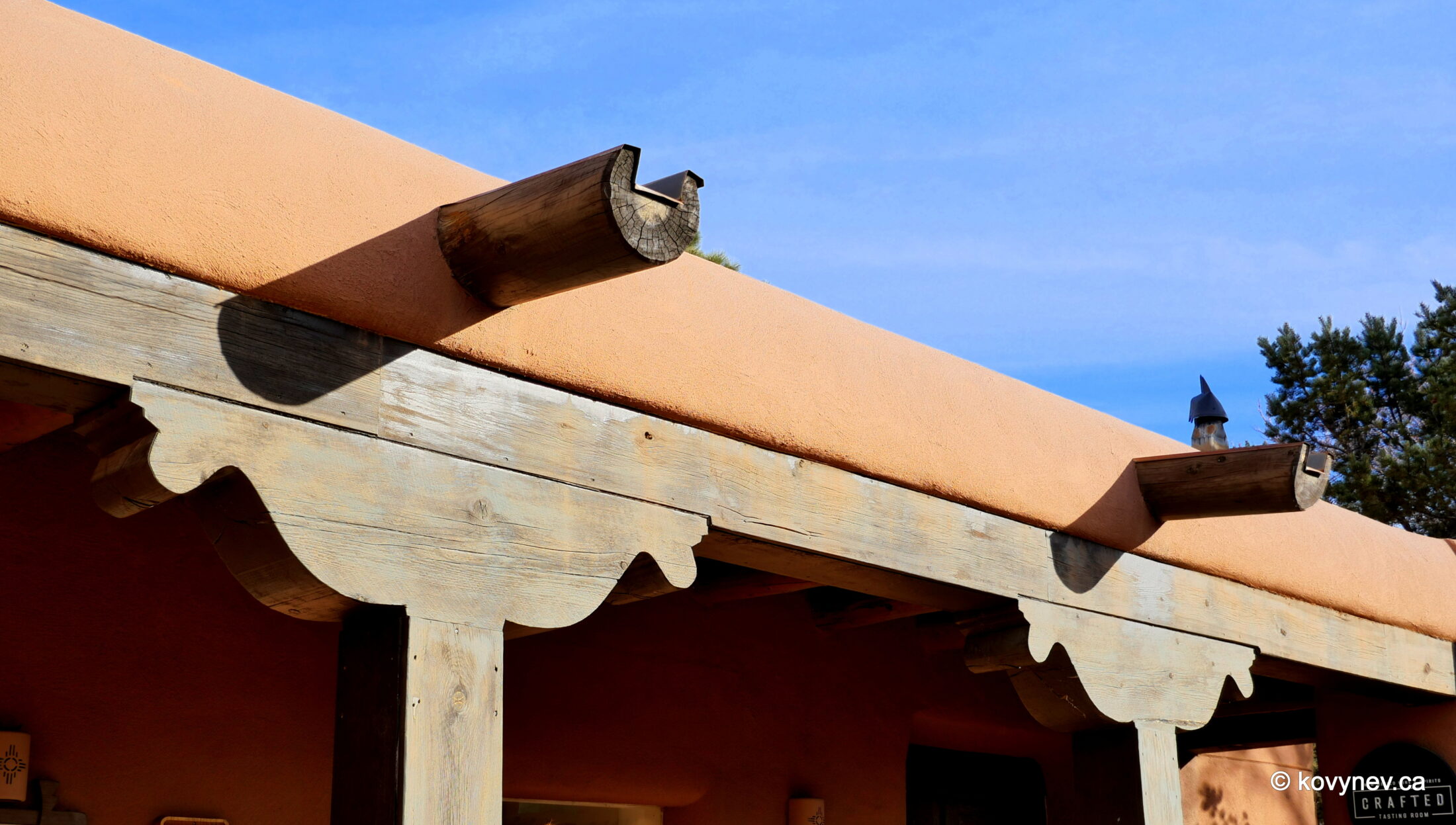
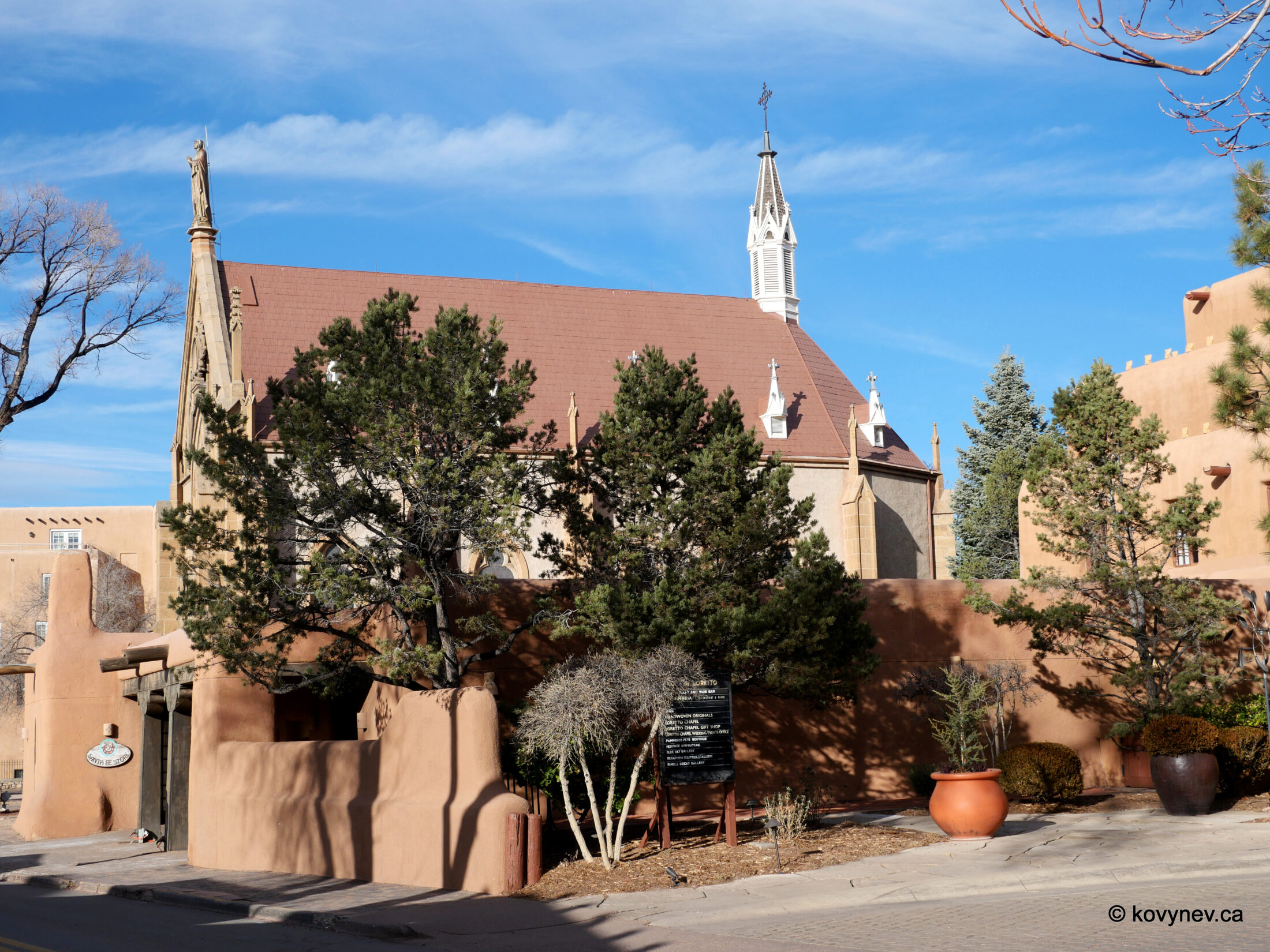
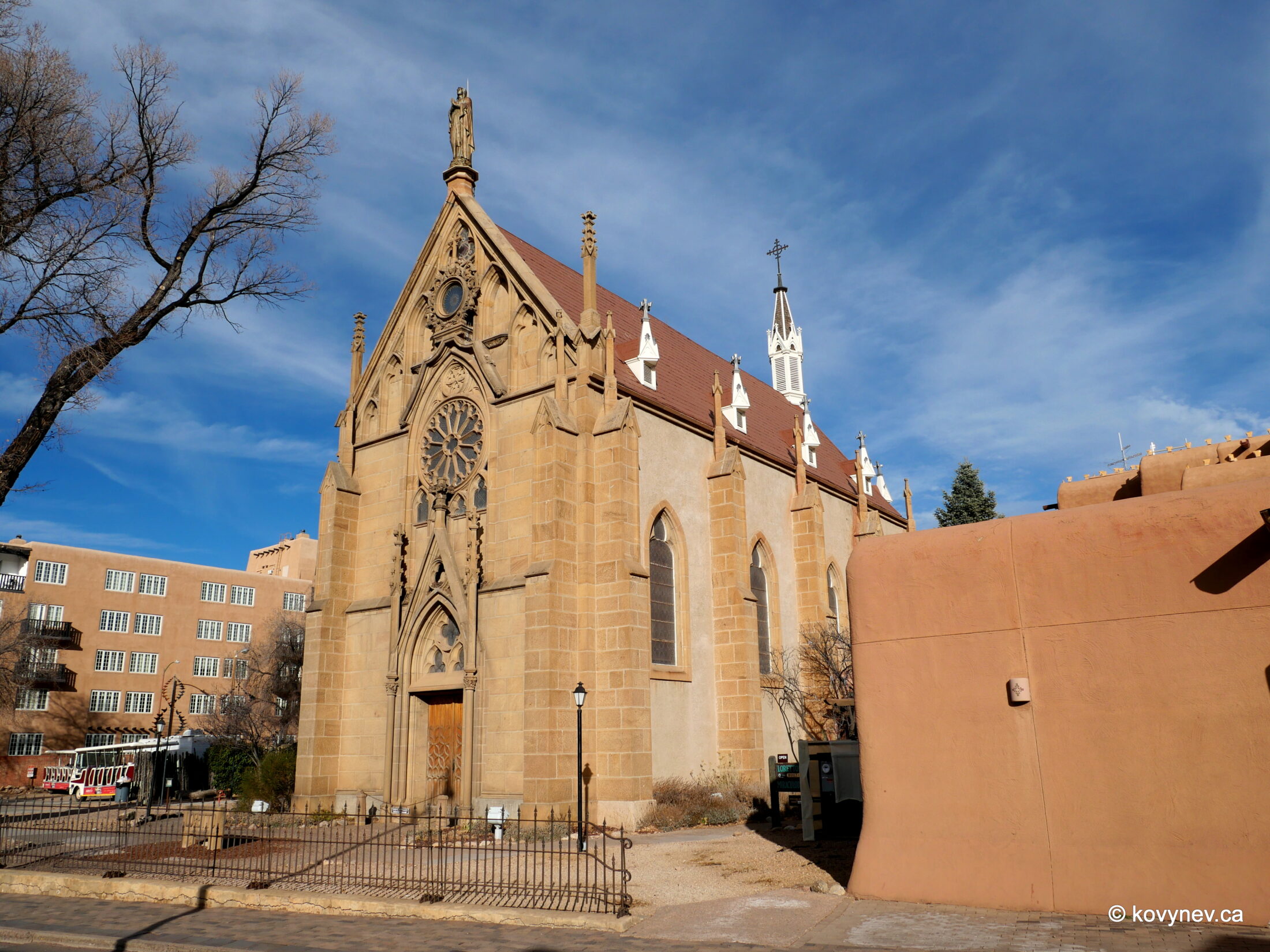
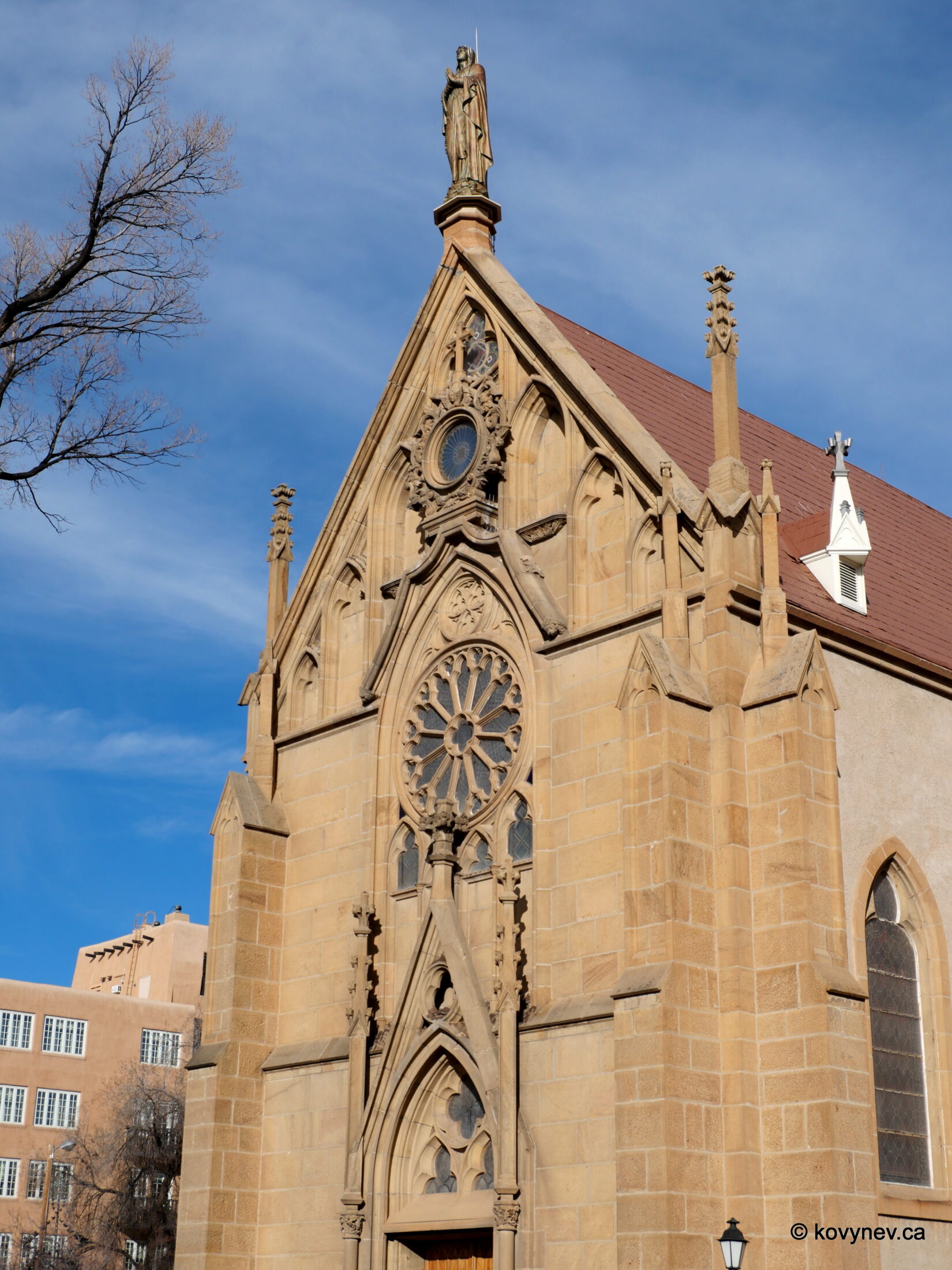
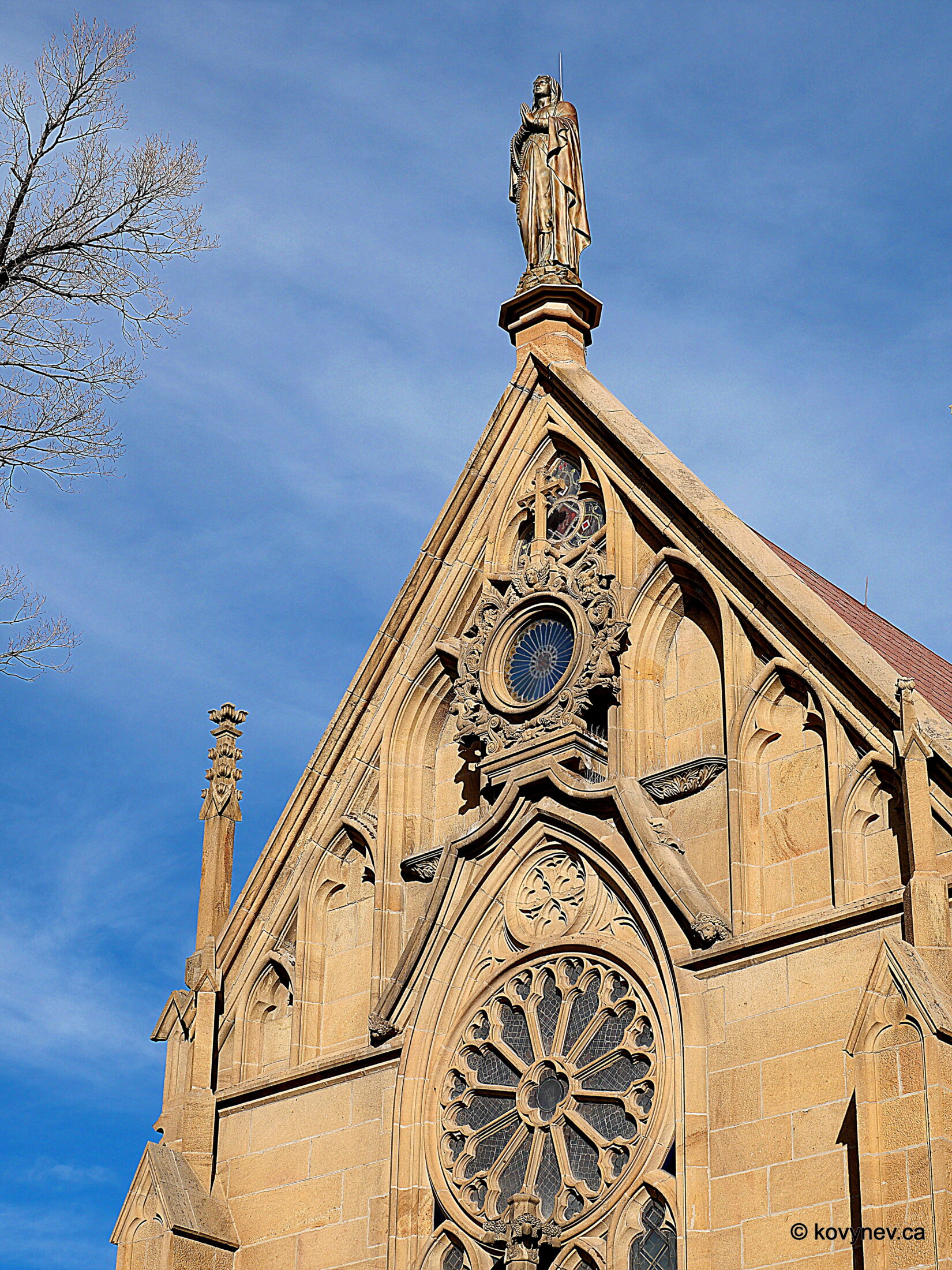
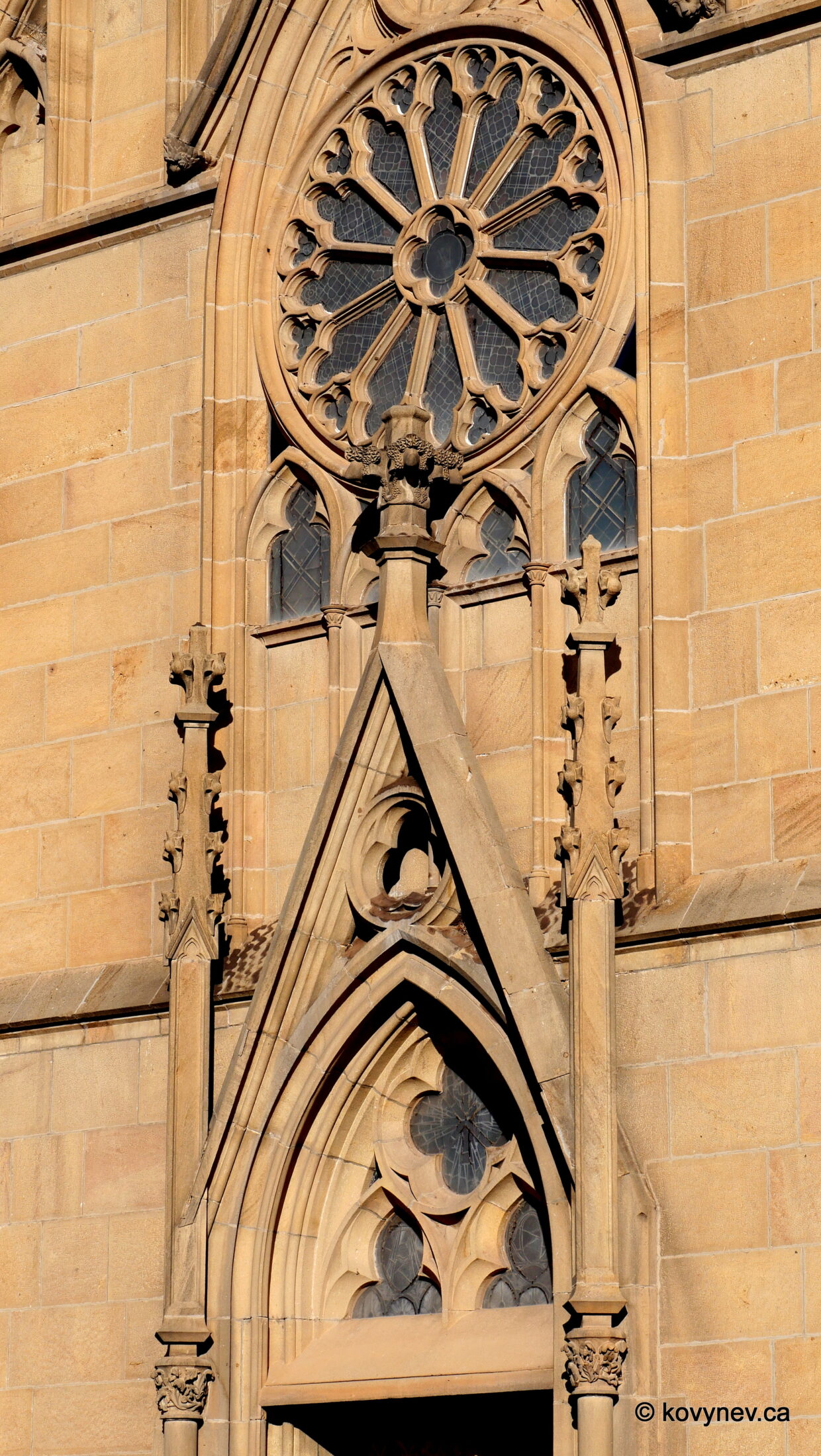
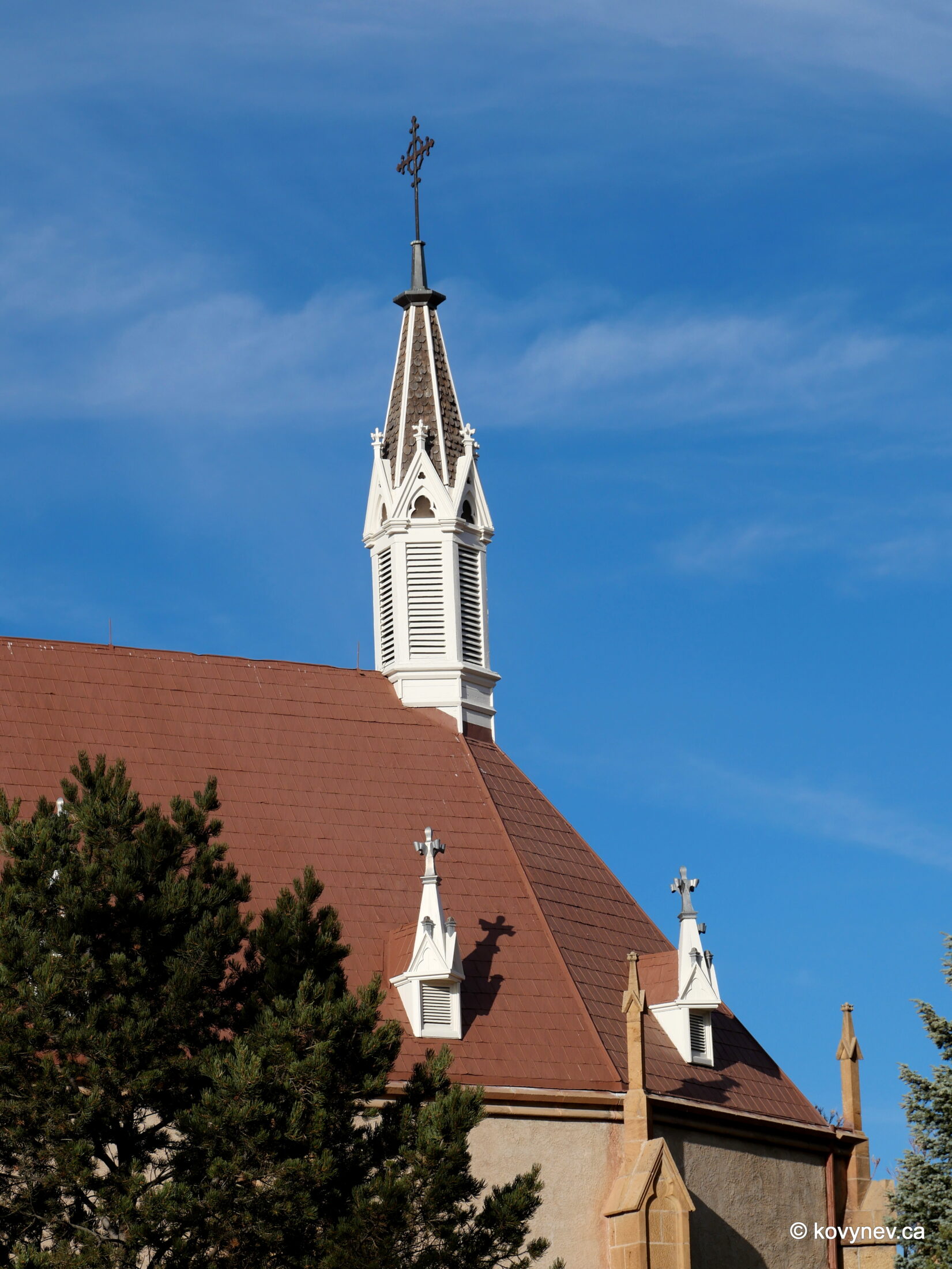
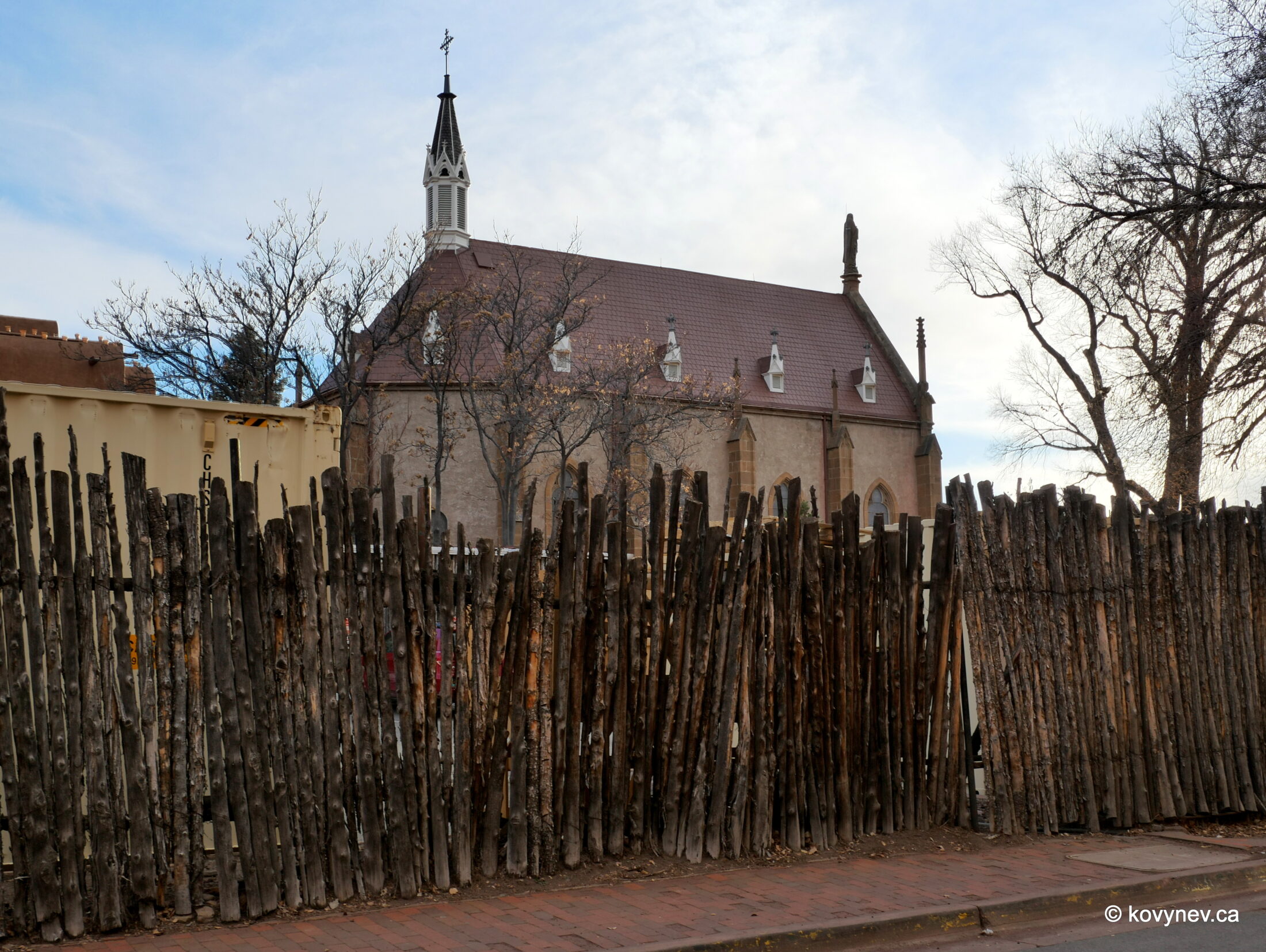
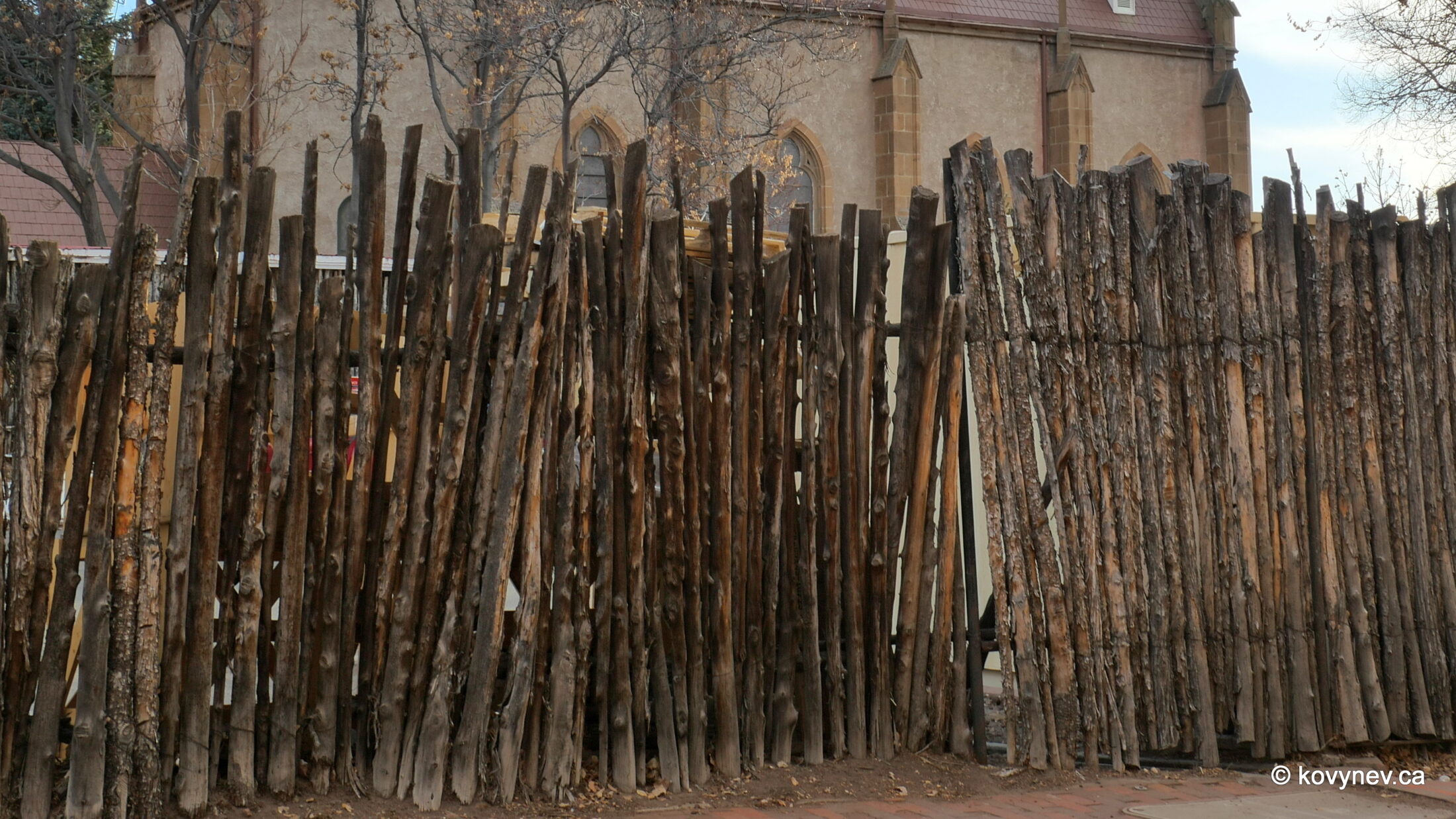
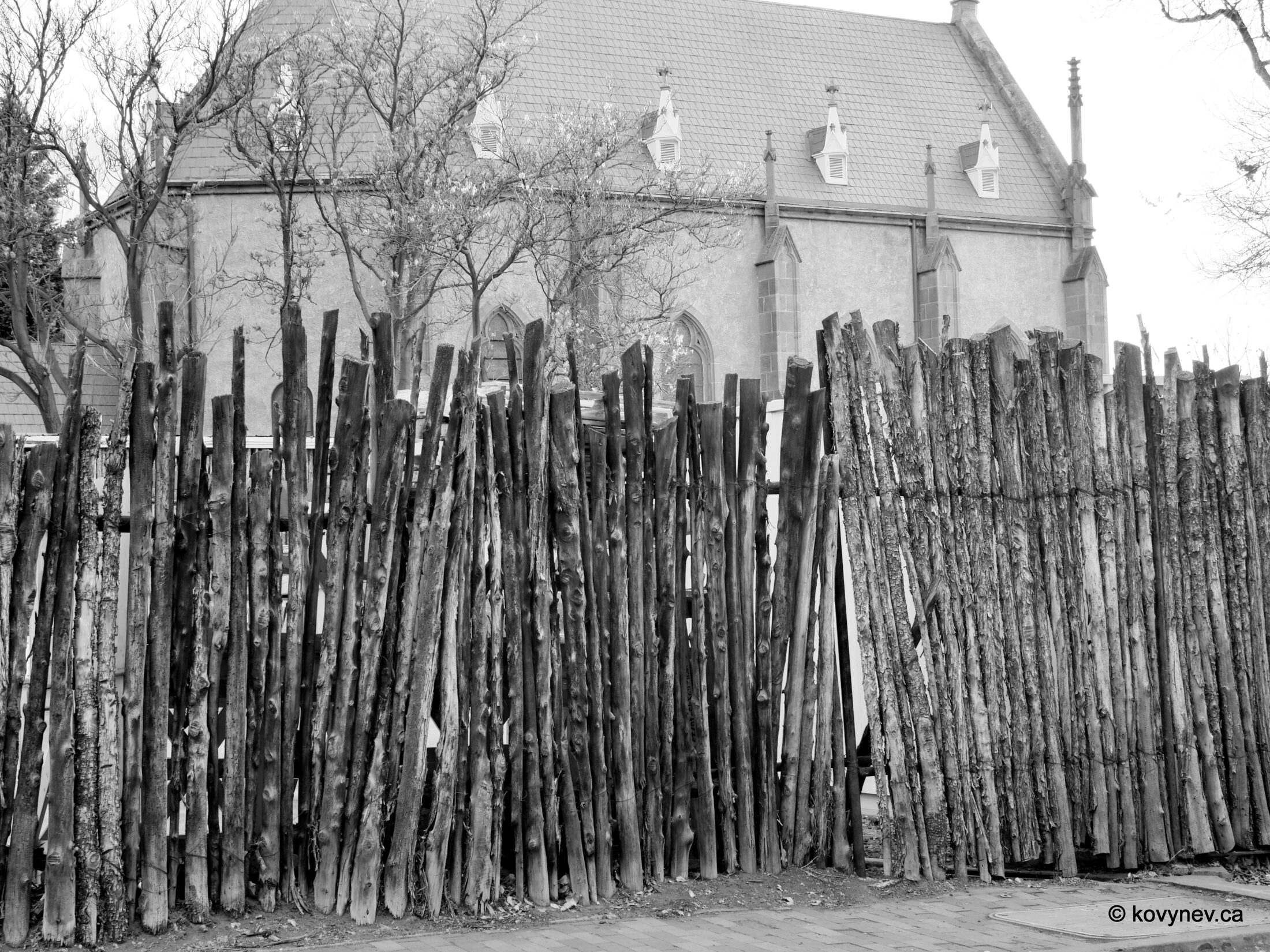
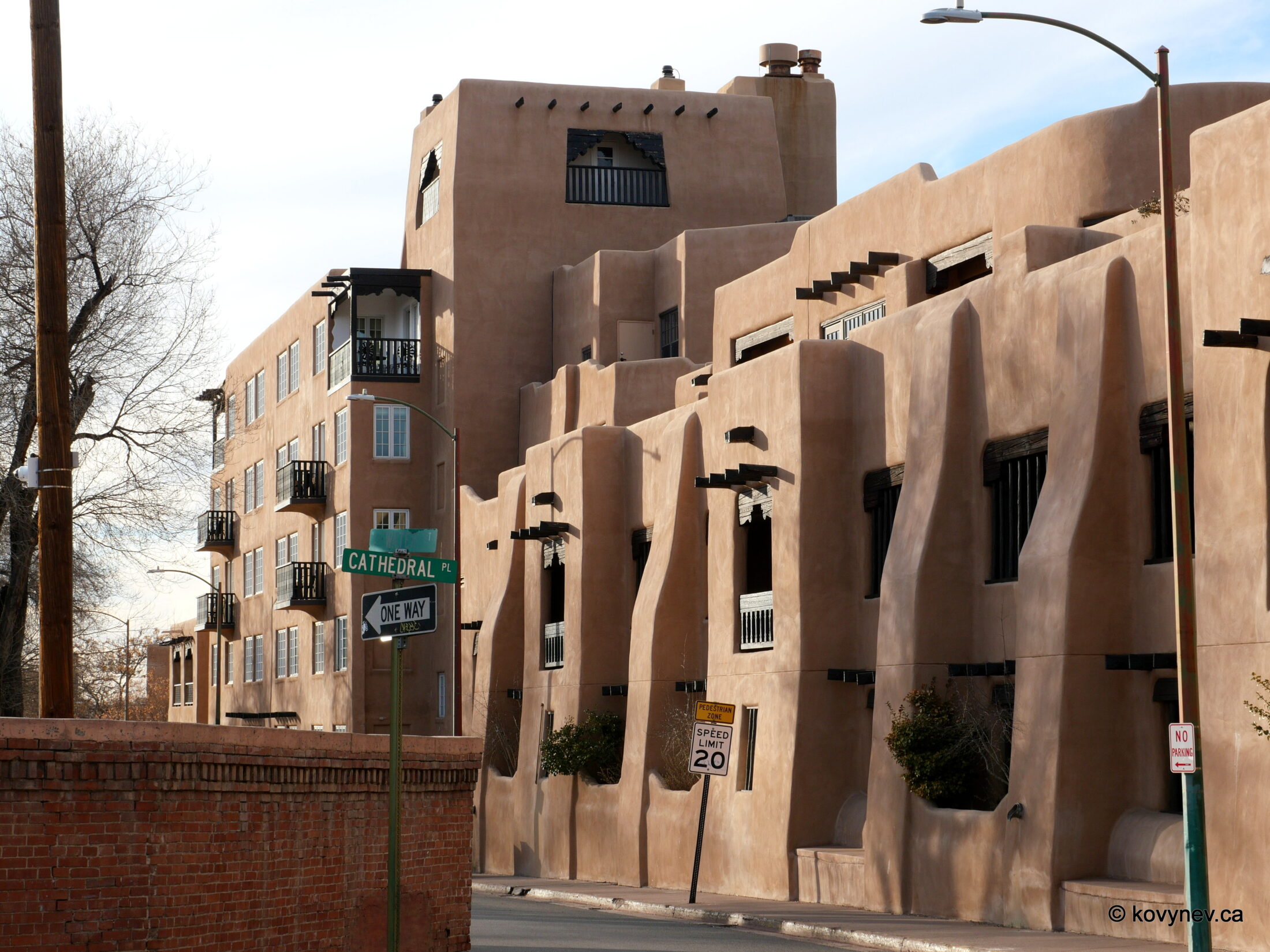
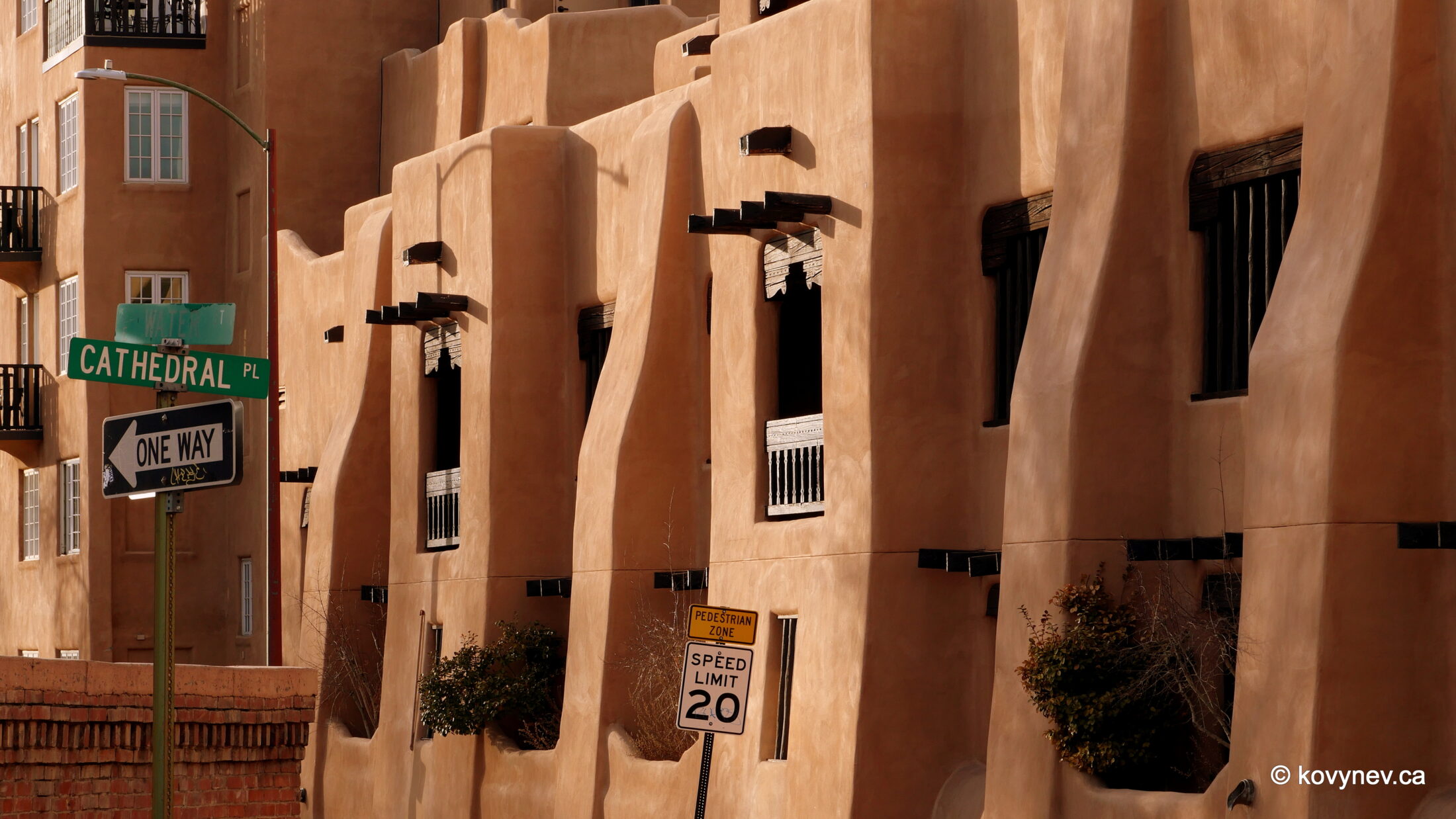
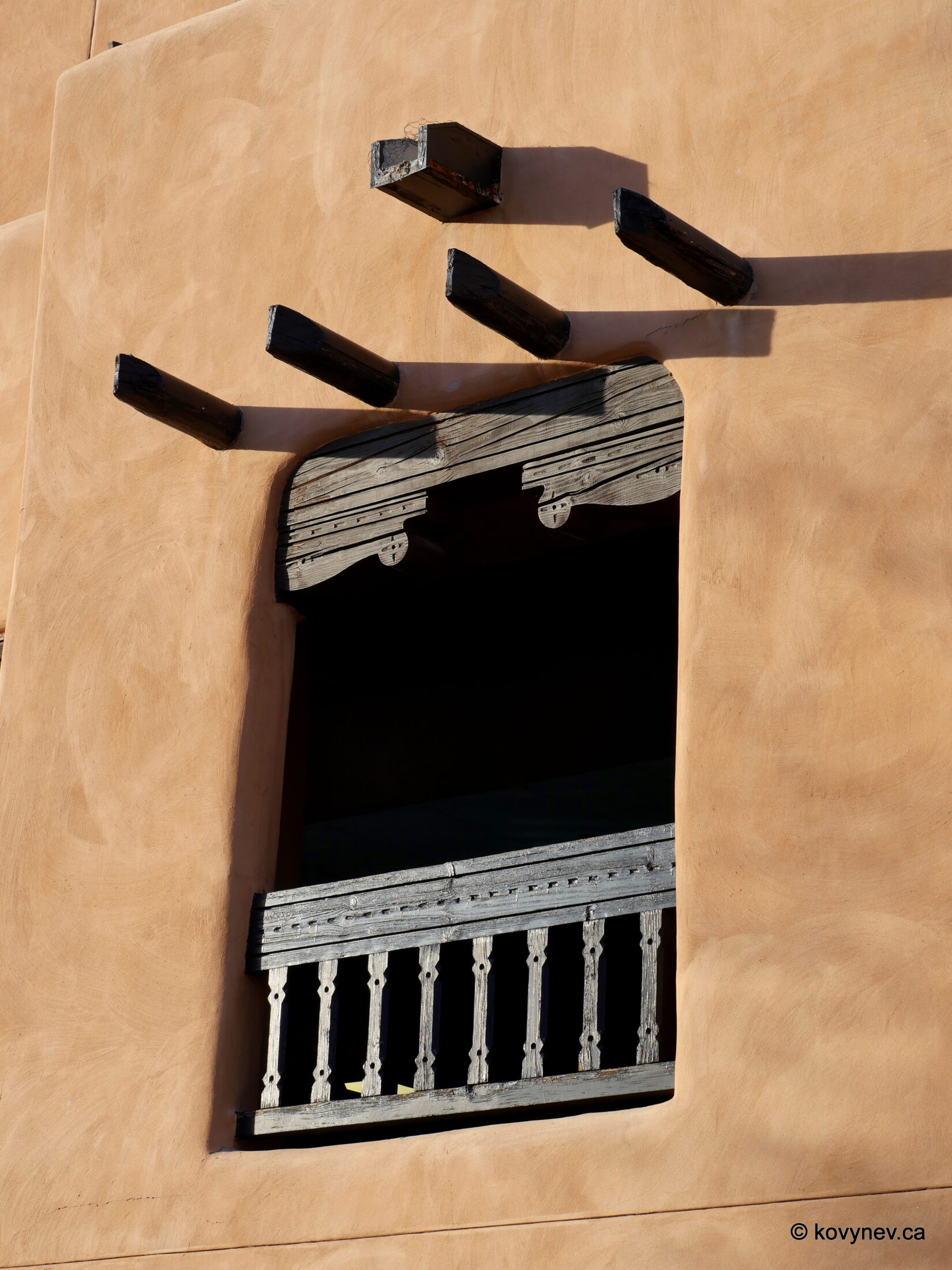
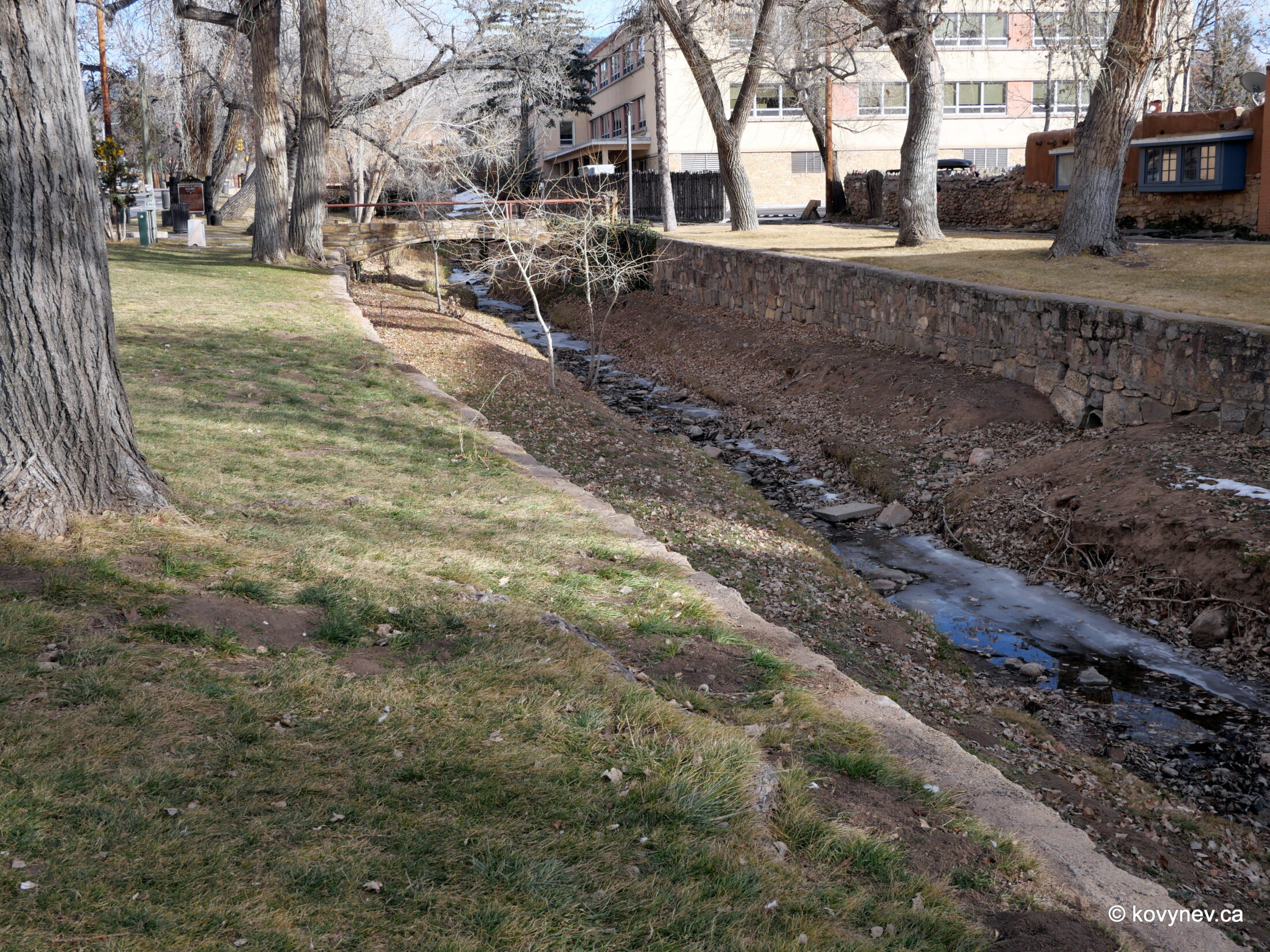
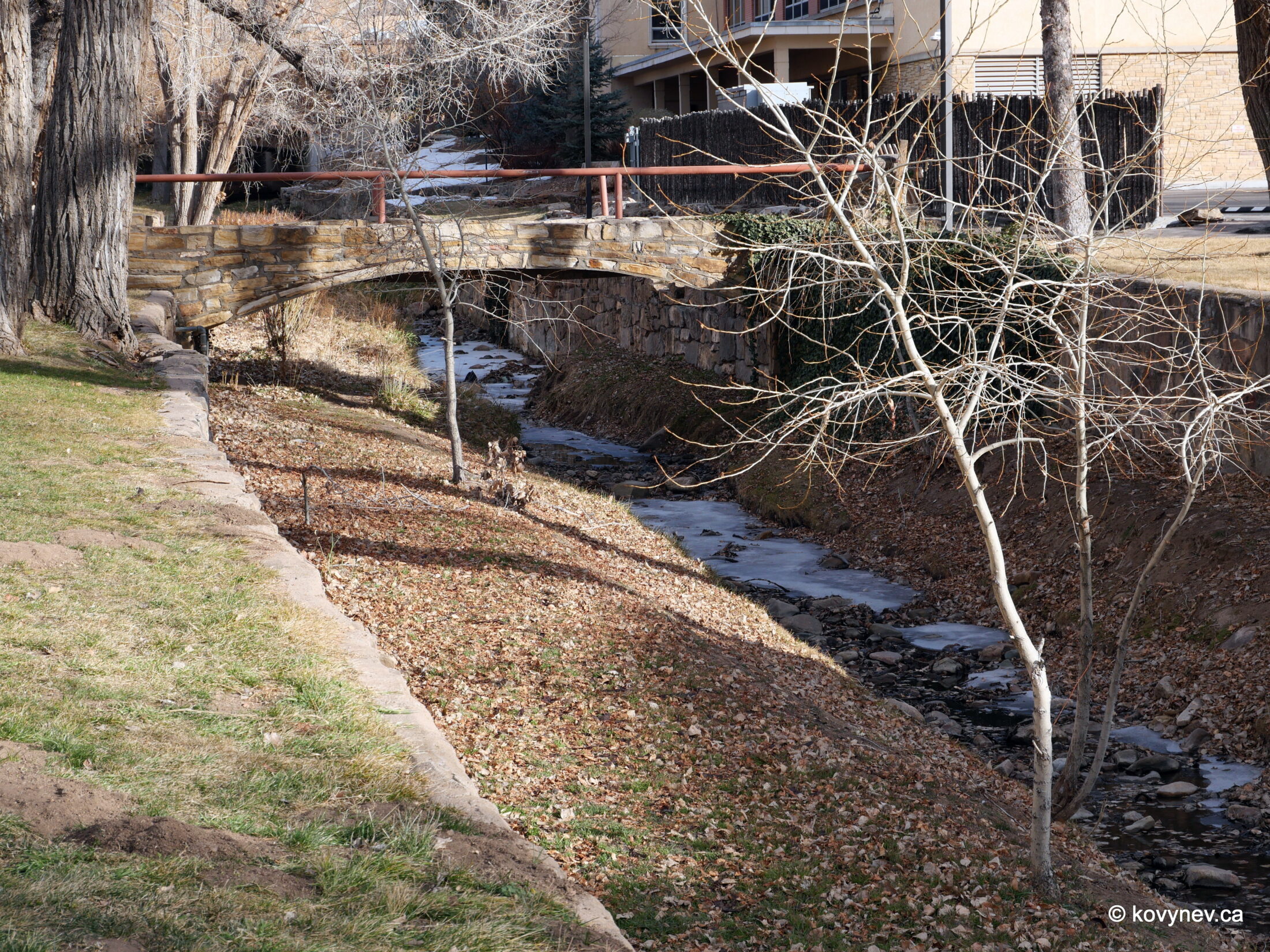
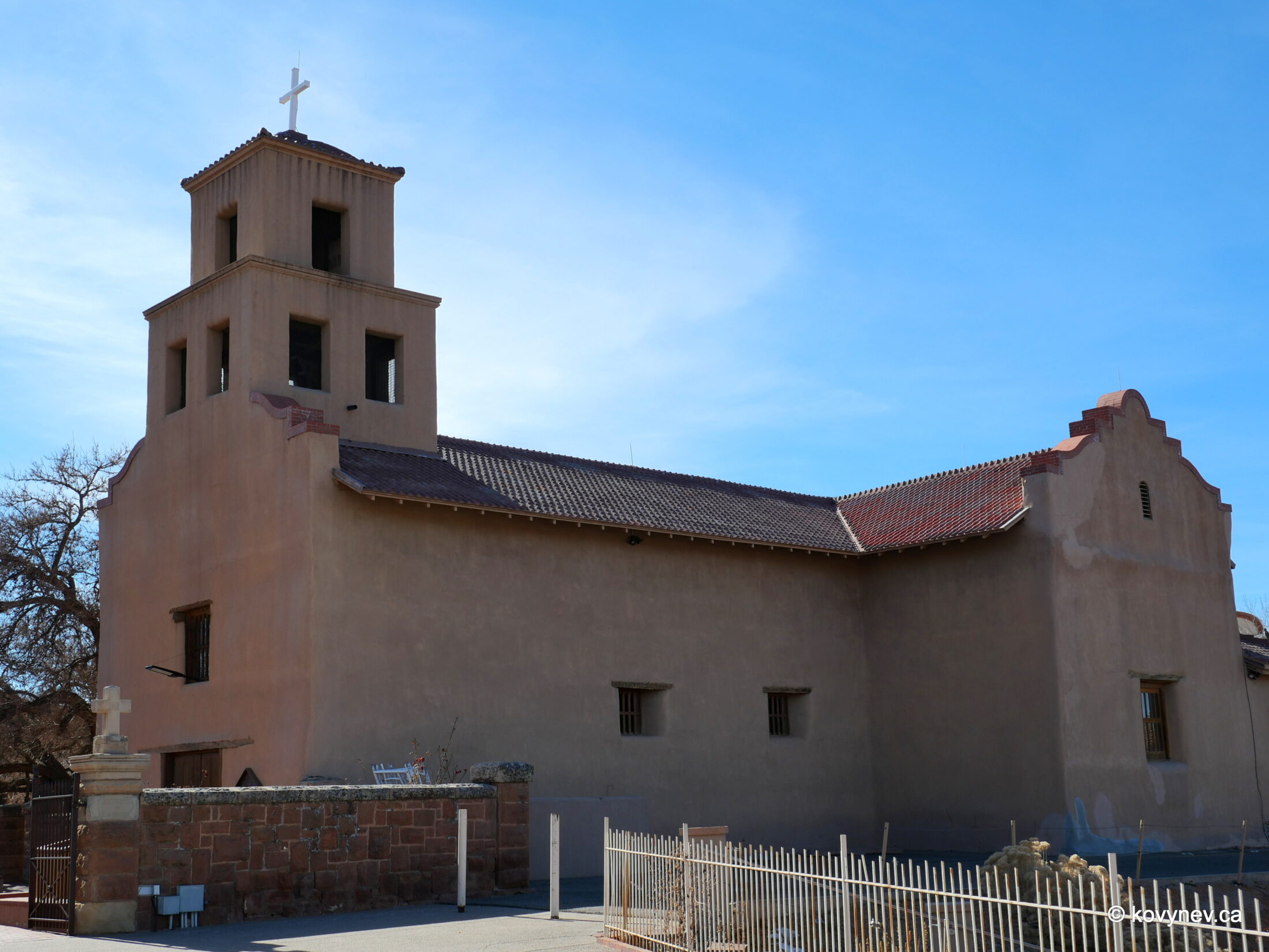
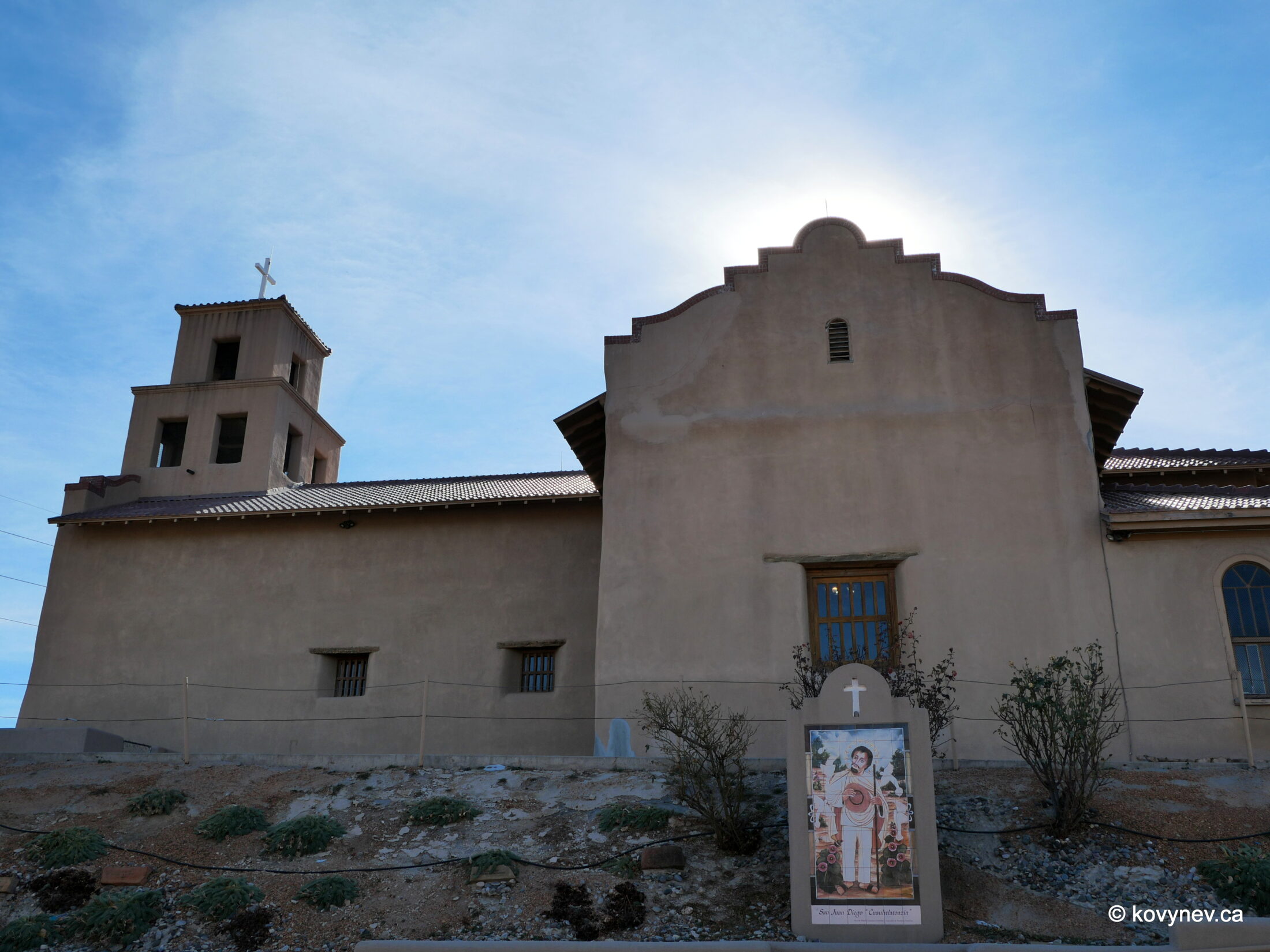
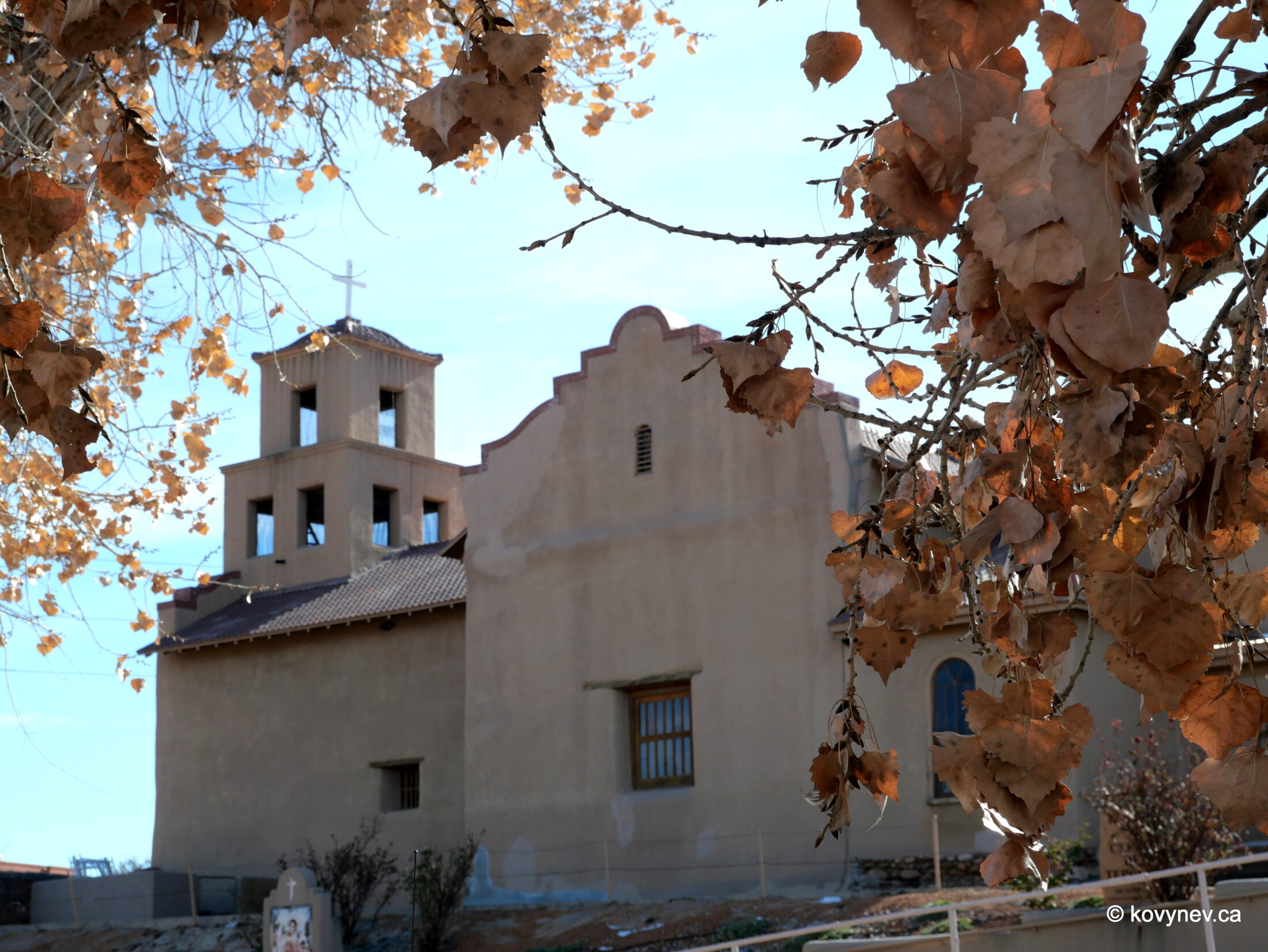
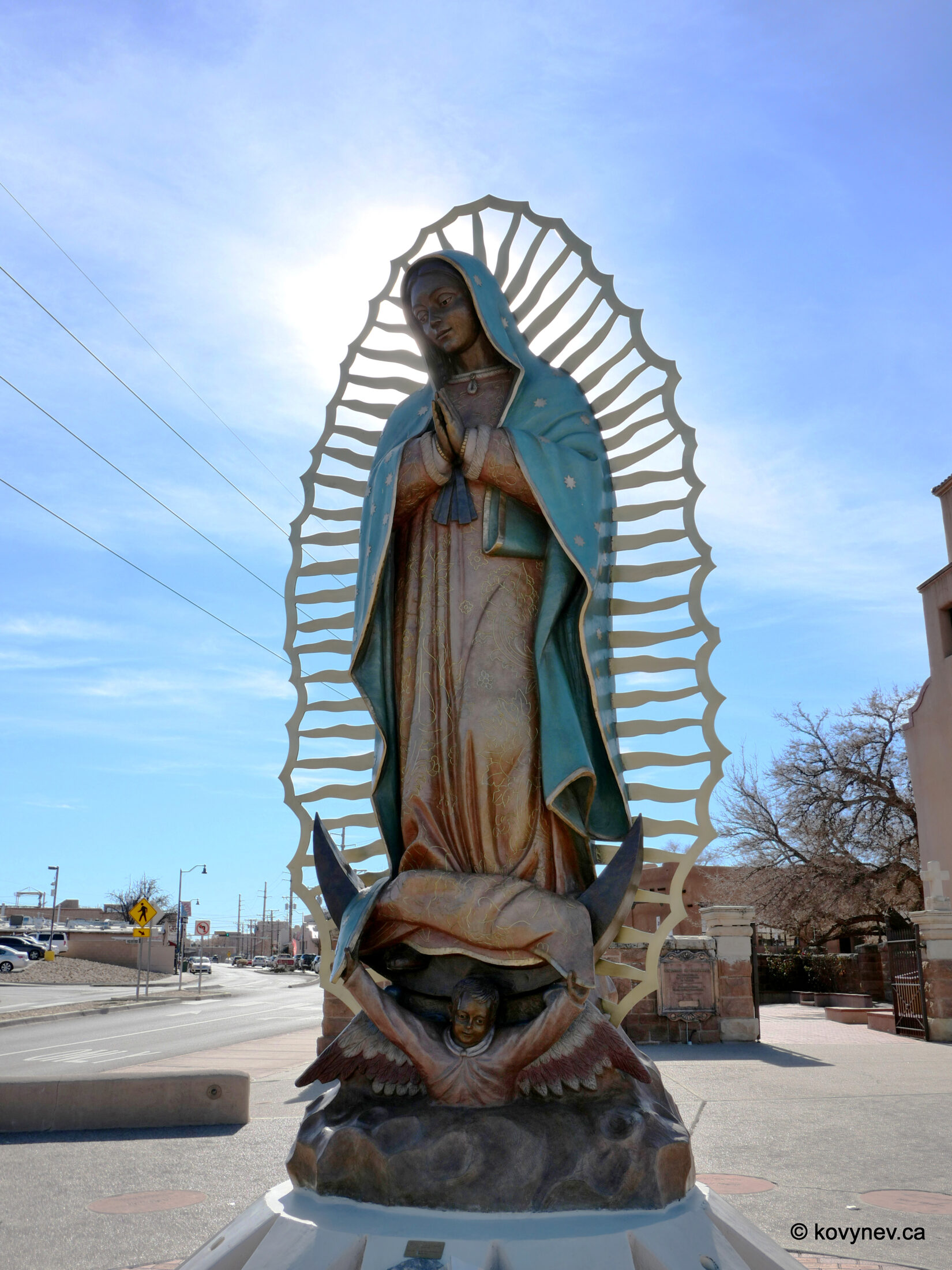
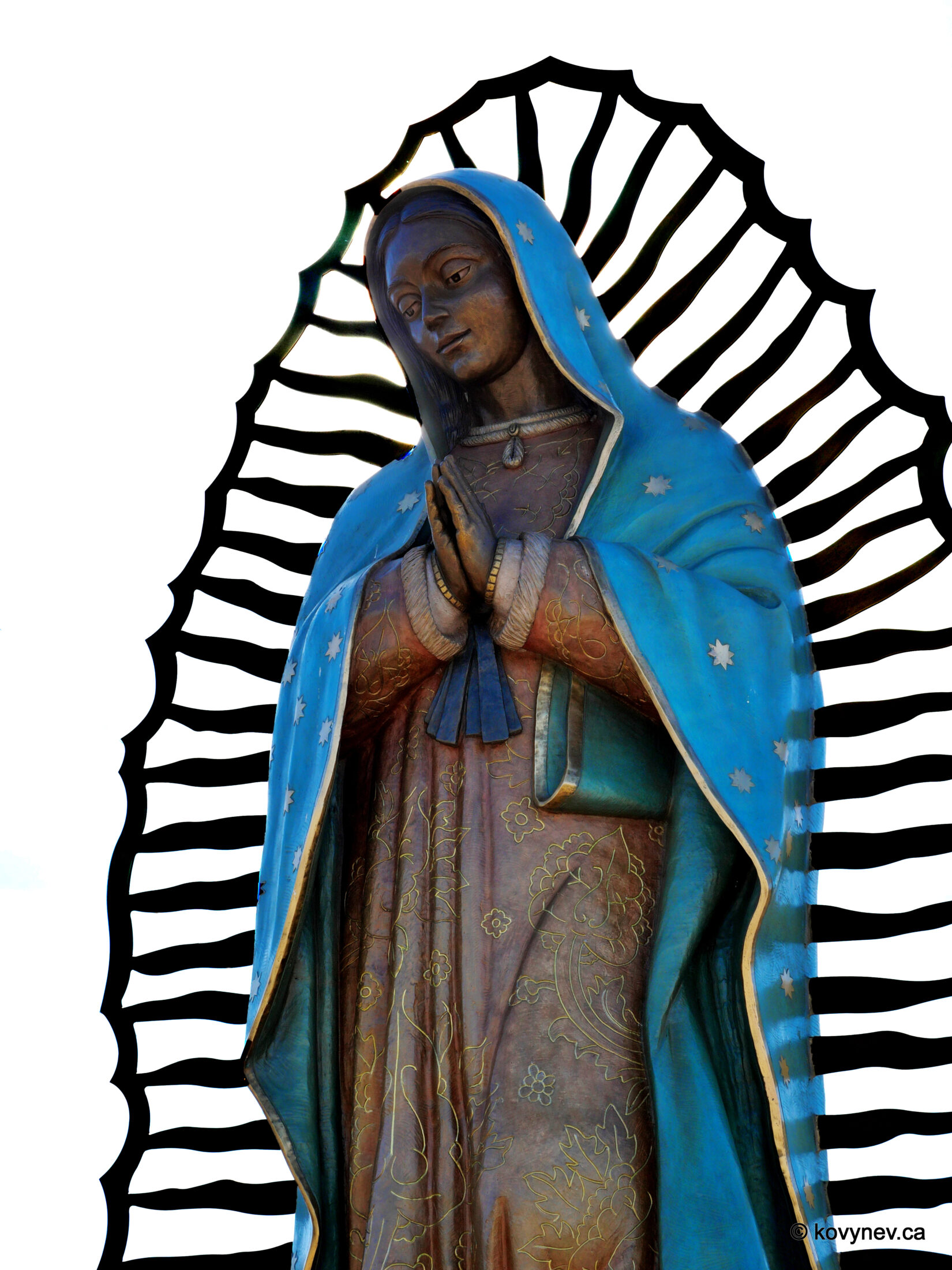
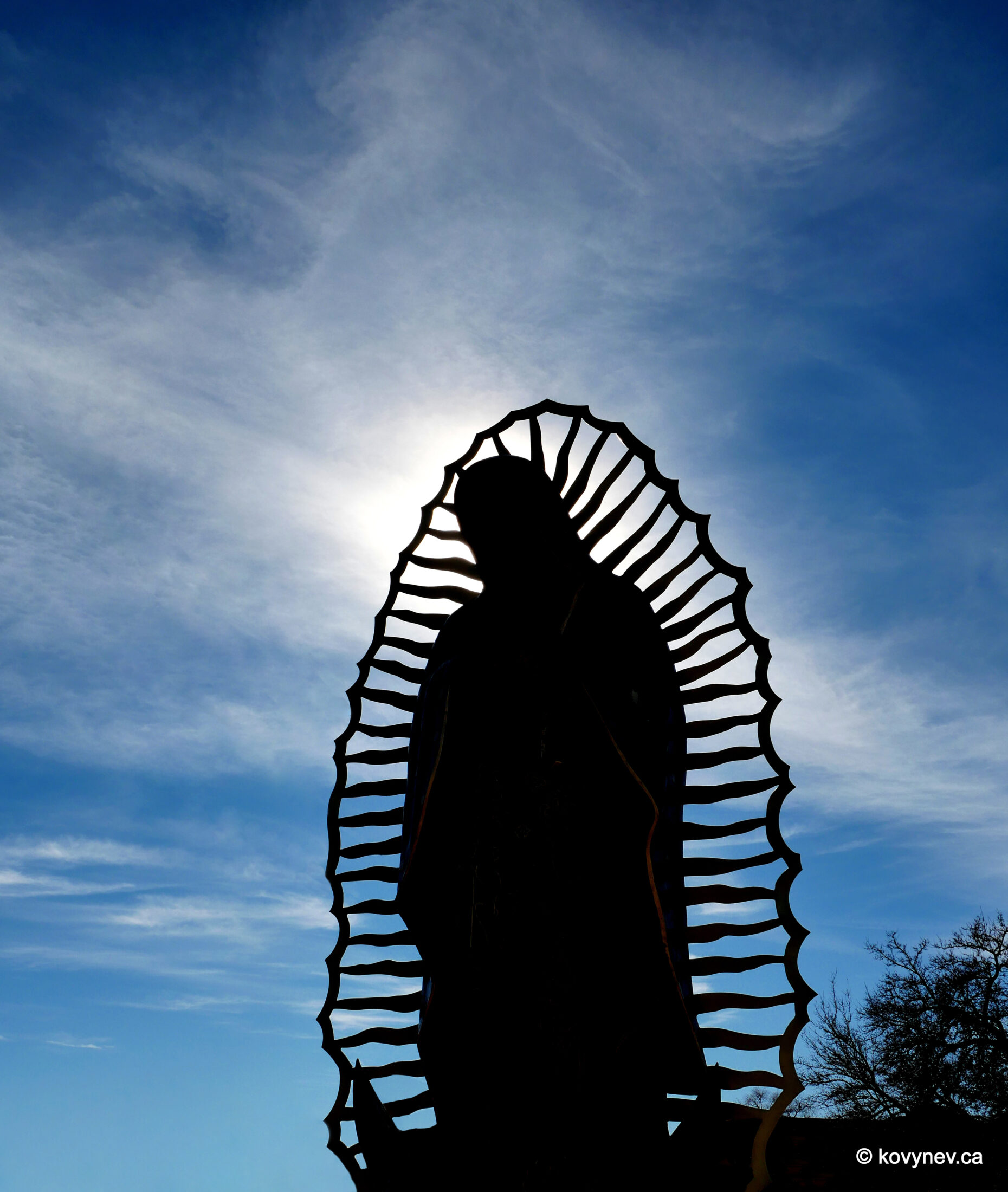
We will start at Santa Fe Plaza, which we visited in the previous gallery, on a street, which goes to the west from the square. It is one of the city′s major streets and it′s called San Francisco St. You know, Santa Fe all being about Saint Francisco and all.A mish-mash of store signs in a shopping gallery along San Francisco St.This is genuinely one of the oldest and most iconic retail landmarks in the United States. Apparently, it started on this very spot as a trading tent, way back in 1603. "Mayflower" will not have arrived for another 17 years. The current storefront was built the late 1800s. It is easily recognizable by the traditional Spanish oxcart on the roof.Another remarkable building on San Francisco St - the Lensic Performing Arts Center, at one point - the main movie and vaudeville theatre in town. The weird name comes from the first initials of the six grandchildren of the theater′s original builder, Nathan Salmon: L – Lila; E – Elias John; N – Nathan; S – Sara; I – Mary Irene; C – Charles.The building was constructed in 1931 in the Spanish Renaissance style. The detail of the roof parapet is rather striking. This is another street, running parallel to San Francisco - Water St. Just a couple of very rustic, quaint wooden balconies for you.Continuing down Water St.Here we have turned on Don Gaspar Ave, which branches off from Water St. The avenue is named after Don Gaspar Ortiz y Alarid, an affluent Santa Fe businessman, nicknamed "merchant prince."Another major street of Santa Fe - Galisteo St, running towards Pueblo Galisteo, a historic Native American village 25 miles south of the city.Pueblo Galisteo played a role in the Pueblo Revolt of 1680, which I mentioned a few times already. The villagers came up this very road to help lay siege (and later, capture) to Santa Fe, at that time - the capital of the Spanish colony of Nuevo México. While talking about the revolt, we came up to this fascinating woodcarving shop, which probably supplies the whole of the city with these intricate window casings, doors, and other decorations of otherwise very plain adobe buildings.Look at these column capitals, called zapatas in Spanish! They even make them look like they are from the 1600s.This would be un friso (a frieze) - a wooden panel, covering the top part of the wall. Look at the detail!Moving farther along Galisteo St. Check out this singular door. Another balcony for you.An antique store next door.I don′t know, something about this store that captivated me.Having turned left from Galisteo St, we are now walking down De Vargas St, named after Don Diego de Vargas, the Spanish colonial governor, who led the 1692 "reconquest" of New Mexico after the Pueblo Revolt of 1680. ⇨ ⇨ That revolt was the only successful uprising of indigenous peoples against a colonial power in North America. They managed to completely drive the Spanish out of New Mexico, and hold them off for 12 years.On the intersection of De Vargas St and Old Santa Fe Trail, we see the oldest church building in the continental United States - San Miguel Chapel. It was originally constructed around 1610, but burned down during the Pueblo Revolt of 1680. After the Spanish reconquista, led by Governor Diego de Vargas, the church was completely rebuilt in 1710. So, technically, this current building is not the oldest church in the USA anymore. But let′s not split hairs.The church was built across the river from the Santa Fe Mission (centered around the current Santa Fe Plaza), in the area called Barrio de Analco, which literally means "The neighbourhood across the water". It was a poor people′s settlement outside of the mission walls. Now, it′s practically in the centre of the city and on its most storied road - the Santa Fe Trail. Back in the 19th century, it was one of the major roads, which were used by the Europeans in their further move to the West, after they had already settled in the Midwest.Missouri trader William Becknell went down this route in 1821, even though he heard, the pioneers before him were arrested and imprisoned by the Spanish authorities. But, when Becknell himself reached New Mexico, he learned that it is now part of an independent country called Mexico, and they don′t mind Americans coming in and settling. After learning this, a lot of people followed, and the trail was born. Still on Old Santa Fe Trail here, walking back towards Santa Fe Plaza.Now we have already crossed the Santa Fe River, into the Santa Fe proper. This is just a big hotel, showcasing the adobe Pueblo Revival style. Quite picture-worthy, in my opinion, so we will stick with it for a while.Notice the decorative bowls on the wall. They are called bultos in Spanish. They started as a unique glazed earthenware style, known as majolica, in the Spanish town of Talavera de la Reina. That′s why such crockery with bold colourful patterns is often called Talavera plates. In the Spanish colony of New Mexico, they′ve become a symbol of status (hey, look, I have these exquisite things from back home!) ⇨ ⇨ Local artists in the Mexican city of Puebla further developed the craft, adding native floral and abstract motifs. This new Mexican fusion became known as Talavera Poblana. And then somebody decided that the bowls will look nice on the plain, smooth adobe walls too.Now, we are back on Old Santa Fe Trail.This is another significant Santa Fe church - the Loretto Chapel, built in 1873-78. It was commissioned by the Sisters of Loretto order (hence the name) and built by a French architect, who modelled it after Sainte-Chapelle in Paris. This is why the chapel has such a distinct Gothic look, contrasting with the adobe structures around.If you saw Sainte-Chapelle in Paris, you′d probably say - Nah, doesn′t look like it at all. But hey, it′s good enough for the middle of the Southwest in America.The most famous story about this chapel is its spiral staircase, which is inside, and which I don′t have a picture of. Because the church was closed when I was there. Next time. Anyway... ⇨ ⇨ When the chapel was finished, the builders realized that the loft was too high for a regular stairs. The Sisters of Loretto engaged in a 9-day prayer to St. Joseph, the patron saint of carpenters. Eventually, a mysterious stranger appeared on a donkey, built a spiral staircase, and disappeared as he came, without a single word. The staircase is a miracle of engineering, having no pillars or any wall support, hanging fully on its own structure. And there are no nails too! Everything is attached by wooden pegs. Some people still believe, it was St. Joseph himself, but there is evidence that the creator was a local carpenter named François-Jean "Frenchy" Rochas. Why he was on a donkey, I wonder...Going around the chapel.I myself is quite fascinated by this fence. It′s not a miracle wooden staircase, sure, but still quite a piece of work, don′t you think?Remember that hotel "La Fonda" we saw in the previous gallery? This is its parking garage at the back of the building. Kudos for building even a parkade in the adobe style, helping the city "stay in character". This is the Santa Fe River I mentioned a few times. Like, seriously, no kidding. Although, this little creek is not a laughing matter - it provides 40% of the water supply for a city of almost 100,000 people. Which is quite puzzling, to be honest. At least we see some water now, because it′s February. In the summer, it′s completely dry. Just a picturesque spot along the river banks. [I chuckled when I wrote "river banks"].Still walking down the river, taking pictures of stuff along the way.And now we have reached our final destination in Santa Fe - Santuario de Guadalupe, or, as it called in English, the church of Our Lady of Guadalupe. It′s one of major Santa Fe churches, dedicated to Virgin Mary of Guadalupe, one of the Saint Mary′s representations officially recognized by the Vatican. And since it′s connected to her apparition in North America, Our Lady of of Guadalupe is especially venerated by the Catholics on this side of the pond.The apparition happened in 1531, when Virgin Mary appeared to the Aztec peasant Juan Diego near modern-day Mexico City. She spoke to him in his native language, Nahuatl, and she introduced herself as Coatlaxopeuh (pronounced "co-at-la-su-pe"), which means "she who crushes the serpent". ⇨ To the Spanish ear, this phrase sounded a lot like "Guadalupe", the name of a town and a river in Spain. There is a huge monastery there, built as a shrine for a small wooden statue of Virgin Mary, purportedly carved by St. Luke the Evangelist in the 1st century. So, it′s one of the major pilgrimage sites for Catholics. ⇨ ⇨ The statue itself, made of very dark wood, is known throughout the Catholic world as the Black Madonna. Christopher Columbus was a big devotee of Our Lady of Guadalupe himself. After coming back from his voyage to the New World, he made a pilgrimage to the shrine in Guadalupe, to give thanks for surviving the journey, and to baptize the first indigenous Americans he brought with him to Europe. ⇨ ⇨ Because of this, the Spanish Crown proclaimed Black Madonna the patroness of all Spanish territories in the New World, establishing Our Lady of Guadalupe as the specifically "North American" representation of Virgin Mary. Long before Juan Diego even saw anything.A bronze statue in front of the church depicts the official image of Nuestra Señora de Guadalupe. The sun rays from behind her symbolize Virgin Mary blocking the Aztec supreme deity, Sun God Huitzilopochtli, meaning she is more powerful than he. She is standing on the crescent moon, which represents the Aztec night god, the serpent god Quetzalcoatl. The winged cherub holding Madonna on his shoulders is a nod to the Aztec tradition when their royalty were carried around by servants on their shoulders. And she is the Queen of Heaven after all. ⇨⇨ The black ribbon Virgin Mary is holding in her hands is an indication of a pregnant woman for Aztecs (meaning, Madonna is pregnant with Jesus). And, finally, a small flower depicted on Mary′s dress is Nahui Ollin, the Aztec symbol for the Center of the Universe and of the Supreme God. And this is the last picture of our little walk around Santa Fe. On to the next stop on our trip!Press ESC to exit